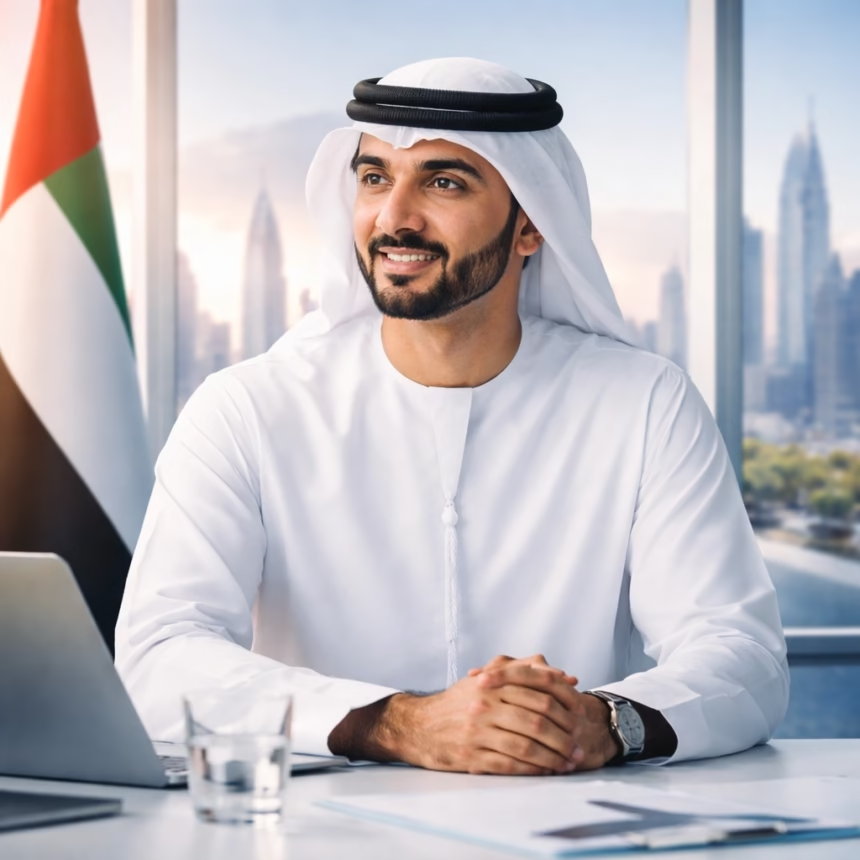
His Highness Sheikh Ammar bin Humaid Al Nuaimi, Crown Prince of Ajman and Chairman of the Ajman Executive Council, recently affirmed the United Arab Emirates' commitment to an advanced governmental model. This paradigm is specifically designed for future readiness, prioritizing agility, innovation, and proactive foresight. The statement underscores the nation's strategic vision to not merely adapt to change but to actively shape the future of governance and societal well-being.
Background
The United Arab Emirates has, for decades, pursued an ambitious trajectory of development and diversification, moving beyond its foundational oil economy. This journey gained significant momentum with strategic initiatives such as Vision 2021, which laid the groundwork for a competitive, knowledge-based economy. The subsequent launch of UAE Centennial 2071 further solidified the nation’s long-term aspirations, aiming for the UAE to be the best country in the world by its hundredth anniversary.
A key driver of this vision has been the emphasis on governmental excellence. Under the leadership of His Highness Sheikh Mohammed bin Rashid Al Maktoum, Vice President and Prime Minister of the UAE and Ruler of Dubai, the government has consistently championed innovation in public service. Early initiatives included the establishment of government accelerators, future labs, and a robust framework for digital transformation across all federal and local entities. These programs fostered a culture of continuous improvement and strategic planning.
The Ajman Executive Council, under Sheikh Ammar's guidance, actively contributes to this national agenda. Local governments across the seven emirates align their strategies with federal directives, creating a cohesive national approach to governance. This includes significant investments in infrastructure, education, healthcare, and smart city technologies, all designed to enhance the quality of life for citizens and residents while attracting global talent and investment. The focus has always been on anticipating future challenges and opportunities, rather than merely reacting to them.
More Read

Key Developments
The core of the UAE’s advanced governmental model lies in its proactive embrace of emerging technologies and a commitment to data-driven policy-making. This model transcends traditional bureaucratic structures, fostering an environment where innovation is not just encouraged but institutionalized. Recent developments highlight a significant shift towards integrating artificial intelligence (AI), blockchain, and big data analytics into the very fabric of government operations.
One critical aspect is the ongoing digital transformation of public services. Citizens and businesses now access a wide array of services through integrated digital platforms, significantly reducing processing times and enhancing user experience. This includes smart applications for permits, licenses, healthcare appointments, and educational resources, all designed with user-centricity in mind. The aim is to make government services seamless, efficient, and accessible 24/7.
Furthermore, the government has invested heavily in developing strategic foresight capabilities. Specialized units and think tanks are tasked with analyzing global trends, identifying potential disruptions, and formulating long-term strategies. This includes scenario planning and risk assessment, ensuring that policies are resilient and adaptable to unforeseen global shifts, from economic downturns to technological revolutions. The emphasis is on building a robust framework that can navigate uncertainty effectively.
More Read

Another crucial development is the continuous upskilling and reskilling of the government workforce. Programs are regularly implemented to equip employees with future-ready skills, including digital literacy, data analysis, critical thinking, and innovation methodologies. This ensures that the human capital within the government remains at the forefront of global best practices, capable of leveraging new tools and approaches to deliver superior public service.
Impact
The implementation of this advanced governmental model has far-reaching implications, positively affecting various segments of society and the nation’s global standing. Citizens and residents are experiencing a tangible improvement in the quality and accessibility of public services. Streamlined digital platforms and proactive government initiatives enhance daily life, from urban planning to public safety and healthcare delivery. This translates into increased citizen satisfaction and trust in government institutions.
For the business community, the impact is equally profound. The UAE's commitment to creating an agile and innovation-friendly regulatory environment fosters a vibrant ecosystem for entrepreneurship and investment. Simplified procedures, transparent governance, and access to cutting-edge infrastructure attract foreign direct investment and encourage local businesses to innovate. This contributes to economic diversification, job creation, and sustained growth across non-oil sectors like technology, tourism, and logistics.
Globally, the UAE is increasingly recognized as a pioneer in future governance. Its proactive strategies and successful implementation of advanced technologies serve as a benchmark for other nations aspiring to modernize their public sectors. This enhances the UAE's soft power, attracting international partnerships, talent, and knowledge exchange, solidifying its position as a global hub for innovation and future-oriented development. The nation's readiness model offers valuable lessons for governments worldwide.
Moreover, the focus on sustainable development and environmental stewardship within this model ensures a positive legacy for future generations. Policies promoting renewable energy, smart mobility, and conservation efforts are integrated into the governmental framework. This holistic approach ensures that economic prosperity is balanced with environmental responsibility, securing a high quality of life for decades to come.
What Next
Looking ahead, the UAE is poised to further cement its position as a global leader in future-proof governance, with several key milestones on the horizon. A primary focus will remain on accelerating the integration of advanced technologies, particularly in the realm of Artificial Intelligence and quantum computing, to enhance public service delivery and decision-making capabilities. This includes exploring personalized government services that anticipate citizen needs through predictive analytics.
More Read

Investment in research and development will continue to be a cornerstone of the nation's strategy. The UAE aims to foster a robust innovation ecosystem, supporting startups and established companies in developing groundbreaking solutions that address global challenges. This includes expanding initiatives in sectors such as space exploration, advanced manufacturing, and biotechnology, positioning the UAE at the forefront of scientific discovery and technological advancement.
The development of human capital will also remain a top priority. Educational reforms will continue to align curricula with future skill requirements, ensuring that the next generation is equipped for jobs that do not yet exist. Government training programs will evolve, focusing on areas like ethical AI, cybersecurity, and advanced data science, preparing the workforce for an increasingly complex digital landscape. This commitment extends to lifelong learning opportunities for all residents.
Furthermore, the UAE will continue to strengthen its international collaborations, sharing its expertise in future governance while learning from global best practices. Participation in international forums, bilateral agreements, and multilateral initiatives will facilitate knowledge exchange and collective problem-solving on issues ranging from climate change to global health. The goal is to contribute actively to shaping a more resilient and prosperous global future.
The nation is steadfastly progressing towards its UAE Centennial 2071 goals, with a clear roadmap to become the world's leading nation across various indicators. This involves continuous evaluation of governmental performance, adaptation of strategies based on emerging trends, and an unwavering commitment to excellence in every facet of public life. The journey towards a truly future-ready government is dynamic and ongoing, driven by a vision of unparalleled societal progress.