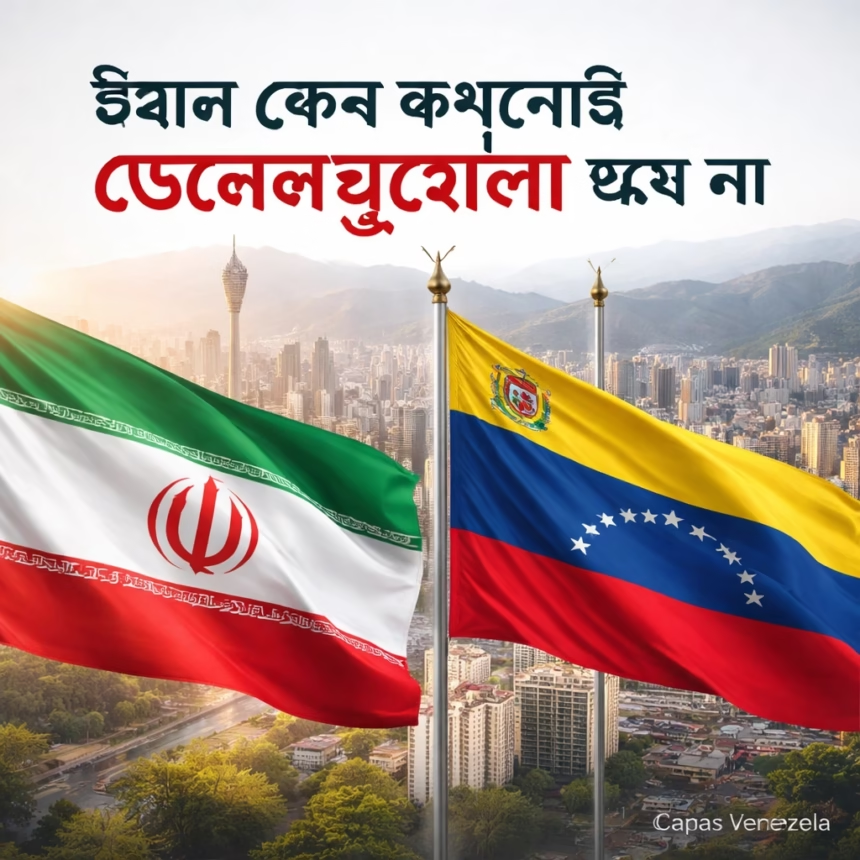
Why Iran and Venezuela Could Never Be the Same – First LightWhy Iran and Venezuela Could Never Be the Same: A Tale of Two Oil-Rich NationsIn a world where oil politics shape global alliances, Iran and Venezuela stand as stark examples of how two resource-rich nations can follow vastly different paths. Despite both being OPEC members and facing economic sanctions, their trajectories diverge sharply. Here's why Iran and Venezuela could never be the same.Background: A Tale of Two EconomiesIran, with a population of 86 million, has a diverse economy that includes oil, gas, and manufacturing. The country's GDP stood at $454 billion in 2022, with crude oil exports accounting for about 40% of government revenue. In contrast, Venezuela, home to 28 million people, relies heavily on oil, with petroleum exports making up 95% of its export earnings. The country's GDP has plummeted to $81 billion in 2022, with hyperinflation and economic mismanagement crippling its economy.Historically, Iran's revolution in 1979 led to a shift from a monarchy to an Islamic republic, while Venezuela's shift towards socialism began in the late 1990s under Hugo Chávez. Both countries have faced international sanctions, but their responses and strategies have differed significantly.Key Developments: Sanctions and AlliancesIran has navigated sanctions by developing domestic industries, diversifying its economy, and forming strategic alliances with countries like China and Russia. In 2021, Iran and China signed a $400 billion trade deal, enhancing their economic and military ties. Venezuela, meanwhile, has seen its oil production drop from 3.5 million barrels per day in 1998 to just 500,000 barrels per day in 2022. The country has relied heavily on support from allies like Russia and China, but economic mismanagement and corruption have hindering progress.In recent years, Iran has made strides in its nuclear program, leading to negotiations with world powers. Venezuela, on the other hand, has faced political turmoil, with President Nicolás Maduro clinging to power amid widespread protests and international pressure.Impact: The Human CostThe economic crises in both countries have taken a toll on their citizens. In Iran, protests over water shortages, economic hardship, and political repression have erupted in recent years. In Venezuela, hyperinflation and food shortages have driven millions to flee the country, creating a regional refugee crisis.Despite their struggles, both nations continue to play significant roles in global energy markets. Iran's oil reserves are the fourth-largest in the world, while Venezuela sits on the largest proven oil reserves globally. Their actions and alliances will continue to shape geopolitical dynamics in the years to come.What Next: The Road AheadAs both countries navigate their respective challenges, the path forward remains uncertain. Iran's nuclear negotiations and its alliances with China and Russia will be critical in determining its future. Venezuela's political stability and economic recovery hinge on its ability to reform and attract investment, despite ongoing sanctions.One thing is clear: while both nations share similarities in their resource wealth and geopolitical challenges, their journeys will continue to diverge. The world will be watching to see how these two oil-rich nations adapt and evolve in the face of adversity.