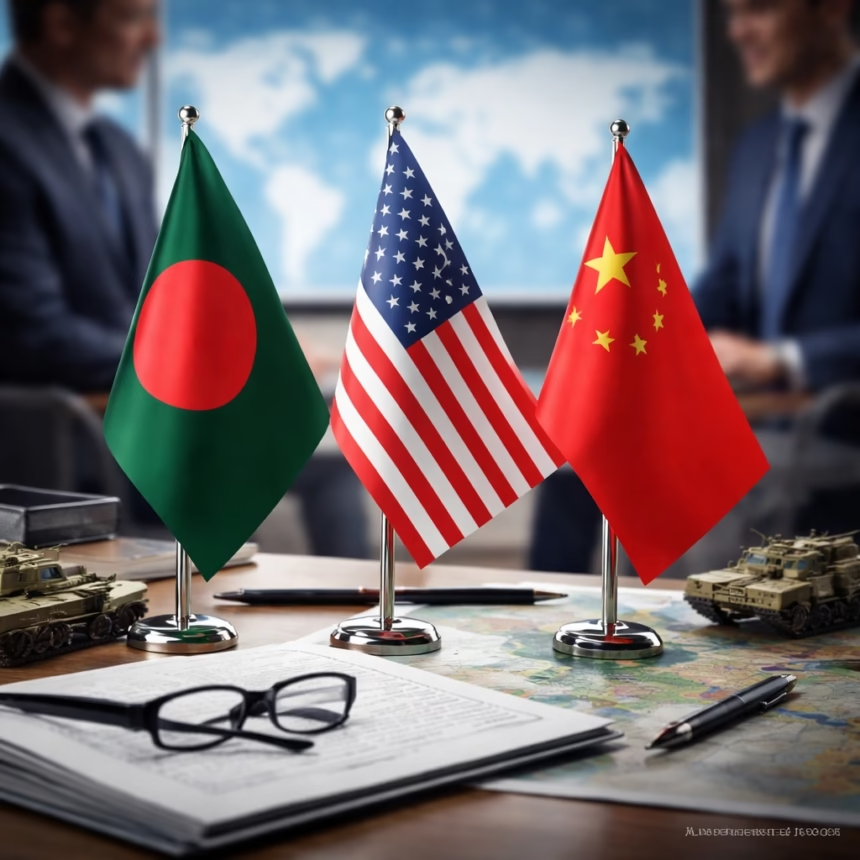
Strategic Shift: US Eyes Counterbalance to Chinese Influence in Bangladesh
Washington D.C. – The United States is reportedly intensifying efforts to bolster Bangladesh's defense capabilities and economic resilience, signaling a strategic move to counter China’s expanding influence in the region. This shift in focus, observed over the past year, involves increased military cooperation, economic aid initiatives, and diplomatic engagement.
Background
China's economic and strategic footprint in Bangladesh has steadily grown since the early 2000s. The Belt and Road Initiative (BRI) has facilitated significant infrastructure projects, including the Padma Bridge, a landmark development financed largely by China. This has led to increased Chinese investment, trade, and political ties. However, this growing relationship has raised concerns within the US about Bangladesh's potential dependence on China and the implications for regional security.
Historically, the US has maintained a strong, albeit less prominent, relationship with Bangladesh, focusing on development assistance, humanitarian aid, and democratic governance. While not a traditional security partner, the US has consistently advocated for a multi-polar regional order and has expressed concerns about China's assertive foreign policy.
Key Developments
Recent months have witnessed a noticeable acceleration in US engagement with Bangladesh’s defense sector. In late 2023, the US authorized a $25 million military training program for Bangladesh military personnel, focusing on maritime security and counter-terrorism. This program builds upon previous collaborations, including joint exercises and equipment transfers.

Furthermore, the US has pledged increased economic assistance, particularly in areas such as infrastructure development, climate resilience, and healthcare. This assistance is intended to diversify Bangladesh's economic partners and reduce its reliance on China.
Diplomatic efforts have also intensified. US officials, including Assistant Secretary of State for South and Central Asian Affairs Donald Lu, have held regular meetings with Bangladeshi counterparts, emphasizing shared strategic interests and encouraging Bangladesh to maintain a balanced foreign policy. These meetings often address concerns about debt sustainability and transparency in Chinese-funded projects.

Impact
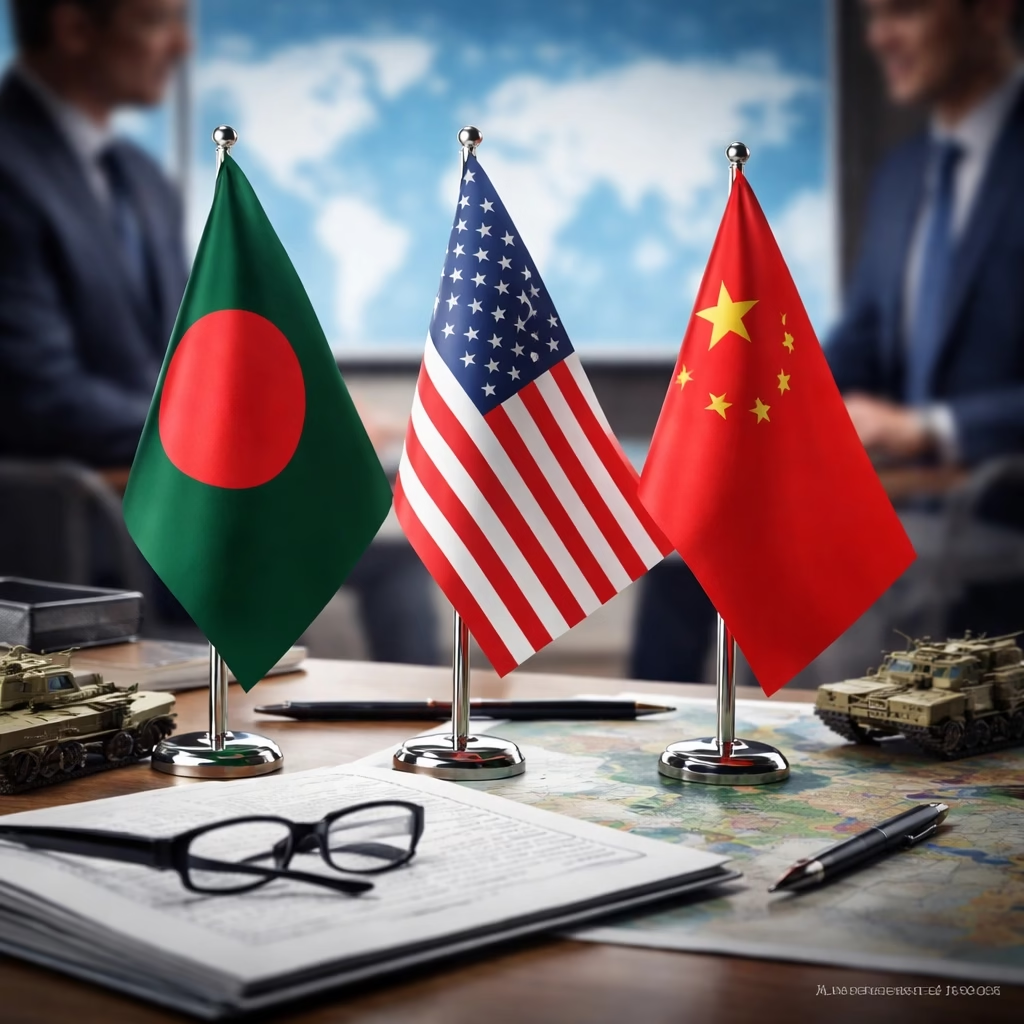
These developments have significant implications for Bangladesh's foreign policy trajectory. While Bangladesh benefits from China's economic investment, the US strategy aims to provide alternatives and enhance Bangladesh's strategic autonomy. This could lead to diversified investment portfolios and reduced vulnerability to economic or political pressure from any single nation.
The shift could also impact regional dynamics. Strengthening Bangladesh’s defense capabilities in maritime security, particularly in the Bay of Bengal, could enhance regional stability and potentially counter China’s growing naval presence in the area. The US approach attempts to offer a counterbalance to China's growing influence.
However, the strategy isn't without complexities. Bangladesh remains heavily reliant on Chinese investment for key infrastructure projects. A complete decoupling from China is unlikely, and the US aims for a balanced approach, promoting diversification rather than outright rejection of Chinese partnerships.
What Next
Enhanced Military Cooperation
The US is expected to further expand military training programs, focusing on advanced skills and technology transfer. Future joint exercises are planned to enhance interoperability between the US and Bangladeshi armed forces. Discussions are also underway regarding potential equipment sales.
Economic Diversification
The US will likely continue to prioritize economic assistance programs aimed at fostering Bangladesh’s private sector and promoting trade with other countries. Emphasis will be placed on sectors such as renewable energy, technology, and pharmaceuticals.
Diplomatic Engagement
Regular high-level dialogues between the US and Bangladesh are anticipated to address strategic concerns and explore areas of cooperation. The US will continue to advocate for Bangladesh’s democratic values and its role in regional forums.
More Read

The next few months will be crucial in determining the effectiveness of the US strategy. The success will depend on Bangladesh’s ability to navigate its relationships with both the US and China while pursuing its own national interests. The evolving geopolitical landscape will continue to shape the dynamics of this strategic balancing act.