Future in Doubt? Shuvit’s Critique of the “Orange Party” Raises Concerns
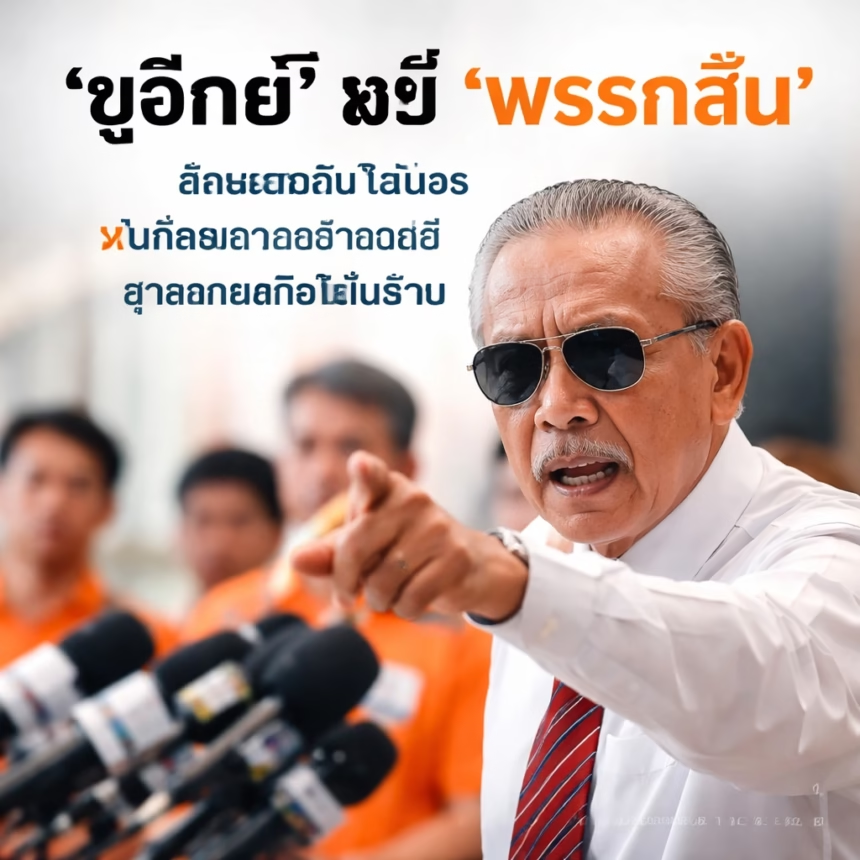
Former Bangkok Metropolitan Administration (BMA) Deputy Governor, Chuwit Muangsuwan, has launched a scathing critique of the Move Forward Party (พรรคก้าวไกล), often referred to as the “Orange Party” due to its campaign color. His remarks, made in late October 2023, have ignited a debate about the party's leadership, internal dynamics, and its ability to deliver on promises for Thailand’s future.
Background: A History of Political Scrutiny
Chuwit Muangsuwan has long been a prominent and often controversial figure in Thai politics. Known for his outspokenness and critical stance on corruption, he has frequently challenged established political powers. He gained public attention during his tenure at the BMA from 2014-2019, where he championed anti-corruption initiatives and often clashed with the central government.
The Move Forward Party, founded in 2020, quickly rose to prominence, particularly among younger voters, with a platform centered on democratic reform, constitutional change, and addressing social inequality. The party achieved a significant victory in the May 2023 general election, securing the most seats in the House of Representatives. However, internal disagreements over key policy issues, particularly regarding the lese-majeste law and the monarchy, have plagued the party since.
Key Developments: Internal Turmoil and Leadership Questions
Chuwit's recent criticism centers on what he perceives as a lack of strong leadership within the Move Forward Party. He specifically highlighted the party’s struggles to consolidate its leadership following the election and the apparent infighting among key figures. He pointed to the party's inability to effectively communicate its vision and address concerns about its policy proposals, particularly regarding constitutional reform.
More Read

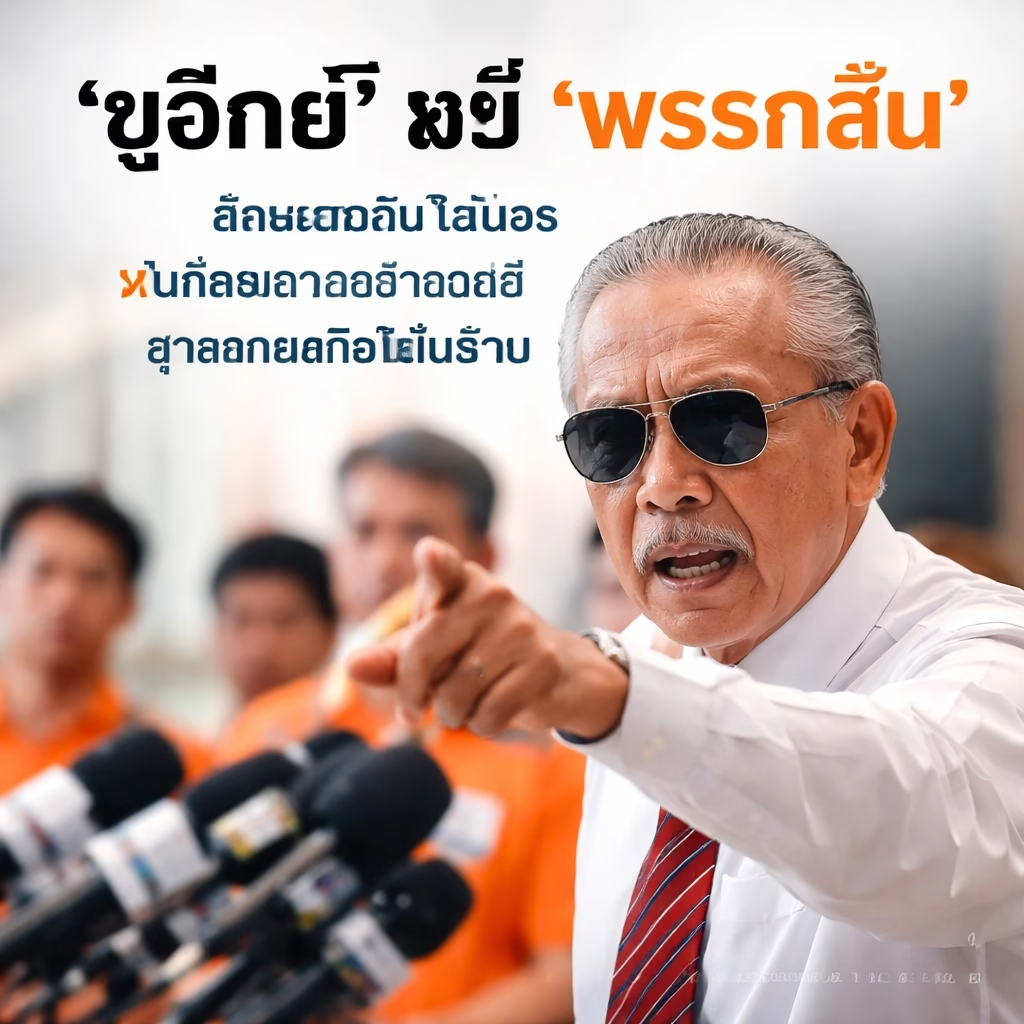
Specifically, Chuwit questioned the party’s preparedness to govern effectively, stating that internal divisions undermined its credibility. He argued that the party's internal power struggles and inconsistent messaging raised serious doubts about its ability to implement its ambitious reform agenda. His comments have gained considerable traction on social media, sparking heated discussions about the party's future prospects.
Impact: Eroding Public Confidence in the “Orange Party”
Chuwit’s remarks have contributed to a decline in public confidence in the Move Forward Party, particularly among those who initially supported the party’s reformist agenda. Polls conducted in the weeks following his criticism showed a slight dip in the party's approval ratings. Some voters expressed concerns about the party’s internal stability and its ability to deliver on its promises.

The criticism has also affected the party's relationships with other political factions. While Move Forward initially forged alliances with several smaller parties to form a coalition government, Chuwit's comments have potentially complicated these negotiations. The ongoing debate has fueled speculation about the potential for a shift in the political landscape and a re-evaluation of the parties’ strengths and weaknesses.
The Role of Social Media
Chuwit's criticism quickly spread across various social media platforms, including Twitter and Facebook. The comments generated a significant volume of reactions, ranging from strong agreement to vehement disagreement. The hashtag #ชูวิทย์ (Chuwit) trended on Twitter for several hours, indicating the widespread interest in his remarks.
What Next: Navigating the Path to Government Formation
The Move Forward Party is currently engaged in negotiations with other parties to form a coalition government. The process is proving to be complex, with disagreements over key policy issues and power-sharing arrangements. The party aims to secure a majority in the House of Representatives to be able to form the government.
The final outcome of these negotiations will significantly shape the future of Thailand. If the Move Forward Party fails to secure a coalition government, the political landscape could shift dramatically, potentially leading to a government led by other parties. The coming weeks will be crucial in determining the direction of Thailand’s political development.
Potential Outcomes
Several scenarios are possible. The Move Forward Party could successfully forge a coalition government, albeit potentially with compromises on its reform agenda. Alternatively, another party or a coalition of parties could form a government. A prolonged period of political instability and uncertainty is also a possibility if no clear consensus can be reached.