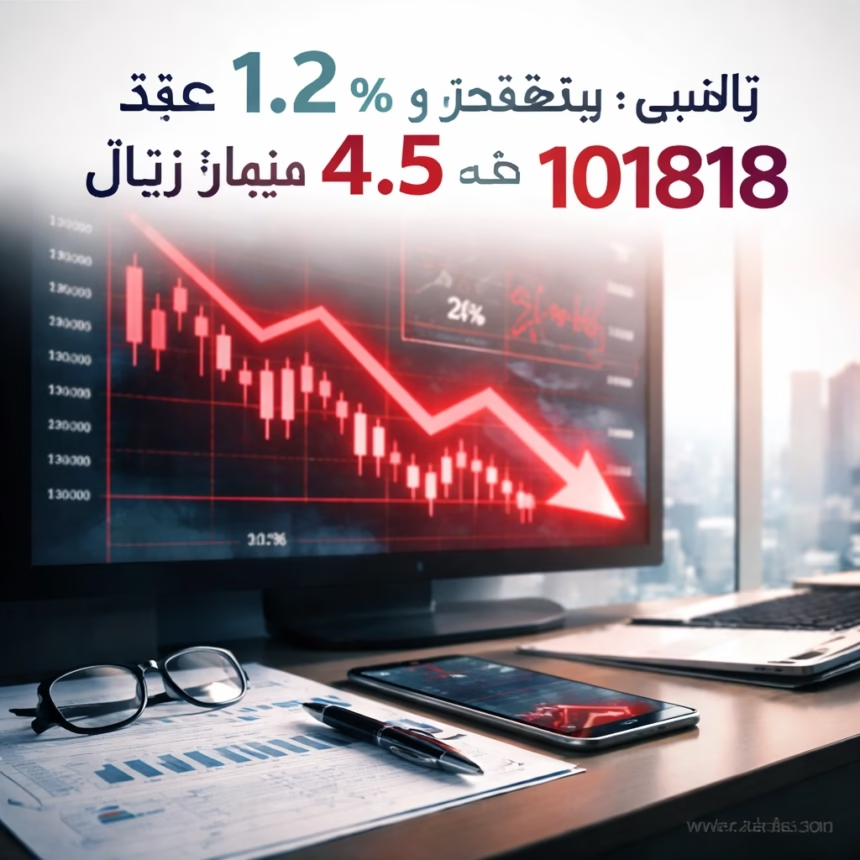
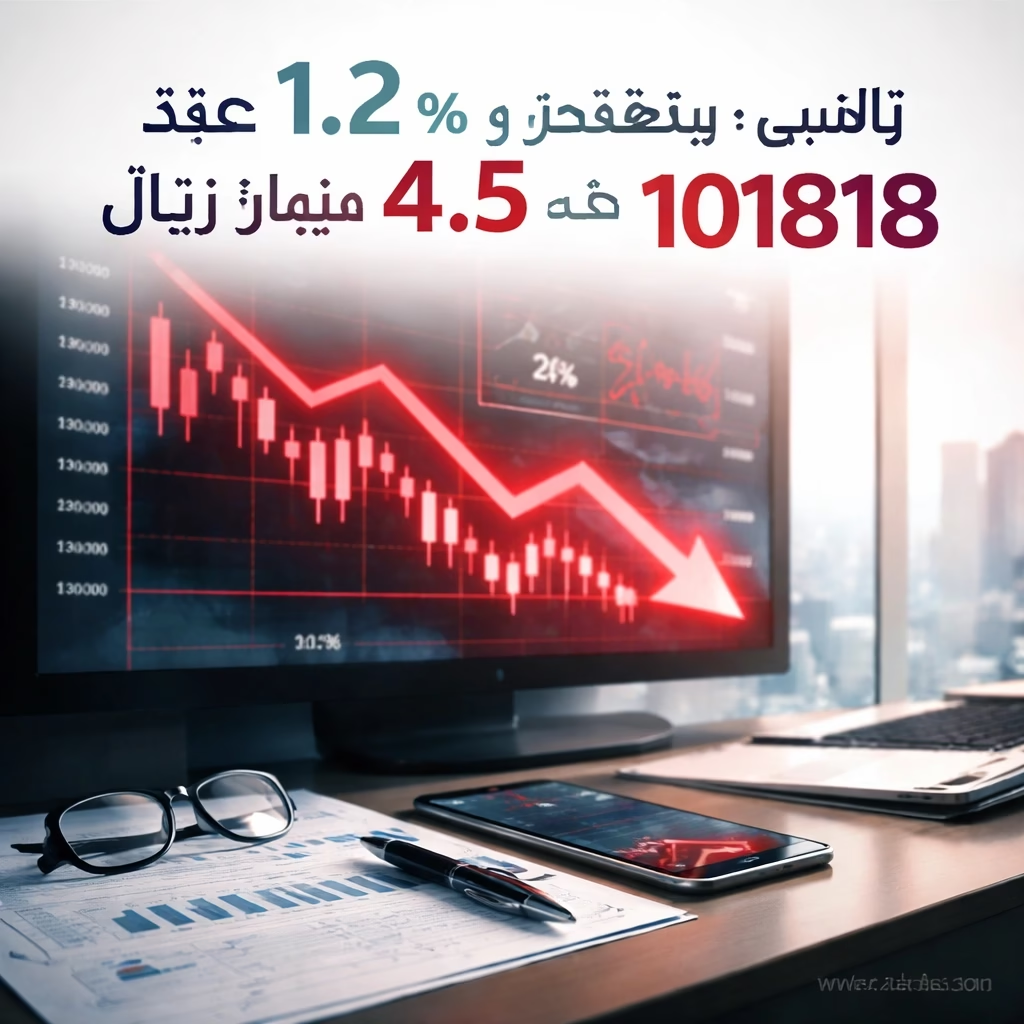
The Tadawul All Share Index (TASI), Saudi Arabia's primary stock market benchmark, experienced a notable decline in its recent trading session, shedding 1.2% of its value. The index closed at 10,818 points, a significant movement that caught the attention of market watchers. This downturn was accompanied by substantial trading activity, with the total value of shares exchanged reaching 4.5 billion Saudi Riyals.
Background: Understanding the Saudi Exchange Landscape
The Tadawul All Share Index (TASI) stands as the principal barometer for the health and performance of the Saudi stock market, officially known as the Saudi Exchange. Established in 1984, the Saudi Exchange has grown to become the largest stock market in the Middle East and North Africa (MENA) region by market capitalization. It lists a diverse array of companies spanning various sectors, including banking, petrochemicals, telecommunications, real estate, and retail.
Evolution of the Saudi Exchange
For decades, the Saudi stock market operated primarily as a closed market, with limited access for foreign investors. However, in recent years, particularly under the ambitious Vision 2030 economic diversification plan, the Kingdom has made concerted efforts to open its markets to global capital. These reforms have included allowing qualified foreign investors (QFIs) direct access to the market, enhancing market infrastructure, and aligning regulatory frameworks with international best practices. This liberalization has significantly increased the market's liquidity and its integration with global financial systems, making TASI's movements increasingly relevant to international investors.
TASI’s Role as an Economic Indicator
TASI's performance is not merely a reflection of corporate profitability; it is also a critical indicator of broader economic sentiment within Saudi Arabia. As the Kingdom strives to diversify its economy away from oil dependence, the non-oil private sector plays an increasingly vital role. The performance of companies listed on the Saudi Exchange, particularly those in nascent and growth sectors, offers insights into the success of these diversification efforts. Fluctuations in TASI can therefore signal shifts in investor confidence regarding the pace and direction of economic reforms and growth initiatives.
Historical Context and Recent Trends
In recent years, TASI has experienced periods of robust growth, fueled by rising oil prices, strong corporate earnings, and optimism surrounding Vision 2030 projects. However, like all global markets, it remains susceptible to external shocks, including geopolitical developments, fluctuations in global commodity prices, and shifts in international monetary policy. The index has navigated through various cycles, demonstrating both resilience and vulnerability to domestic and international pressures. Understanding these historical trends provides crucial context for interpreting current market movements and anticipating future trajectories.
More Read

Key Developments: Analyzing the Recent Decline
The recent trading session saw TASI register a 1.2% drop, closing at 10,818 points. This movement represents more than a minor fluctuation; it signifies a retreat from recent levels and a potential shift in market sentiment. The index's descent below certain psychological or technical support levels can often trigger further selling pressure as investors reassess their positions.
Magnitude of the Decline and Trading Volume
The 1.2% decline, while not catastrophic, is significant enough to warrant attention, especially when considering the substantial trading volume that accompanied it. A total of 4.5 billion Saudi Riyals worth of shares changed hands during the session. High trading volumes during a downturn can be interpreted in several ways. On one hand, it could indicate strong conviction among sellers, suggesting that a broad segment of the market is offloading assets. On the other hand, it might also reflect significant buying interest at lower price points, though the net effect in this instance was a downward push. Analyzing this volume against historical averages would provide deeper insights into whether this was an exceptionally active day or simply part of a larger trend.
Sectoral Performance and Leading Laggards
While specific sectoral data for this particular decline was not provided in the topic, historical patterns suggest that certain sectors are more sensitive to market-wide corrections. Typically, sectors such as petrochemicals, which are highly sensitive to global oil prices and industrial demand, or banking, which is influenced by interest rate expectations and economic growth forecasts, often lead market movements. Similarly, real estate and construction companies can be impacted by shifts in investor confidence and government spending plans. A broad-based decline across multiple sectors indicates widespread investor caution rather than an isolated issue within a single industry. Conversely, if the decline was concentrated, it might point to specific challenges within a particular segment of the economy.
More Read

Potential Catalysts for the Downturn
Several factors could contribute to such a market movement. Globally, concerns over persistent inflation, the trajectory of interest rate hikes by major central banks, and geopolitical tensions can weigh heavily on investor sentiment. Domestically, specific corporate earnings reports, regulatory announcements, or shifts in oil price outlook can trigger a reassessment of valuations. For instance, if recent economic data suggested a slowdown in non-oil growth or if oil prices experienced a sharp drop, investors might become more risk-averse. The interplay of these various local and international dynamics often creates a complex environment that influences daily market performance.
Impact: Who is Affected by TASI’s Movement?
A decline in TASI, especially one accompanied by significant trading volume, has ripple effects across various stakeholders within the Saudi economy and beyond. Its immediate and long-term consequences are felt by individual investors, corporations, and the broader economic landscape.
Impact on Investors
For retail investors, a decline means a direct reduction in the value of their equity portfolios. Those who invest in TASI-tracking funds or hold a diversified portfolio of Saudi stocks will see their net worth decrease. This can lead to anxiety and, in some cases, panic selling, further exacerbating market declines. Institutional investors, including pension funds, sovereign wealth funds, and asset managers, also face similar challenges, albeit on a larger scale. Their performance metrics are directly tied to market movements, and a downturn can impact their ability to meet financial obligations or attract new capital. Foreign investors, who have increasingly gained access to the Saudi market, will also be closely monitoring TASI's performance, as it influences their overall emerging market allocations and perceptions of Saudi Arabia's investment climate.
Impact on Corporations and Economic Sentiment
Companies listed on the Saudi Exchange experience a direct impact on their market capitalization. A lower share price can make it more challenging and expensive for companies to raise capital through equity offerings, potentially hindering expansion plans or debt refinancing efforts. Moreover, a declining market can dampen overall business confidence, leading to reduced investment, hiring freezes, or even layoffs in some sectors. This can create a negative feedback loop where declining market sentiment translates into real economic slowdowns, affecting consumer spending and broader economic activity. The perceived health of the stock market often acts as a leading indicator for the general economic outlook, influencing both domestic and international perceptions of the Kingdom's economic stability and growth prospects.
Broader Economic and Strategic Implications
From a macroeconomic perspective, a sustained downturn in TASI could complicate Saudi Arabia's efforts under Vision 2030. Attracting foreign direct investment (FDI) and fostering a vibrant private sector are key pillars of the diversification strategy. A volatile or declining stock market can make the Kingdom less attractive to international capital, potentially slowing down the pace of economic transformation. Furthermore, the Saudi government itself holds significant stakes in many listed companies through entities like the Public Investment Fund (PIF). Fluctuations in TASI therefore directly impact the value of these strategic holdings, influencing the government's financial capacity for large-scale projects and investments.
More Read

What Next: Anticipating Future Market Movements
Predicting the future trajectory of TASI involves a careful analysis of various interconnected factors, ranging from global economic trends to domestic policy decisions. Market participants and analysts will be keenly watching for signals that could indicate either a recovery or further declines.
Analyst Outlook and Short-Term Volatility
Many analysts anticipate continued short-term volatility in the Saudi market, reflecting the ongoing uncertainties in the global economy. The immediate focus will be on whether TASI can find strong support levels to prevent further significant drops. Technical analysis will play a crucial role, with traders identifying key resistance and support points. From a fundamental perspective, analysts will be scrutinizing upcoming corporate earnings reports to gauge the health of individual companies and sectors. Any signs of robust performance or unexpected weaknesses could sway market sentiment significantly.
Global Economic Headwinds and Opportunities
The price of oil remains a pivotal factor for the Saudi economy and, by extension, TASI. Fluctuations in global oil demand and supply, influenced by geopolitical events and economic growth projections, will continue to impact the Kingdom's fiscal health and investor confidence. Beyond oil, global inflation rates and the monetary policy decisions of central banks like the U.S. Federal Reserve will have a profound effect. Higher interest rates globally can make equity investments less attractive compared to fixed-income assets, potentially drawing capital away from emerging markets. Conversely, a stabilization of global inflation and a more dovish stance from central banks could provide a tailwind for equity markets.
Domestic Policy and Vision 2030 Momentum
Domestically, the pace and success of Vision 2030 initiatives will be critical. Continued government spending on mega-projects, reforms aimed at enhancing the business environment, and efforts to attract foreign investment are all positive catalysts for TASI. Any new policy announcements, particularly those related to market liberalization, privatization programs, or incentives for specific industries, could inject renewed optimism into the market. Investors will be looking for concrete progress on diversification efforts, as these are fundamental to the long-term growth story of the Saudi economy. The government's commitment to creating a vibrant, diversified economy remains a cornerstone for sustained market performance.
Upcoming Economic Data and Earnings Seasons
The release of key economic indicators, such as GDP growth figures, inflation rates, and employment data, will provide further clarity on the health of the Saudi economy. Similarly, the upcoming corporate earnings seasons will offer insights into the profitability and future outlook of listed companies. Strong earnings results could help to stabilize the market and rebuild investor confidence, while disappointing figures might lead to further re-evaluations. These data points collectively form the basis upon which investors make informed decisions, shaping the immediate and medium-term direction of the Tadawul All Share Index.