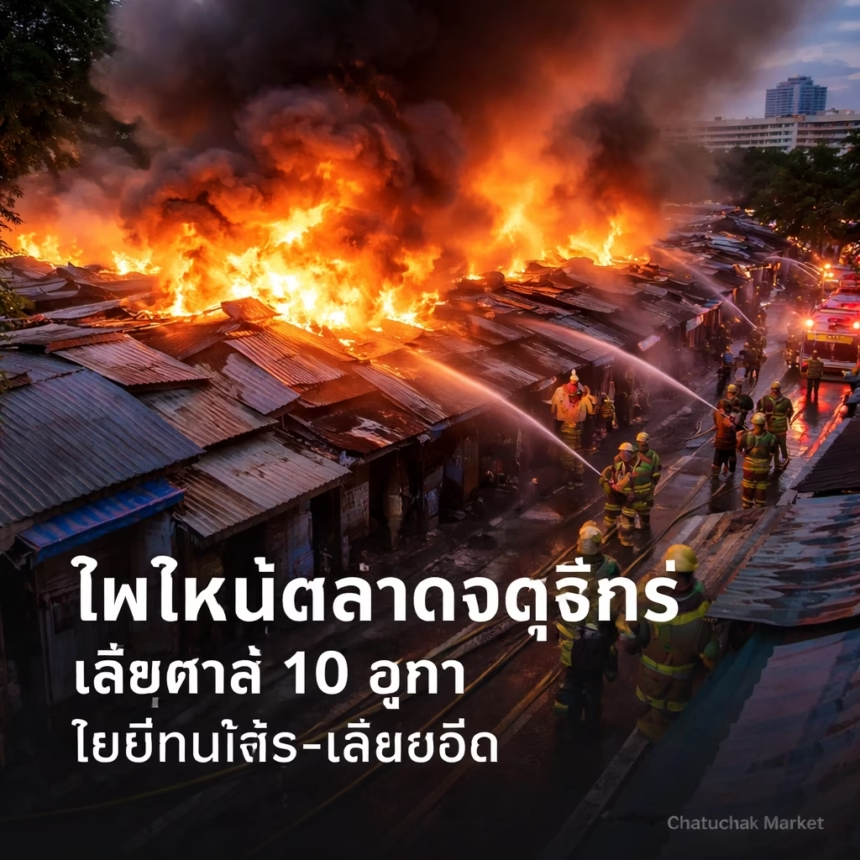
An early morning inferno ripped through a section of Bangkok's world-renowned Chatuchak Weekend Market on [Insert Date, e.g., Saturday, 15 June 2024], causing extensive damage to at least ten vendor stalls. The blaze, which erupted in the pre-dawn hours, sent plumes of smoke high above the bustling district, sparking alarm among residents and market officials. Despite the significant material destruction, authorities confirmed a miraculous outcome: zero injuries or fatalities were reported, thanks to the market being largely unoccupied at the time of the incident.
Background: A Global Shopping Icon Under Threat
Chatuchak Weekend Market, often affectionately known as JJ Market, stands as one of the largest and most famous markets globally, attracting over 200,000 visitors every weekend, including a substantial number of international tourists and local shoppers. Spanning more than 27 acres, it houses over 15,000 stalls selling an astonishing array of goods, from clothing and accessories to handicrafts, antiques, food, and pets. Its labyrinthine alleys and dense concentration of vendors contribute significantly to Bangkok's vibrant economy and cultural identity, serving as a primary source of income for thousands of small business owners and their families. The market’s sprawling layout, characterized by narrow pathways and tightly packed structures, presents unique challenges for emergency services in the event of a fire. Many stalls are constructed from a mix of wood, corrugated metal, and canvas, housing highly flammable goods like textiles, paper products, and plastics, which can accelerate the spread of fire rapidly.
The incident on [Insert Date] is not an isolated event in the market's history, nor is it unique among large, traditional markets in urban centers. Dense commercial areas, often featuring older electrical wiring systems and a high concentration of combustible materials, are inherently vulnerable to fire hazards. While specific major fires at Chatuchak have been relatively rare in recent decades, smaller incidents and near-misses have periodically prompted calls for improved safety standards. These concerns often revolve around the integrity of electrical installations, the availability and maintenance of fire extinguishers, and the clear demarcation of emergency access routes within the market's complex grid. The sheer volume of goods and the informal nature of many vendor setups can complicate compliance with stringent fire safety regulations, creating a continuous challenge for the Bangkok Metropolitan Administration (BMA), which oversees the market's operations.
Key Developments: The Blaze’s Trajectory and Response
The alarm was first raised around 4: 30 AM on [Insert Date] when market security personnel detected smoke emanating from Section 25, an area primarily known for its pet supplies and various small goods. Within minutes, the initial smoke quickly escalated into visible flames, consuming several adjacent stalls. Firefighting units from the Bangkok Fire and Rescue Department were immediately dispatched, with the first engines arriving on the scene approximately 15 minutes after the initial report. The narrow access roads and the early morning darkness posed immediate challenges for the responding teams, requiring careful navigation to bring equipment close enough to the epicenter of the blaze.
More Read

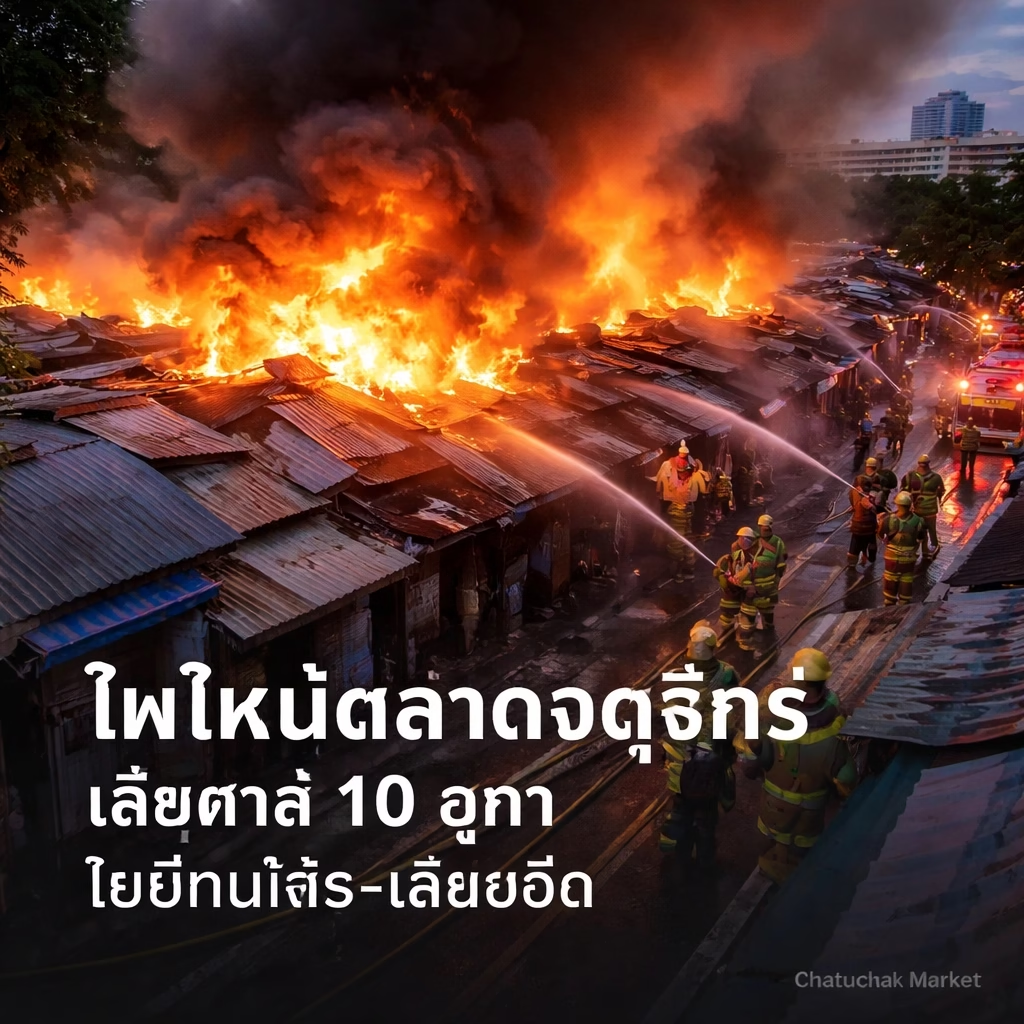
Over 20 fire engines and more than 100 firefighters were eventually mobilized to combat the escalating inferno. The fire's rapid spread was attributed to the highly combustible materials stored within the affected stalls, including pet food, plastic cages, and various textile products. Firefighters worked tirelessly for over an hour, employing water jets from multiple angles to contain the flames and prevent them from spreading to neighboring sections. By 6:00 AM, the fire was brought under control, though smoldering pockets continued to emit smoke for several hours, requiring extensive dampening down operations. Preliminary assessments indicated that ten stalls were completely destroyed, with several others sustaining smoke and water damage. Authorities quickly cordoned off the affected area to allow for forensic investigation and to ensure public safety. No casualties were reported among firefighters or market personnel during the arduous operation, a testament to the rapid response and coordinated efforts.
Initial investigations by forensic police and fire department experts have commenced, with a primary focus on identifying the precise origin and cause of the fire. Early speculation points towards an electrical short circuit as a potential culprit, a common cause in older commercial structures with extensive wiring. Investigators are meticulously examining the remains of the electrical systems within the destroyed stalls, along with any surveillance footage from the vicinity that could provide clues. Witness accounts from market security guards who were on duty at the time are also being collected to piece together a comprehensive timeline of the incident. The BMA has pledged full cooperation with the ongoing investigation, emphasizing the need for a thorough and transparent inquiry to prevent future occurrences.
Impact: Devastation for Small Businesses, Market-Wide Concerns
The immediate and most profound impact of the Chatuchak fire falls squarely on the shoulders of the ten vendors whose stalls were obliterated. These are typically small, independent businesses, often family-run, for whom their stall represents their sole source of income and livelihood. The destruction of their inventory, fixtures, and the physical structure of their shops equates to a complete loss of their business assets. Many vendors operate on thin margins and may not possess comprehensive business insurance, leaving them vulnerable to significant financial hardship. The estimated losses per stall, encompassing goods, equipment, and structural damage, could easily range into hundreds of thousands of Thai Baht, representing years of savings and hard work for these entrepreneurs. The emotional toll of witnessing their livelihoods reduced to ashes is immeasurable, adding to the urgency for swift support and recovery efforts.
More Read

Beyond the directly affected stalls, the incident casts a shadow over the entire Chatuchak market community. While the fire was contained to a relatively small section, the psychological impact on neighboring vendors and the broader market management is significant. Concerns about fire safety, electrical infrastructure, and emergency preparedness are once again at the forefront. The market's reputation as a safe and vibrant shopping destination, crucial for attracting both local and international visitors, could also be subtly affected. The BMA, as the market's administrator, faces the challenge of reassuring vendors and the public that robust safety measures are in place and continually reviewed. This incident serves as a stark reminder of the inherent risks associated with operating such a large and complex commercial environment, prompting a renewed focus on preventative strategies and rapid response protocols.
Furthermore, the temporary closure of the affected section, even if localized, can cause minor disruptions to the overall flow of the market. While the vast majority of Chatuchak remains operational, news of a fire can momentarily deter some visitors, especially tourists who prioritize safety and convenience. The incident also highlights a broader vulnerability within Bangkok's urban landscape, where older commercial zones and dense residential areas often grapple with outdated infrastructure and the challenges of enforcing modern safety standards. The economic ripple effect, though contained for now, underscores the fragility of small enterprises in the face of unforeseen disasters and the critical role of robust support systems.
What Next: Path to Recovery and Reinforcing Safety Standards
The immediate priority following the containment of the fire is the comprehensive forensic investigation, which is expected to conclude within several weeks. The findings will be crucial in determining the exact cause of the blaze and informing future preventative measures. Concurrently, the Bangkok Metropolitan Administration has announced plans to provide immediate assistance to the affected vendors. This support is expected to include temporary vending spaces in other sections of the market, low-interest loans to help rebuild inventory, and potential financial aid packages to cover initial reconstruction costs. The BMA has also initiated a rapid assessment of the structural integrity of the damaged section to determine the scope of rebuilding required and the safest approach to restoration. The goal is to facilitate the quickest possible return to business for the displaced vendors, recognizing the urgency of their economic situation.
In the medium to long term, this incident is anticipated to trigger a thorough review and potential overhaul of fire safety protocols across the entire Chatuchak Weekend Market. Discussions are expected to focus on several key areas: upgrading the market's electrical infrastructure, particularly in older sections, to meet modern safety standards; enhancing the coverage and accessibility of fire suppression systems, such as additional hydrants and potentially even sprinkler systems in high-risk areas; and improving the clarity and maintenance of emergency evacuation routes. There will also likely be an emphasis on mandatory fire safety training for all vendors and market staff, including the proper use of fire extinguishers and emergency procedures. The BMA may also explore stricter enforcement of building codes and material usage within stalls to minimize the spread of future fires.
The full reopening of the damaged section will depend on the investigation's outcome and the pace of reconstruction. While authorities aim for a swift recovery, safety will remain the paramount concern. This incident, while devastating for those directly affected, presents an opportunity for Chatuchak Market to emerge stronger and safer, reinforcing its commitment to the well-being of its vendors and millions of visitors. The collaborative efforts of the BMA, local authorities, and the market community will be essential in navigating the path to full recovery and ensuring that Chatuchak continues its legacy as a cherished global landmark.