"""
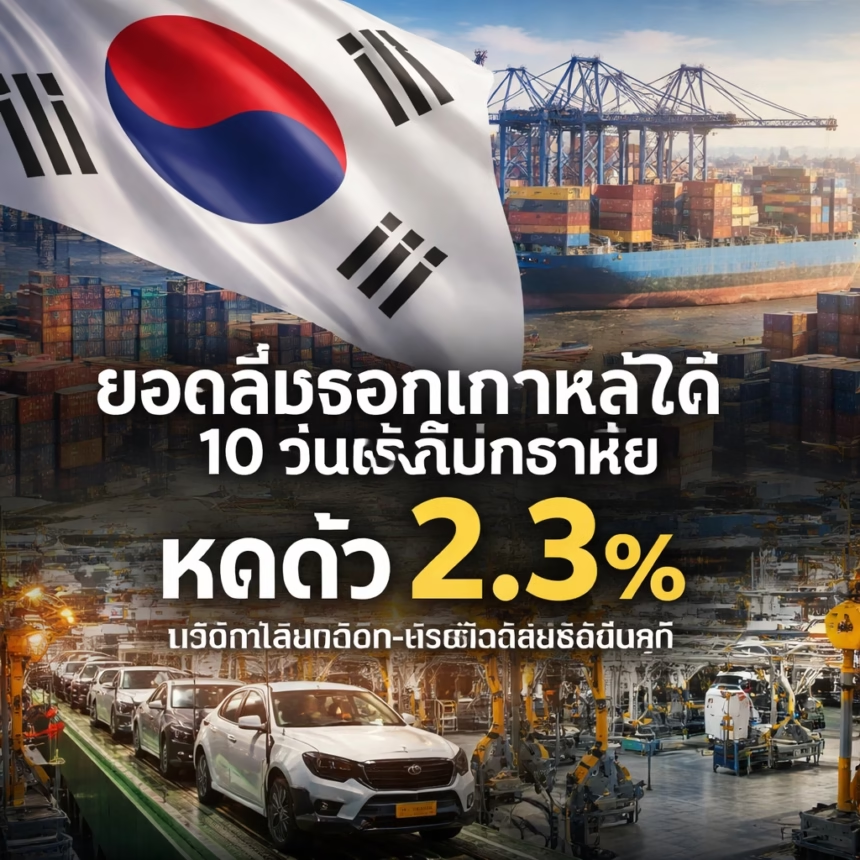
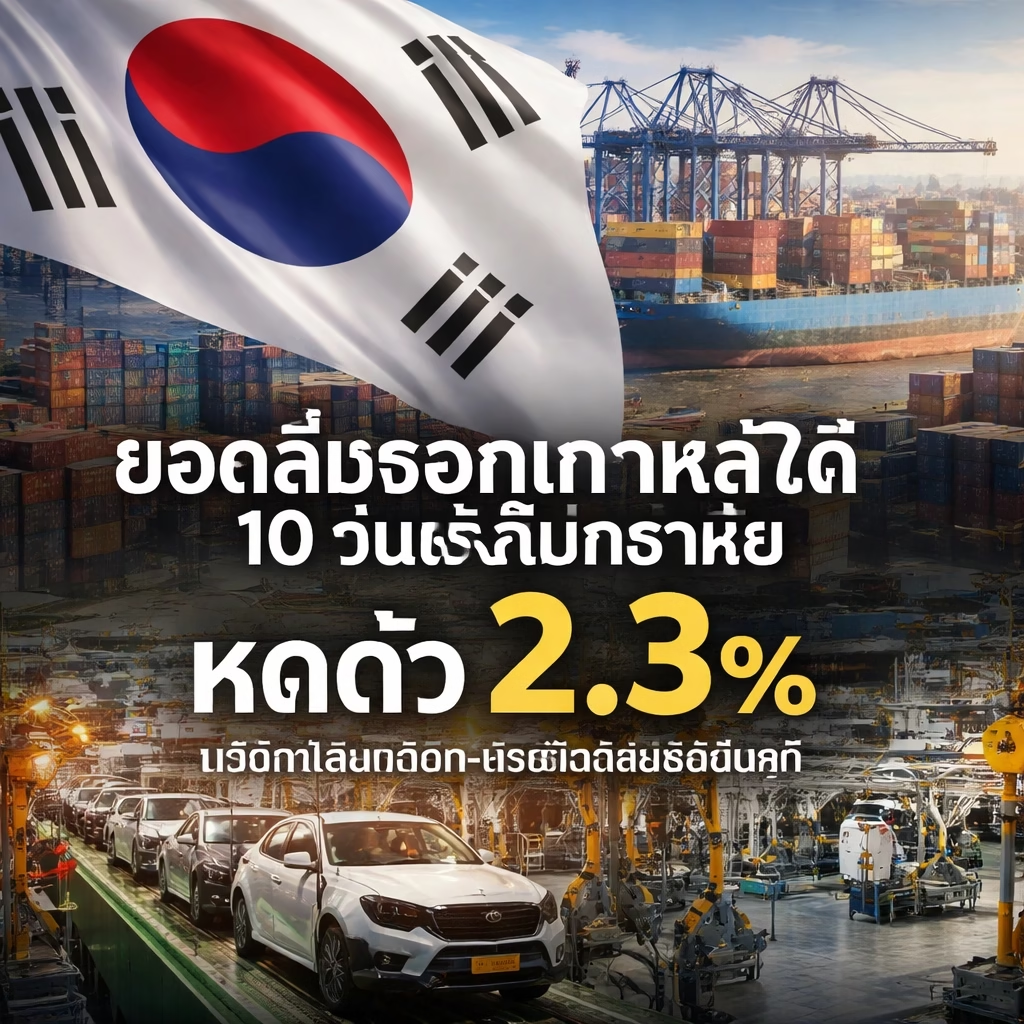
South Korea's Exports Drop 2.3% in First 10 Days of January
South Korea's Exports Plunge 2.3% in January—Auto and Heavy Industry Struggles
Seoul, South Korea – South Korea's exports have declined 2.3% in the first 10 days of January compared to the same period last year, largely due to weak demand in the automotive and heavy industry sectors. This marks the first contraction in exports in over a year, raising concerns about the country's economic growth.
Trade officials attribute the decline to sluggish global demand, particularly in key export markets such as China and the United States. The drop in exports comes amid rising geopolitical tensions and economic uncertainty worldwide.
Background
South Korea, a major exporter of semiconductors, automobiles, and ships, has long relied on its trade-oriented economy. The country’s exports have been a key driver of its economic growth, accounting for nearly 30% of its GDP. However, recent global economic headwinds have begun to impact South Korea’s trade performance.
More Read

In 2023, South Korea’s exports showed signs of recovery, growing 4.1% year-over-year. This growth was driven by strong demand for semiconductors and petrochemicals. However, the recent decline in exports suggests that the recovery may be slowing down.
Key Developments
The decline in exports is primarily attributed to a 4.1% drop in shipments of automobiles and a 10.1% decrease in heavy industry goods, including ships and steel. Semiconductor exports, a key export category for South Korea, also saw a slight decline of 1.2%. In contrast, exports of petrochemicals and display panels increased by 11.4% and 2.3%, respectively.
Trade officials noted that the decline was partly due to fewer working days in January compared to the same period last year. The Lunar New Year holiday, which falls in late January this year, also impacted trade volumes.

Impact
The decline in exports is expected to weigh on South Korea’s economic growth in the first quarter of 2024. Analysts predict that the country’s GDP growth may slow down to around 2.0% this year, down from the previous estimate of 2.4%. This could have significant implications for the country’s job market and consumer confidence.
The automotive and heavy industry sectors, which are major contributors to South Korea’s exports, are likely to face challenges in the coming months. Companies in these sectors may need to adjust their production plans and explore new markets to offset the decline in demand.
What Next
The South Korean government is expected to announce measures to support the export sector in the coming weeks. These may include tax incentives for exporters, increased funding for research and development, and efforts to diversify export markets. Trade officials are also monitoring global economic trends to assess the potential impact on South Korea’s trade performance.
In the longer term, South Korea may need to focus on innovation and diversification to maintain its competitiveness in the global market. This could involve investing in emerging technologies such as artificial intelligence, renewable energy, and biotechnology, which have the potential to drive future growth.