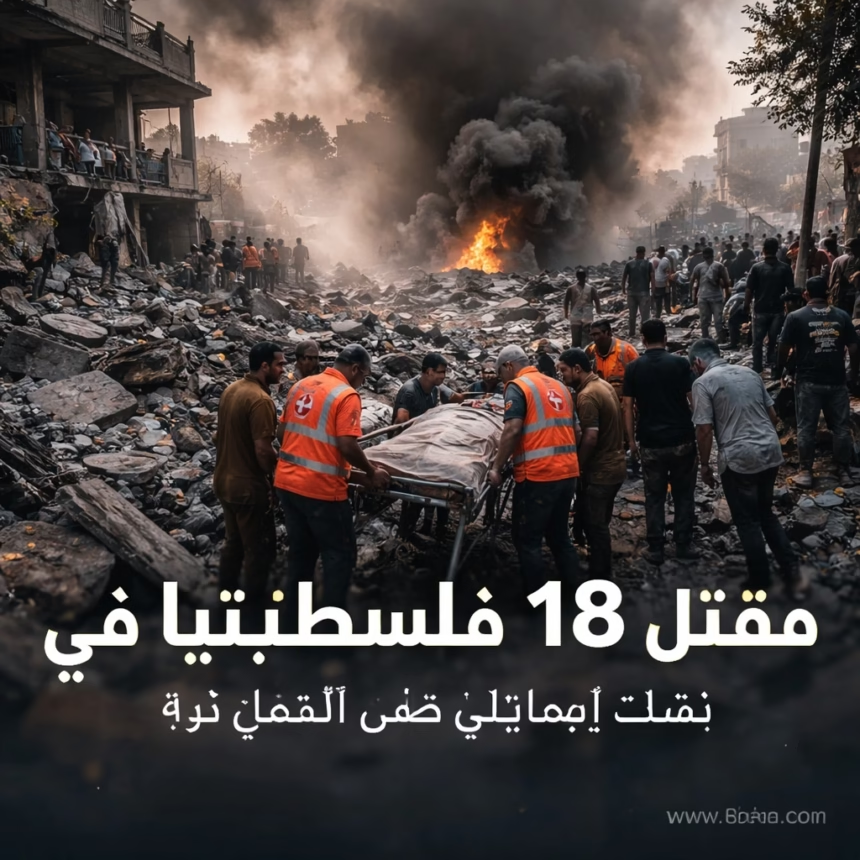
Gaza Under Fire: Overnight Strikes Claim 18 Lives, Escalation Feared
Gaza Under Fire: Overnight Strikes Claim 18 Lives, Escalation Feared
The Gaza Strip witnessed a devastating escalation of violence in recent days, as Israeli airstrikes and shelling operations resulted in the deaths of at least 18 Palestinians. The intense bombardment, primarily occurring overnight, targeted various locations across the densely populated enclave, prompting widespread alarm and international calls for de-escalation.
Background: A Cycle of Conflict and Siege
The Gaza Strip, a narrow coastal territory home to over two million Palestinians, has been under an Israeli and Egyptian blockade since 2007, following Hamas’s takeover. This blockade has severely crippled its economy and restricted the movement of goods and people, contributing to a persistent humanitarian crisis. The region is a frequent flashpoint in the broader Israeli-Palestinian conflict, characterized by cycles of violence involving Palestinian militant factions, primarily Hamas and Islamic Jihad, launching rockets into Israel, and subsequent Israeli military responses.
Historical Tensions and Previous Escalations
Decades of conflict have shaped Gaza’s reality. Major Israeli military operations, such as “Cast Lead” (2008-2009), “Protective Edge” (2014), and “Guardian of the Walls” (2021), have resulted in significant casualties and widespread destruction within the Strip. These operations often follow periods of increased rocket fire from Gaza or specific Israeli security concerns. The underlying issues of occupation, blockade, and the struggle for Palestinian statehood fuel an ongoing environment of instability and resentment.

The Role of Militant Factions
Hamas, the de facto governing authority in Gaza, along with other groups like Palestinian Islamic Jihad (PIJ), maintain armed wings that regularly engage in confrontations with Israel. These groups cite the occupation and blockade as justifications for their actions, which include rocket attacks, cross-border infiltrations, and other forms of resistance. Israel, in turn, views these actions as acts of terrorism and responds with military force, targeting what it identifies as militant infrastructure, weapon depots, and command centers. The current escalation unfolds against this complex backdrop, where each action often triggers a counter-action, perpetuating the cycle.
Key Developments: A Night of Intense Bombardment
The latest wave of violence began with reports of targeted Israeli military operations across the Gaza Strip. According to initial reports, the Israeli military stated its actions were in response to ongoing security threats emanating from Gaza, including alleged rocket launches and attempts at border infiltration. The operations involved multiple airstrikes and artillery shelling, impacting both urban and rural areas.
Military Operations and Stated Objectives
Israeli defense forces confirmed conducting precision strikes against what they identified as militant targets. These targets reportedly included rocket manufacturing sites, military compounds belonging to Hamas and PIJ, and underground tunnel networks. The military asserted that its operations aimed to degrade the capabilities of these factions and deter further aggression against Israeli communities. Eyewitnesses in Gaza reported hearing numerous explosions throughout the night, with smoke plumes visible over several locations.
More Read

Civilian Casualties and Local Impact
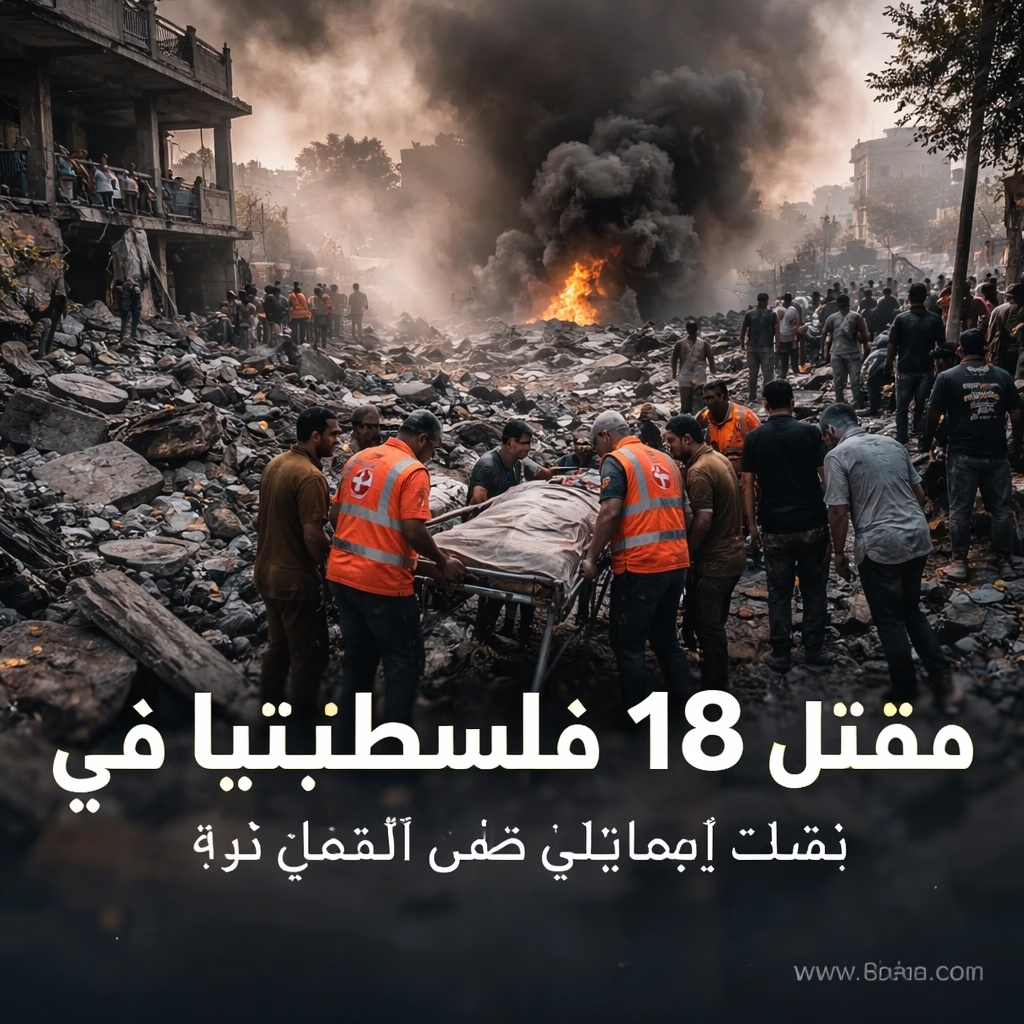
Tragically, the intense bombardment led to a significant loss of civilian life. Palestinian health officials confirmed the deaths of 18 individuals, including women and children, with dozens more injured. While the Israeli military maintained its efforts to minimize civilian casualties, the densely populated nature of Gaza often means that military strikes in residential areas carry a high risk for non-combatants. Homes were destroyed, and critical infrastructure sustained damage, adding to the already dire living conditions for many residents. Emergency services struggled to reach affected areas amidst ongoing strikes and the widespread destruction.
Palestinian Response
Following the initial Israeli strikes, Palestinian militant factions responded with barrages of rockets launched towards southern Israeli towns and cities. These rocket attacks triggered air raid sirens across Israeli communities, sending residents scrambling for shelters. While many rockets were intercepted by Israel’s Iron Dome defense system, some reportedly landed in open areas, causing property damage but no immediate reports of casualties. These retaliatory actions further fueled the cycle of violence, raising fears of a prolonged and more extensive confrontation.
Impact: A Growing Humanitarian Crisis
The recent escalation has exacerbated the already severe humanitarian situation in the Gaza Strip. The loss of life, injuries, and destruction of homes and infrastructure deepen the crisis for a population already struggling with poverty, unemployment, and limited access to essential services.
Human Toll and Displacement
The deaths of 18 Palestinians represent a profound human tragedy, leaving families bereaved and communities in shock. Beyond the fatalities, many more sustained injuries, some severe, placing immense strain on Gaza’s under-resourced healthcare system. Hospitals, already struggling with shortages of medicine and equipment due to the blockade, faced an influx of trauma cases. The destruction of residential buildings also led to internal displacement, with families forced to seek refuge with relatives or in temporary shelters, further disrupting their lives.
Infrastructure Damage and Essential Services
Reports indicate damage to residential buildings, roads, and other vital infrastructure. Power outages, a common occurrence in Gaza, were exacerbated in some areas, affecting access to electricity and clean water. The disruption of essential services complicates relief efforts and prolongs the suffering of the population. Schools and public facilities were temporarily closed, impacting education and daily life for thousands of children.
International Condemnation and Calls for Calm
The international community swiftly reacted to the escalating violence. The United Nations Secretary-General, along with several international bodies and human rights organizations, issued statements condemning the loss of civilian lives and calling for an immediate cessation of hostilities. Many urged both sides to exercise restraint and adhere to international humanitarian law. Regional powers, including Egypt and Qatar, reportedly initiated diplomatic efforts to mediate a ceasefire and prevent the conflict from spiraling out of control.

What Next: Precarious Ceasefire and Uncertain Future
The immediate aftermath of such intense escalations often involves a period of precarious calm, typically brokered by international mediators. However, the underlying issues remain unresolved, leaving the door open for future confrontations.
Prospects for De-escalation and Mediation
Egypt, historically a key mediator between Israel and Palestinian factions, is expected to play a crucial role in negotiating a lasting ceasefire. Discussions often involve guarantees for a cessation of rocket fire from Gaza in exchange for potential easing of the blockade or other concessions from Israel. The success of these efforts hinges on the willingness of all parties to adhere to agreed-upon terms, which has proven challenging in the past. The United Nations and other international actors will likely continue to monitor the situation and push for a diplomatic resolution.
Humanitarian Response and Reconstruction
In the short term, humanitarian organizations will focus on providing immediate aid to those affected, including medical supplies, food, and temporary shelter for displaced families. Longer-term efforts will involve assessing the damage and initiating reconstruction projects, a process often hampered by restrictions on building materials entering Gaza due to the blockade. International donors will be called upon to contribute to these recovery efforts.
Political Ramifications and Future Outlook
The recent violence will undoubtedly have political ramifications for both Israeli and Palestinian leaderships. For Israel, the operations aim to demonstrate resolve against security threats, while for Palestinian factions, the response seeks to assert resistance against occupation. However, the human cost on both sides, particularly in Gaza, fuels ongoing grievances and complicates prospects for a lasting peace. Without a comprehensive political resolution addressing the root causes of the conflict, the cycle of violence is likely to persist, leaving the future of the Gaza Strip and its residents perpetually uncertain.