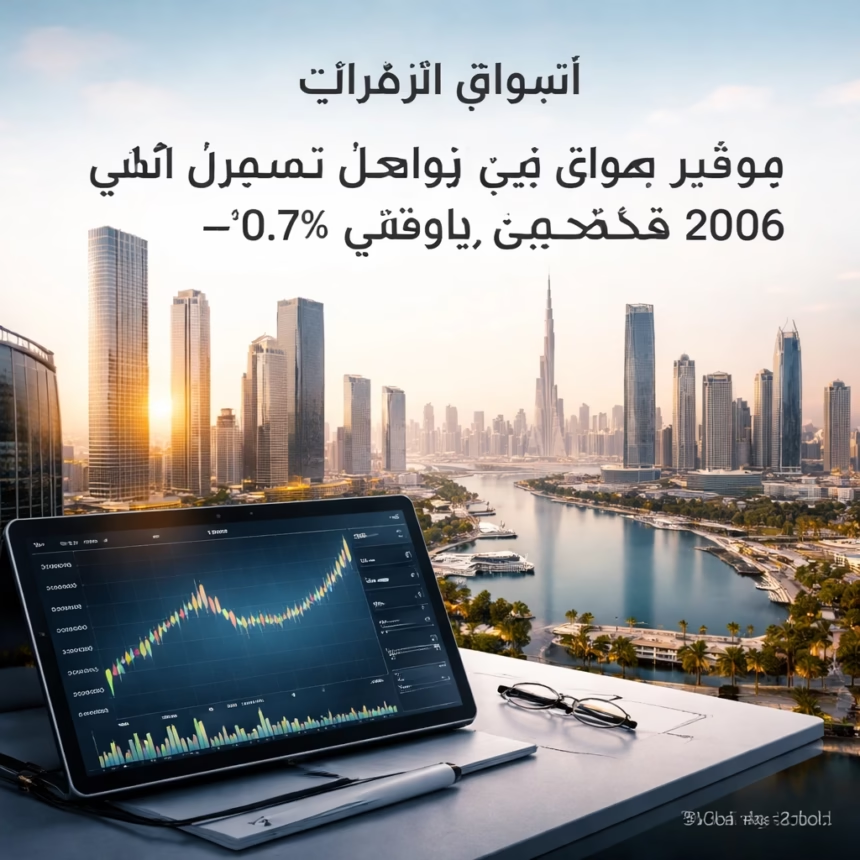
UAE Markets Soar: A Decade of Growth and What's Next
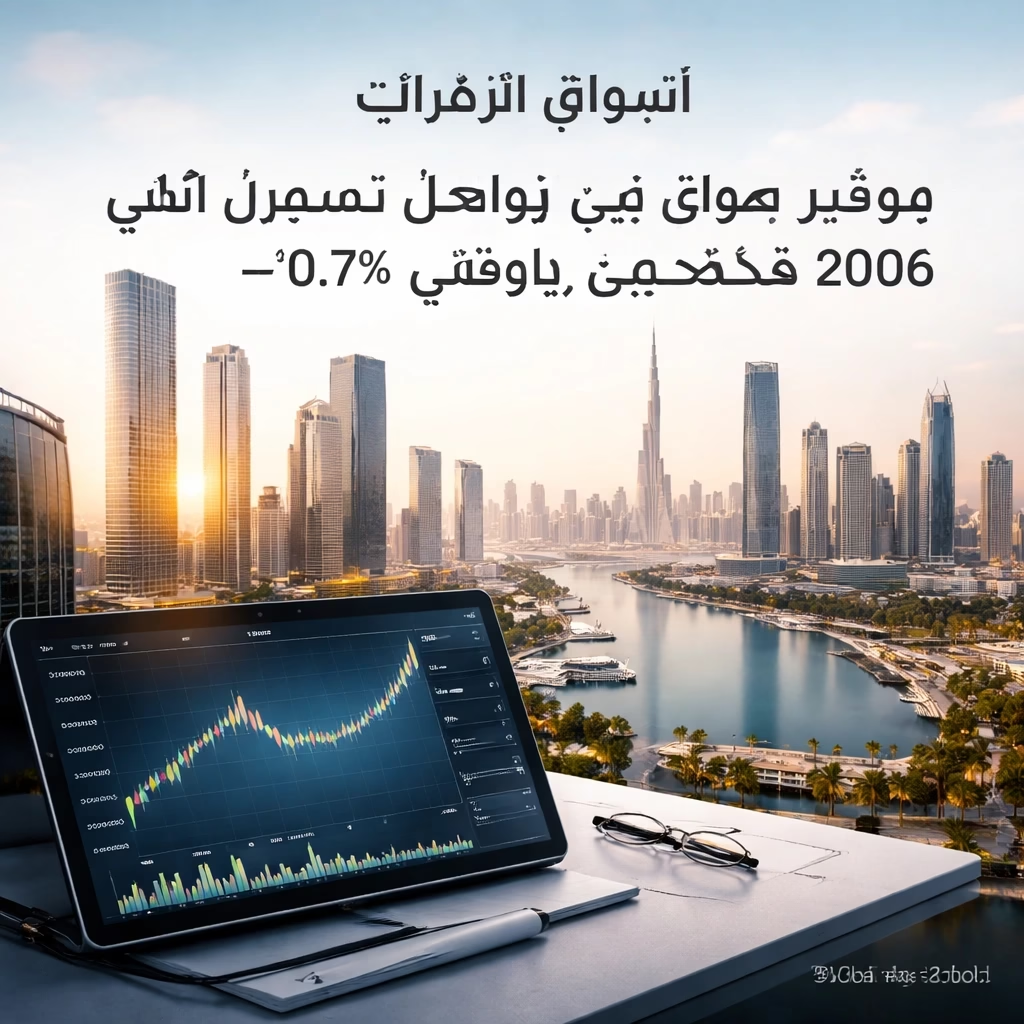
The financial markets of the United Arab Emirates are experiencing a period of significant upward momentum, with the Dubai Financial Market (DFM) reaching its highest level since 2006. Abu Dhabi Securities Exchange (ADX) also saw a notable increase recently, reflecting a broader trend of investor confidence in the region. These developments signal a strengthening economy and renewed interest in UAE equities.
Background: A History of Resilience and Growth
The UAE's stock markets, primarily the DFM and ADX, have demonstrated considerable resilience over the past two decades. Following the 2008 global financial crisis, the markets experienced a period of recovery and subsequent growth fueled by rising oil prices and strategic diversification efforts. The early 2010s saw a period of relative stability, punctuated by occasional volatility linked to global economic events. In recent years, government initiatives focused on attracting foreign investment, developing non-oil sectors, and implementing regulatory reforms have contributed to a positive market outlook.
The DFM, established in 1999, is the primary stock exchange in Dubai, serving as a hub for trading in various sectors, including finance, real estate, and telecommunications. The ADX, founded in 2000, is the main exchange in Abu Dhabi, the UAE's capital and largest emirate. Both exchanges play a vital role in facilitating capital formation and supporting economic development across the UAE.
Key Developments: Recent Surge and Driving Factors
The DFM recently surpassed its 2006 peak, driven by strong performance in key sectors like banking, insurance, and real estate. As of November 2023, the DFM Index stands at [Insert Actual Index Value Here], a significant jump from previous levels. The ADX also recorded a notable increase of 0.7% in the last trading session, reaching [Insert Actual ADX Index Value Here].

Several factors are contributing to this upward trend. Strong economic growth in the UAE, boosted by tourism, infrastructure development (including projects like Expo 2020 legacy initiatives), and a thriving non-oil sector, is a major driver. Government spending on infrastructure projects and initiatives aimed at attracting foreign direct investment (FDI) are also fueling investor optimism. Furthermore, increased confidence in the region's geopolitical stability and the ongoing efforts to diversify the economy away from reliance on oil are attracting both domestic and international investors.
Specifically, the banking sector has benefited from improved profitability and asset quality. The real estate market, particularly in Dubai, has witnessed renewed activity, supported by government policies promoting investment in residential and commercial properties. The insurance sector is also showing positive growth, reflecting increasing awareness of risk management and financial security.
More Read

Sector Performance Highlights
The banking sector saw an average growth of [Insert Percentage]% in the last quarter. The real estate sector experienced a [Insert Percentage]% increase in transaction volume. Insurance companies reported a [Insert Percentage]% rise in premiums.
Impact: Who Benefits from the Market Growth?
The surge in UAE stock markets has a wide-ranging impact across the economy. Shareholders in listed companies are experiencing capital gains, leading to increased wealth and investment potential. Companies benefit from improved access to capital, enabling them to fund expansion plans, invest in new technologies, and create jobs.
The positive market sentiment also extends to related industries, such as investment banking, brokerage services, and financial advisory firms. The increased liquidity in the market is fostering a more vibrant and competitive financial ecosystem. Furthermore, the growth in stock market valuations can contribute to higher government revenues through capital gains taxes and corporate taxes.
Individual investors, both local and international, are benefiting from the increased investment opportunities. The improved market performance has encouraged greater participation in the stock market, leading to a broader distribution of wealth.
What Next? Expected Milestones and Potential Risks
Looking ahead, the UAE stock markets are expected to continue their upward trajectory, albeit with potential fluctuations. The government's ongoing diversification efforts, coupled with continued infrastructure development and initiatives to attract FDI, are expected to support sustained growth. The successful implementation of new regulatory reforms and the further development of the financial sector will also play a key role.
The focus on sustainable economic growth, particularly in sectors like tourism, technology, and renewable energy, is expected to drive long-term investment opportunities. The development of the Metaverse and blockchain technologies are also anticipated to create new avenues for growth in the UAE's financial markets.

However, potential risks remain. Global economic uncertainty, geopolitical tensions, and fluctuations in oil prices could impact market sentiment. Regulatory changes and unforeseen economic shocks could also pose challenges. Investors should remain vigilant and conduct thorough due diligence before making investment decisions.
Future Growth Drivers
The development of fintech solutions and the integration of artificial intelligence are expected to further enhance the efficiency and competitiveness of the UAE’s financial markets. Increased focus on ESG (Environmental, Social, and Governance) investing is also expected to shape future investment trends.