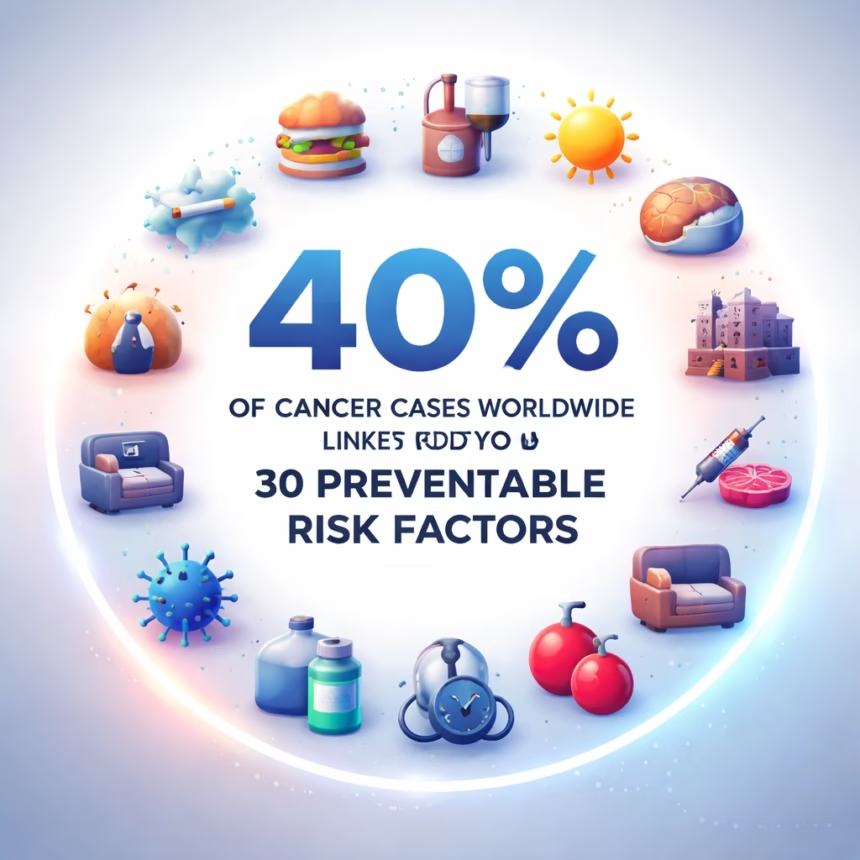
The World Health Organization (WHO) has released a landmark report, shedding new light on the global cancer burden. This comprehensive analysis reveals that a staggering 40% of all cancer cases diagnosed worldwide are linked to 30 identifiable and largely preventable risk factors. Published recently from its headquarters in Geneva, Switzerland, this critical assessment underscores an urgent call for intensified public health interventions across all nations.
Background: A Shifting Understanding of Cancer Prevention
Cancer remains one of the leading causes of death globally, responsible for millions of fatalities annually and placing immense strain on healthcare systems. For decades, public health efforts have focused on identifying and mitigating its complex risks. Early understanding primarily centered on prominent factors such as tobacco use, excessive alcohol consumption, and certain occupational exposures, leading to targeted campaigns against these well-established carcinogens.
The International Agency for Research on Cancer (IARC), WHO's specialized cancer agency based in Lyon, France, has been instrumental in classifying environmental and lifestyle carcinogens since its establishment in 1965. Through its rigorous monographs, IARC has systematically evaluated thousands of agents, providing a scientific foundation for prevention strategies. Over time, research expanded significantly, incorporating dietary patterns, physical inactivity, obesity, various infectious agents, and environmental pollutants into the growing list of recognized risk factors.
This latest report builds upon decades of extensive epidemiological studies, surveillance programs, and meta-analyses. It signifies a crucial evolution in the scientific community's approach, moving beyond singular risk factors to a more holistic and quantified understanding of the preventable causes of cancer. The shift reflects a broader global health trend, where non-communicable diseases (NCDs), including cancer, have emerged as paramount challenges, demanding robust primary prevention strategies.
Key Developments: Unveiling the 30 Preventable Risks
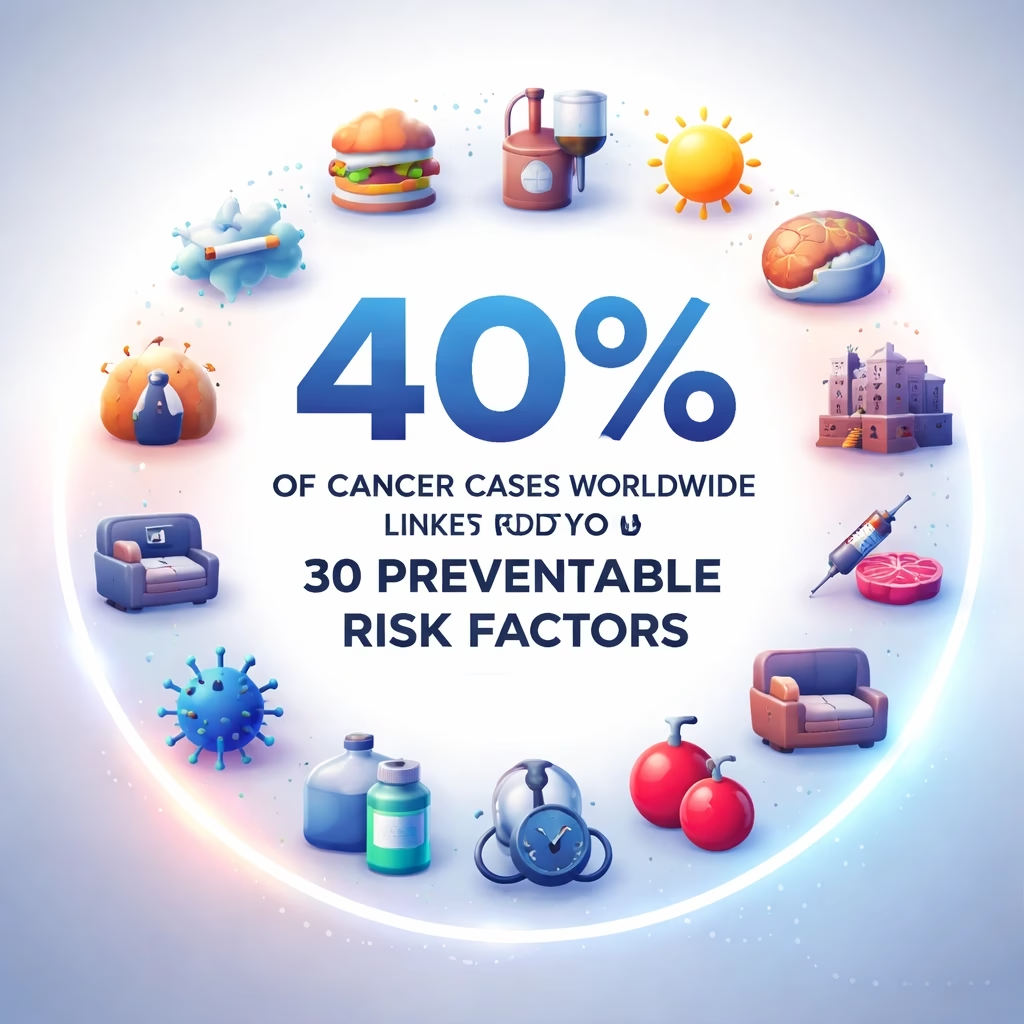
The most striking revelation from the WHO report is the precise quantification: 40% of global cancer cases are attributable to a specific set of 30 modifiable risks. This figure represents a more comprehensive and updated estimate than previous assessments, reflecting significant advancements in data collection, analytical models, and a deeper understanding of multifactorial disease causation.
More Read

Expanding the List of Risk Factors
While traditional culprits like smoking, heavy alcohol consumption, and exposure to certain industrial chemicals remain prominent, the report places increased emphasis on factors whose full impact has become clearer recently. These include:
Obesity: Now recognized as a major contributor to at least 13 types of cancer, including colorectal, breast (postmenopausal), endometrial, kidney, and esophageal adenocarcinomas. Its role in inflammation and hormone dysregulation is increasingly understood.
Physical Inactivity: Directly linked to an increased risk for several cancers, including colon, breast, and endometrial cancers, by influencing hormone levels, immune system function, and energy balance.
Unhealthy Diets: High consumption of processed meats, low intake of fruits, vegetables, and fiber, and excessive sugar intake are implicated in various gastrointestinal cancers and others.
Infections: Preventable infections continue to pose a significant threat. Human papillomavirus (HPV) is the primary cause of cervical cancer, Hepatitis B and C viruses are major drivers of liver cancer, and *Helicobacter pylori* is a key factor in stomach cancer. These infections account for a substantial proportion of preventable cancers, particularly in lower-income settings.
Environmental Pollution: Exposure to fine particulate matter in outdoor and household air pollution, certain pesticides, and industrial emissions are increasingly linked to lung, bladder, and other cancers.
Ultraviolet (UV) Radiation: Primarily from sun exposure and artificial tanning devices, UV radiation remains a leading cause of skin cancers, including melanoma, basal cell carcinoma, and squamous cell carcinoma.
Methodological Advances
The report leverages a vast array of global health data, including national cancer registries, population-based surveys, and extensive meta-analyses of epidemiological studies. This robust evidence base allowed for a sophisticated attributable risk analysis, which estimates the proportion of disease incidence that can be prevented by eliminating specific risk factors. The report also highlights the synergistic effects of multiple risk factors, where combined exposures can amplify cancer risk significantly beyond the sum of individual risks.
More Read
Impact: A Global Opportunity for Health
The report's findings have profound implications for global public health, suggesting that millions of cancer diagnoses and deaths could be averted through targeted prevention efforts. This potential reduction offers a glimmer of hope for overstretched healthcare facilities and an opportunity to reallocate resources towards other pressing health needs.
Addressing Geographic and Socioeconomic Disparities
The burden of preventable cancers is not evenly distributed. Low- and middle-income countries (LMICs) often bear a disproportionate share, facing a double burden of traditional risk factors like infections and emerging lifestyle risks associated with rapid urbanization and globalization. While smoking and obesity are prevalent globally, LMICs also contend with a higher incidence of cancers linked to infectious agents (e.g., HPV, Hepatitis B) due to limited vaccination programs and screening infrastructure.
Relieving Healthcare and Economic Burdens
Cancer treatment is notoriously costly, encompassing extensive diagnostics, surgery, chemotherapy, radiation, and long-term palliative care. This places immense strain on national healthcare budgets and can lead to catastrophic financial hardship for individuals and families. Preventing 40% of cases would significantly reduce this economic burden, freeing up vital resources that could be invested in strengthening primary healthcare, improving access to essential medicines, or addressing other public health challenges. Beyond the statistics, the impact translates to countless lives saved, improved quality of life, and reduced suffering for patients and their families worldwide.
What Next: Charting a Course for Prevention
The WHO's report is not merely an assessment; it is accompanied by a clear and urgent call to action for governments, health organizations, communities, and individuals worldwide. It provides an actionable roadmap to translate scientific understanding into tangible reductions in cancer incidence.
Policy Directives and Public Health Strategies
Governments are urged to review and update their national cancer control plans to integrate these prevention strategies more effectively. Key policy recommendations include:

Strengthening Tobacco Control: Implementing higher taxes on tobacco products, enforcing stricter advertising bans, and expanding smoke-free public spaces.
Promoting Healthy Diets and Physical Activity: Developing public education campaigns, regulating the marketing of unhealthy foods, improving food labeling, and creating accessible recreational facilities and safe environments for physical activity.
Expanding Vaccination Programs: Ensuring widespread and equitable access to vaccines for HPV and Hepatitis B, especially in LMICs, to protect against cervical and liver cancers.
Reducing Environmental and Occupational Exposure: Enacting and enforcing stricter regulations on air pollution, industrial emissions, pesticide use, and occupational hazards to minimize exposure to known carcinogens.
Early Detection and Screening: While prevention is paramount, the report also reinforces the critical importance of organized screening programs for early diagnosis of cancers where prevention failed or wasn't fully applicable.
Research and Global Collaboration
Continued research into novel risk factors, personalized prevention strategies, and the cost-effectiveness of various interventions will be crucial. Understanding the genetic predispositions and molecular pathways influenced by these preventable factors can lead to more targeted approaches.
The WHO emphasizes the critical need for global solidarity and shared learning to tackle this universal challenge. International collaboration is vital, particularly in supporting LMICs with resource and expertise transfer, enabling them to implement robust prevention programs. The ultimate goal is to translate this scientific consensus into a significant reduction in cancer incidence within the next decade, moving towards a future where preventable cancers are a rarity, not a tragic norm.