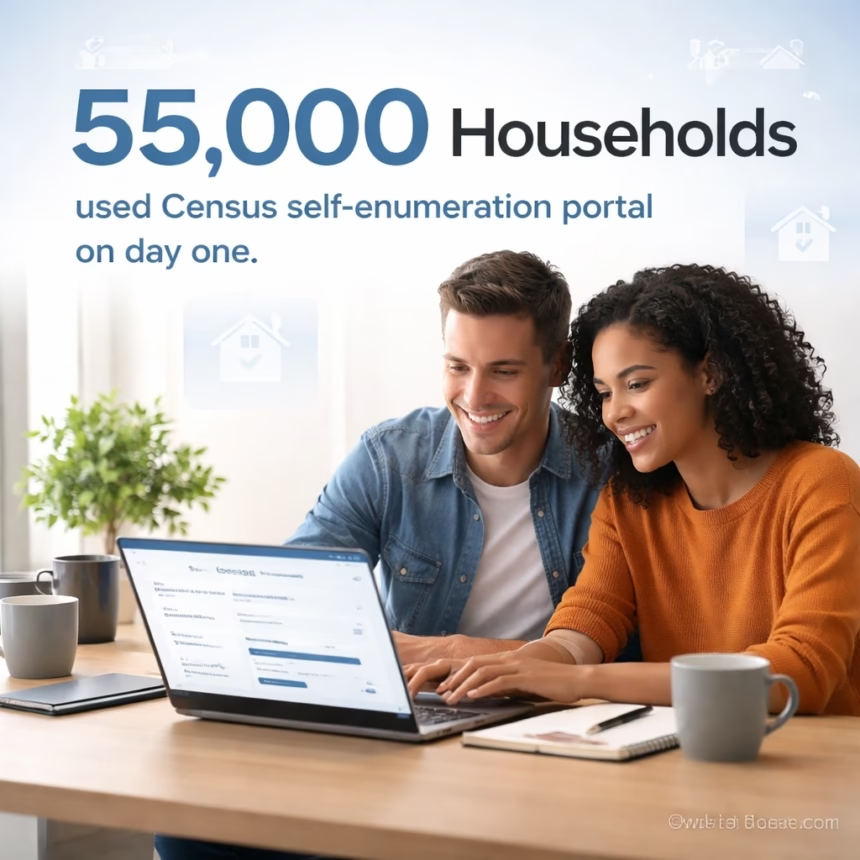
Digital Surge: Over 55,000 Homes Join Census Revolution on Day One!
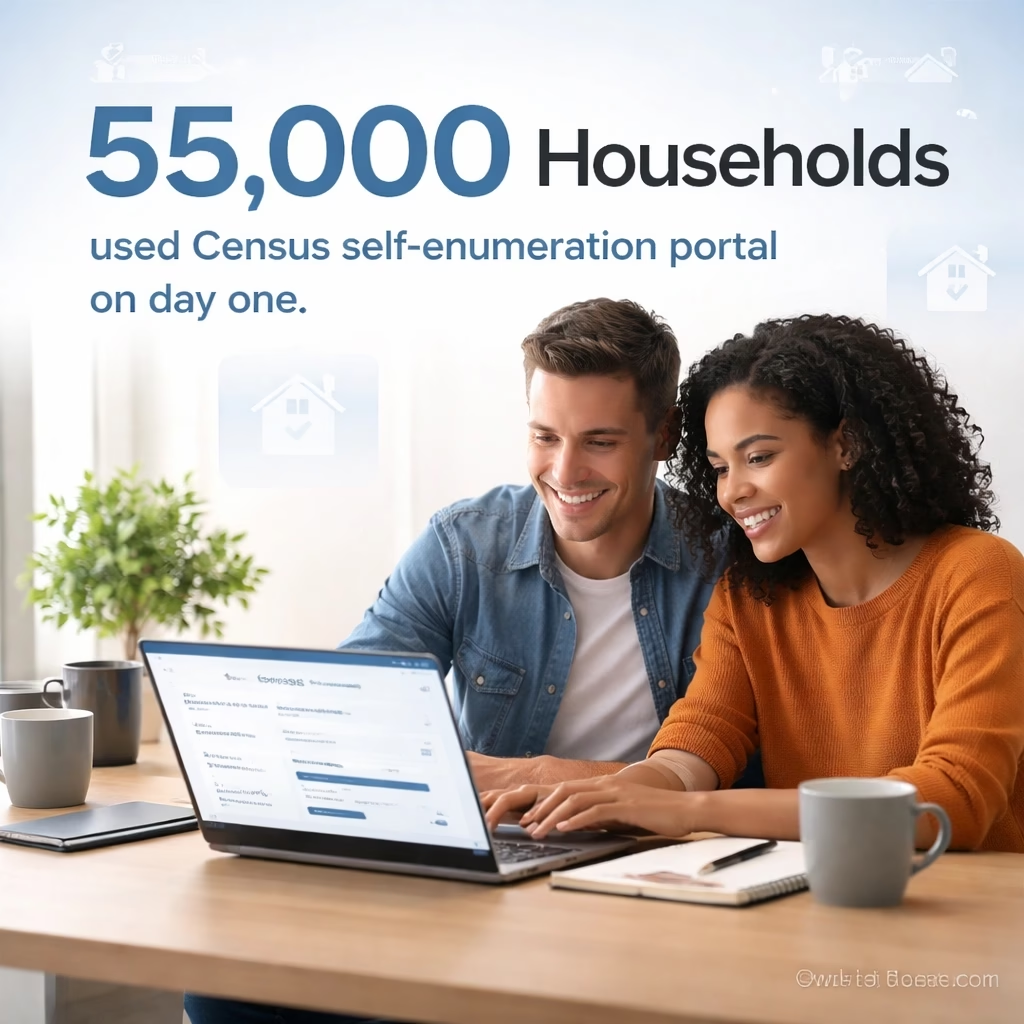
A groundbreaking moment for national data collection unfolded yesterday as over 55,000 households successfully utilized the new online self-enumeration portal for the decennial Census on its inaugural day. This unprecedented digital engagement marks a significant shift in how the nation gathers vital demographic information, streamlining the process for hundreds of thousands of citizens nationwide.
The National Bureau of Statistics (NBS) confirmed the robust initial uptake following the portal's launch at 8:00 AM on Monday, October 28, 2024, signaling a strong public embrace of the modernized enumeration method.
Background: A Decades-Long Evolution Towards Digital
The Census, a constitutionally mandated undertaking, has historically relied on extensive field operations involving millions of paper forms and a vast network of enumerators visiting homes across the country. Conducted every ten years, its primary purpose is to count every resident and collect essential demographic data to inform national planning, resource allocation, and political representation.
From Paper Trails to Digital Streams
For generations, the image of a census enumerator knocking on doors, armed with clipboards and paper questionnaires, defined the data collection process. While effective, this method was labor-intensive, costly, and presented logistical challenges, especially in remote areas or densely populated urban centers. The processing of paper forms also introduced potential for errors and significant delays in data finalization.
More Read

The push towards digitalization began over a decade ago with initial feasibility studies and pilot programs. Early trials focused on developing secure, user-friendly online platforms that could handle a massive influx of data while maintaining stringent privacy standards. These pilot projects, conducted in select regions during the 2014 and 2019 intercensal surveys, provided crucial insights into public receptiveness and technical requirements.
Lessons learned from these trials informed the design and implementation of the current system, emphasizing accessibility, multi-language support, and robust cybersecurity measures. The investment in this digital infrastructure has been substantial, reflecting a long-term strategic vision to enhance the efficiency and accuracy of national statistics.
Key Developments: A Seamless Digital Launch
The self-enumeration portal, accessible via the official NBS website, went live yesterday, initiating a four-week window for households to submit their information online. The system's architecture was designed to manage concurrent submissions from millions of users, ensuring stability and responsiveness even under peak load.
Technological Foundation and Security
Developed by a consortium of national and international technology firms, the portal incorporates advanced encryption protocols to safeguard personal data. All information submitted is anonymized and aggregated before being used for statistical purposes, adhering strictly to the National Data Protection Act of 2022 and international best practices for statistical confidentiality. Users are required to register using a unique Census ID provided in advance via mail, adding an extra layer of security and ensuring each household is counted once.
The platform features an intuitive interface, guided prompts, and an estimated completion time of 15-20 minutes for an average household. It supports the nation’s five official languages, with additional language support available through a dedicated helpline. Accessibility features, including screen reader compatibility and adjustable font sizes, were integrated to ensure inclusivity for all citizens.
Public Awareness Campaign
Leading up to the launch, the NBS conducted an extensive public awareness campaign spanning several months. This campaign utilized television, radio, social media, and community outreach programs to educate the public about the new digital option, its benefits, and the importance of participation. Infographics, video tutorials, and frequently asked questions were widely distributed to demystify the process and build public confidence in online enumeration.
Initial reports from the NBS indicate that the portal experienced no significant technical glitches on day one, a testament to the rigorous testing phases and the robust infrastructure in place. The smooth rollout is a critical factor in encouraging continued digital participation throughout the enumeration period.
Impact: Efficiency, Accuracy, and Public Engagement
The immediate success of the self-enumeration portal on its first day carries profound implications for the entire census operation and future national data initiatives. High early adoption rates can significantly enhance the efficiency and accuracy of the overall count.
Cost Savings and Reduced Burden
Each household that self-enumerates online reduces the need for a physical enumerator visit, leading to substantial cost savings in terms of personnel, transportation, and printing materials. The NBS estimates that a 10% increase in online participation could save the national treasury millions of dollars over the entire census period. Furthermore, it alleviates the logistical burden on field staff, allowing them to focus on households that may require in-person assistance or lack internet access.

The digital method also minimizes the environmental footprint associated with printing and distributing millions of paper questionnaires, aligning with national sustainability goals.
Enhanced Data Quality and Timeliness
Online submissions inherently reduce the potential for transcription errors common with paper forms. The portal’s built-in validation checks prompt users to correct incomplete or inconsistent entries in real-time, leading to cleaner, more accurate data. This improved data quality is crucial for precise demographic analysis and evidence-based policymaking.
The speed of digital data collection and processing means that preliminary results can be released much faster than in previous cycles, providing policymakers with up-to-date information sooner. This agility is vital for responding to rapidly changing socio-economic landscapes.
Public Engagement and Digital Inclusion
The strong initial turnout suggests a high level of public trust and digital literacy among the population. It demonstrates the effectiveness of the public awareness campaigns and the accessibility of the online platform. This success could serve as a model for future government digital services, encouraging broader digital inclusion initiatives.
While the 55,000 initial users represent a fraction of the nation’s total households, it sets a positive precedent. Demographically, early adopters of online enumeration often include younger, tech-savvy individuals and families in urban and suburban areas. The challenge for the NBS will be to maintain this momentum and extend digital participation to more diverse demographics throughout the enumeration period.
What Next: Sustaining Momentum and Comprehensive Enumeration
The first day's success is a promising start, but the census operation is a multi-phase endeavor that will continue for several months. The NBS has outlined a clear roadmap for the remainder of the enumeration period and subsequent data processing.
Continuing Online and Helpline Support
The self-enumeration portal will remain open for submissions until November 24, 2024. Throughout this period, the NBS will closely monitor response rates across different regions and demographics, adapting its outreach strategies as needed. A dedicated national helpline, staffed by trained operators, will continue to assist individuals with questions about the portal or the census process. Community centers and public libraries are also offering digital assistance to those who require it.
Field Enumeration and Non-Response Follow-Up
Following the closure of the online portal, a targeted field enumeration phase will commence on December 2, 2024. Trained enumerators will visit households that have not yet submitted their census information, either online or through other channels. This ensures that every household, regardless of internet access or digital proficiency, has the opportunity to be counted. The data collected during this phase will be primarily through secure digital tablets used by enumerators, further reducing reliance on paper.
This mixed-mode approach is designed to achieve the most comprehensive and accurate count possible, recognizing the diverse needs and capabilities of the national population.
Data Processing and Dissemination
Once all enumeration phases are complete by late December, the extensive process of data validation, cleaning, and analysis will begin. The NBS expects to release preliminary population figures by March 2025, providing an early snapshot of key demographic trends. Final, detailed results, including breakdowns by age, gender, geographic location, and other socio-economic indicators, are anticipated by October 2025.
These comprehensive datasets will be crucial for government agencies, academic researchers, businesses, and non-profit organizations for planning infrastructure development, public health initiatives, educational programs, and economic policies for the next decade. The success of the digital launch is a strong indicator that the nation is on track to deliver one of its most efficient and accurate censuses to date.