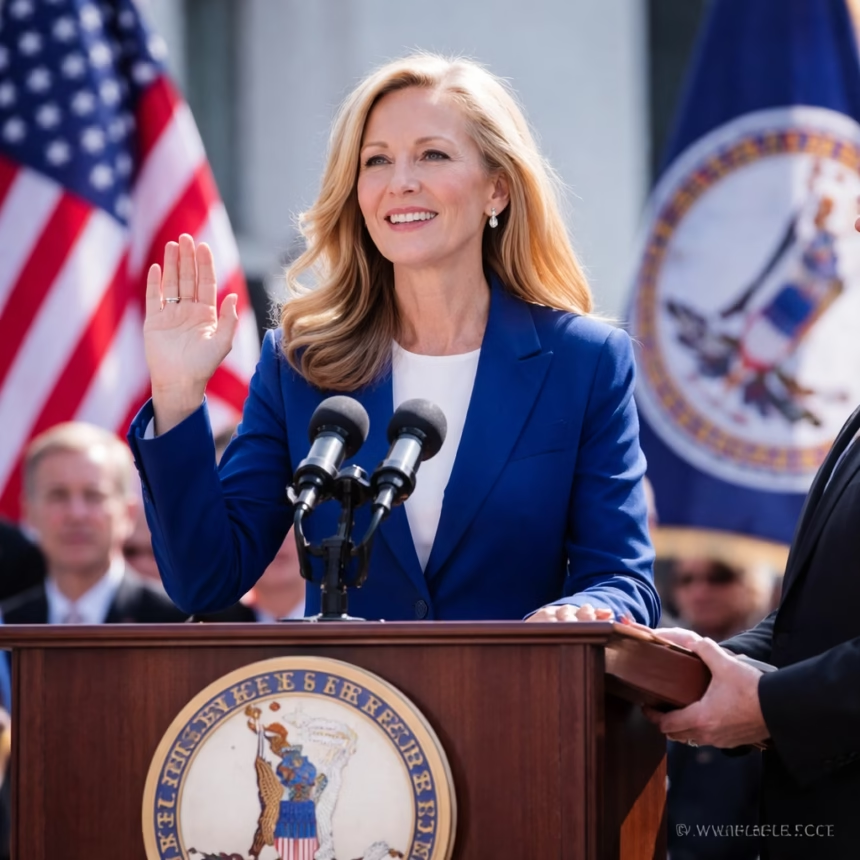
Richmond, VA – In a moment etched into the annals of Virginia's political landscape, Abigail Spanberger was inaugurated as the Commonwealth's 75th Governor on Saturday, January 13, 2024. The former U.S. Congresswoman's swearing-in ceremony, held on the historic steps of the Virginia State Capitol, marks a pivotal milestone, making her the first woman to hold the state's highest executive office. Her ascension signifies a profound shift in a state historically led by men, ushering in a new era for Virginia.
A Path Forged: Background and Political Ascent
Abigail Spanberger's journey to the governorship is rooted in a diverse career spanning national security and public service. Born in New York and raised in Virginia, she graduated from the University of Virginia and later earned an MBA from Johns Hopkins University. Her early career saw her serve as a CIA operations officer, specializing in counterterrorism and intelligence collection, a role that took her across the globe. This background instilled in her a pragmatic, results-oriented approach that would later define her political style.
From Intelligence to Congress
Spanberger transitioned into politics following her intelligence career, motivated by a desire to bring her problem-solving skills to domestic issues. In 2018, she successfully ran for Virginia's 7th congressional district, flipping a long-held Republican seat. Her victory was a bellwether for a broader shift in Virginia's suburban politics. She served three terms in the U.S. House of Representatives, building a reputation as a moderate Democrat focused on constituent services, fiscal responsibility, and bipartisan cooperation.
During her time in Congress, Spanberger championed legislation related to healthcare costs, government ethics, and support for veterans. She was a vocal advocate for expanding broadband access in rural areas and worked across the aisle on agricultural policy. Her ability to appeal to a broad base of voters in a competitive district laid the groundwork for her gubernatorial ambitions.
Historical Context of Virginia’s Governorship
Virginia's governorship has a long and storied history, dating back to colonial times. For over 240 years since the state's founding, every governor has been male. This unbroken line of male leadership underscored the significance of Spanberger's candidacy. While women have served in the state legislature and other high-ranking positions, the executive mansion remained exclusively male until this historic inauguration. Her victory represents a powerful symbolic breakthrough for gender equality in the Commonwealth's highest echelons of power.
More Read

Key Developments: The Campaign, Election, and Inauguration
Spanberger announced her candidacy for governor in early 2023, positioning herself as a unifying force capable of bridging partisan divides and delivering tangible results for Virginians. Her campaign focused on core issues such as strengthening public education, expanding access to affordable healthcare, fostering economic growth, and protecting environmental resources.
A Strategic Campaign and Decisive Victory
Her campaign strategy emphasized direct engagement with voters across the Commonwealth, from the bustling urban centers of Northern Virginia to the rural communities of the Southwest. She highlighted her experience in national security and Congress as evidence of her ability to lead effectively. Major endorsements from key state and national figures bolstered her campaign, as did a robust grassroots organizing effort.
On election day, November 5, 2023, Spanberger secured a decisive victory, defeating her Republican opponent by a significant margin. Her win was attributed to strong turnout among women and suburban voters, combined with her appeal to independent and moderate Republican voters who valued her pragmatic approach. The election results confirmed a shifting demographic and political landscape within Virginia.
More Read

The Inauguration Ceremony
The inauguration ceremony on January 13, 2024, was a grand affair, attended by thousands of Virginians, national political figures, and Spanberger's family and supporters. The event commenced with traditional pomp and circumstance, including musical performances and invocations. Chief Justice S. Bernard Jones administered the oath of office, with Spanberger placing her hand on a family Bible.
In her inaugural address, Governor Spanberger spoke passionately about unity, progress, and the promise of Virginia. "Today, we turn a new page in Virginia's history," she declared, "not just because of who stands before you, but because of what we stand for: a Commonwealth where every child has a chance, every family has security, and every voice is heard." She outlined her vision for a collaborative approach to governance, pledging to work with both parties to address the state's most pressing challenges. Her speech emphasized themes of economic opportunity, accessible healthcare, and a commitment to protecting Virginia's natural beauty.
Impact: A New Chapter for Virginia
Governor Spanberger's inauguration carries significant weight, impacting various facets of Virginia life, from political representation to policy direction and societal norms.
Political and Social Impact
Her election serves as a powerful symbol for women and girls across Virginia and the nation, demonstrating that no office is beyond reach. It is expected to inspire more women to seek leadership roles in politics and other fields. For Virginia, it signals a further modernization of its political identity, moving beyond traditional structures.
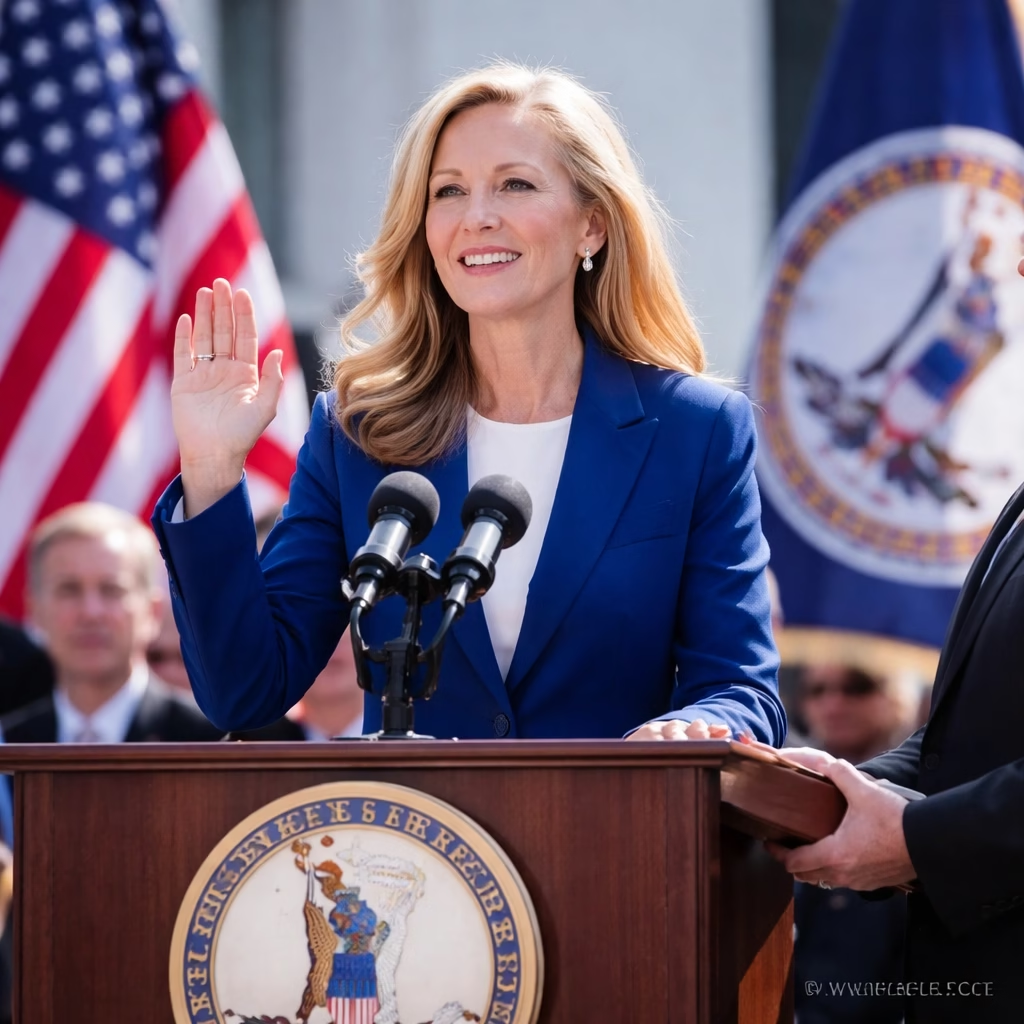
Politically, Spanberger's governorship is anticipated to bring a fresh perspective to the state's executive branch. As a moderate Democrat, she is expected to seek common ground with a sometimes-divided General Assembly, potentially fostering an era of more collaborative policymaking. Her focus on pragmatic solutions could help de-escalate partisan tensions that have sometimes characterized Virginia politics.
More Read

Anticipated Policy Shifts
On the policy front, Governor Spanberger has outlined several key priorities. In education, she plans to advocate for increased funding for public schools, teacher salary raises, and expanded access to early childhood education programs. Her administration is expected to push for initiatives to lower healthcare costs, including expanding access to affordable insurance and addressing prescription drug prices.
Economically, she has pledged to focus on attracting new businesses, supporting small businesses, and investing in infrastructure projects that create jobs and improve connectivity, particularly in underserved rural areas. Environmental protection is also a core tenet of her agenda, with plans to advance renewable energy initiatives and safeguard Virginia's natural resources against climate change impacts.
What Next: The Road Ahead for Governor Spanberger
As Governor Spanberger steps into her new role, her administration faces immediate challenges and opportunities. The coming months will be crucial in setting the tone and direction for her term.
First Legislative Session and Budget Priorities
Her first major test will be navigating the upcoming legislative session with the Virginia General Assembly. She is expected to introduce a package of priority bills aligned with her campaign promises. Key legislative battles are anticipated around the state budget, where she will seek to align spending with her educational and healthcare initiatives. Her ability to build consensus and negotiate effectively with both Democratic and Republican lawmakers will be critical to the success of her agenda.
Key Initiatives and Challenges
Governor Spanberger's first 100 days will likely focus on a series of executive actions and appointments designed to implement her vision. This includes appointing cabinet secretaries and agency heads who align with her policy goals. She is expected to launch initiatives aimed at improving government efficiency and transparency.
Challenges will undoubtedly arise, ranging from potential partisan gridlock to unforeseen economic headwinds or natural disasters. Her ability to unite diverse factions within the state, manage complex budgetary decisions, and respond effectively to crises will define her early tenure. Her governorship is not just a historic first, but a significant opportunity to shape Virginia's future for years to come.