AI Scans Your Lungs for Hidden Heart Risks: Nationwide Program Transforms CT Imaging
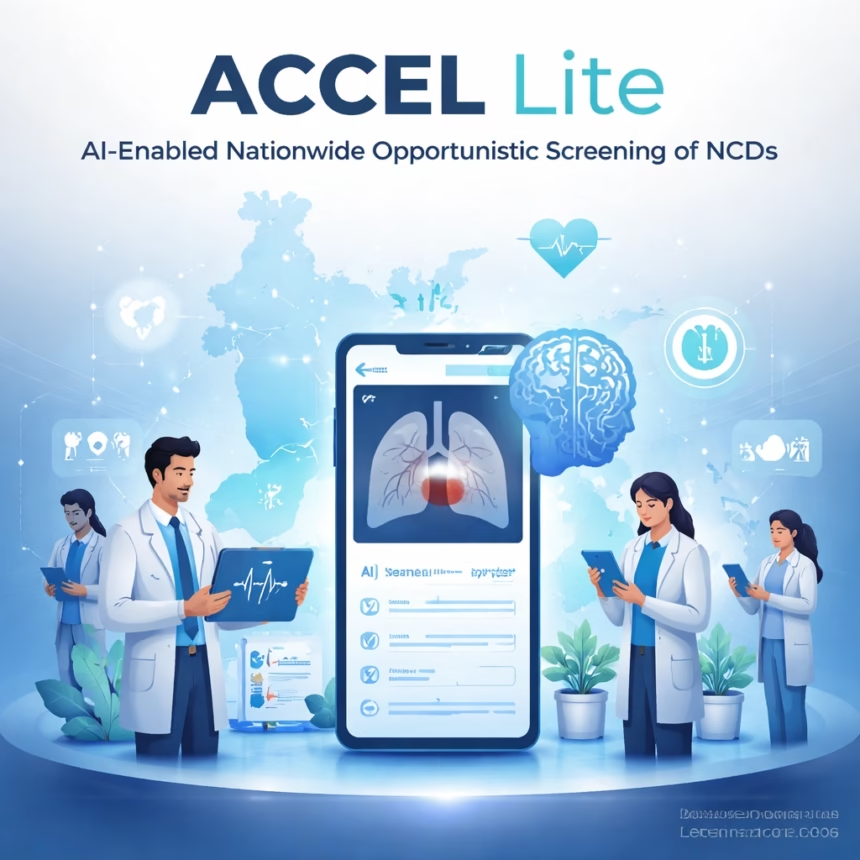
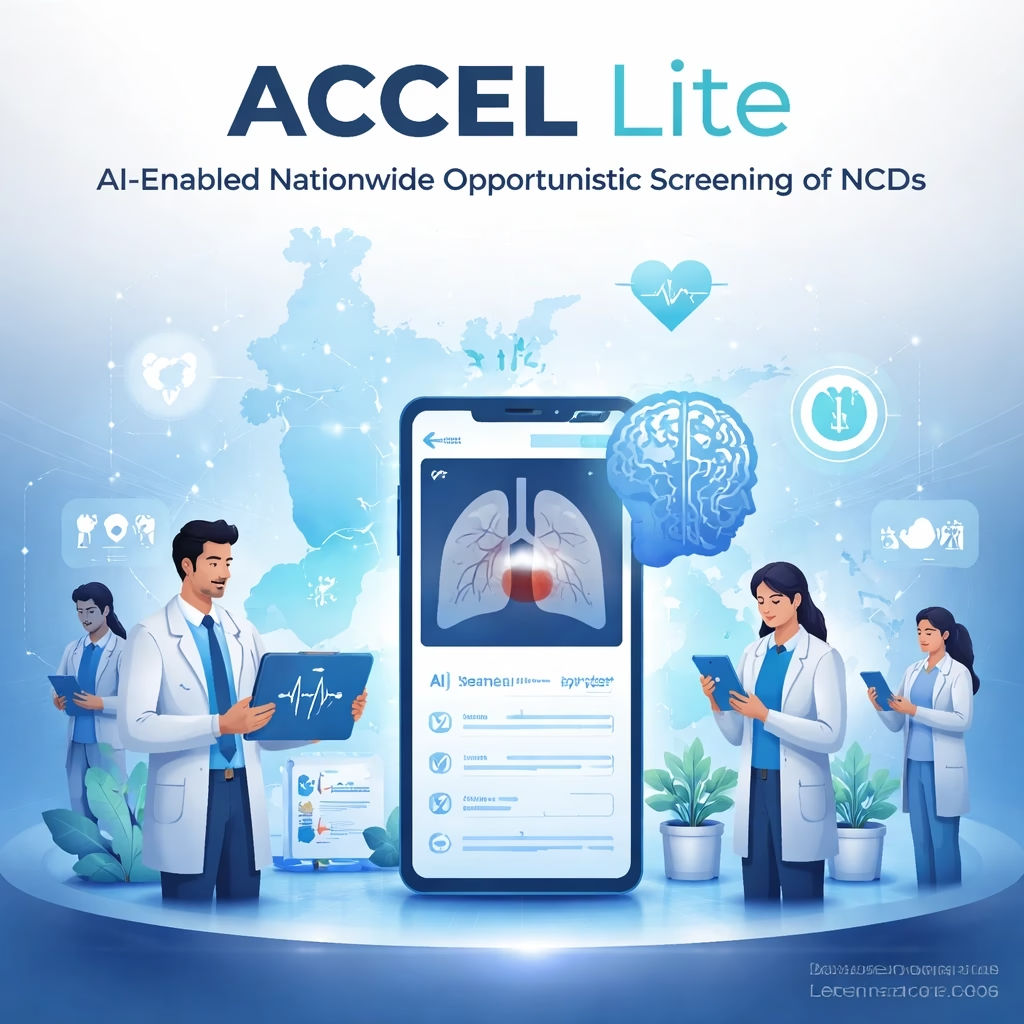
A groundbreaking nationwide initiative, ACCEL Lite, is leveraging artificial intelligence to analyze non-contrast chest CT scans, proactively identifying individuals at risk of future death and cardiovascular events. Launched in early 2023, this innovative program aims to transform routine medical imaging into a powerful tool for early disease detection across major healthcare systems in the United States.
Background: Unlocking Latent Data in Medical Scans
For decades, non-contrast chest CT scans have been a staple in medical diagnostics, primarily used for evaluating lung conditions, detecting cancers, or assessing acute respiratory issues. However, these images contain a wealth of information beyond their primary diagnostic purpose, often overlooked by the human eye.
The concept of "opportunistic screening" utilizes existing medical data, such as CT scans performed for unrelated reasons, to screen for other conditions. In the context of cardiovascular disease, these scans frequently capture incidental findings like coronary artery calcification (CAC), aortic calcification, and changes in body composition, all of which are strong predictors of future cardiovascular events and mortality.
The ACCEL (AI-enabled Cardiovascular Event prediction via Lung CT) project originated from a collaborative effort between leading research institutions and AI development firms in the late 2010s. Early pilot studies demonstrated the feasibility and accuracy of AI models in identifying these subtle cardiovascular risk markers from routine chest CTs. The "Lite" designation in ACCEL Lite signifies a streamlined, more scalable version of this foundational research, designed for widespread deployment.

Traditional cardiovascular risk assessment often relies on clinical scores and targeted tests, which may miss a significant portion of the population at risk, especially those without overt symptoms. ACCEL Lite addresses this gap by harnessing the vast repository of chest CT data already being generated, turning every eligible scan into an opportunity for comprehensive health insight.
Key Developments: AI-Powered Precision and Nationwide Expansion
The transition to ACCEL Lite marks a significant leap from research pilots to a fully operational, nationwide screening program. This expansion is powered by advanced deep learning algorithms specifically trained on millions of diverse chest CT images linked to long-term patient outcomes.
Sophisticated AI Algorithms
The core of ACCEL Lite lies in its sophisticated artificial intelligence models. These algorithms are designed to precisely quantify various biomarkers from non-contrast chest CTs, including coronary artery calcification (CAC) scores, aortic calcification, vertebral bone density, and visceral adipose tissue volume. Unlike human interpretation, which can be subjective and time-consuming for these secondary findings, the AI provides objective, rapid, and consistent measurements.
More Read

Researchers have refined these models to detect even minute calcifications and subtle anatomical variations that correlate strongly with increased risk of myocardial infarction, stroke, heart failure, and all-cause mortality. The AI’s ability to process images at scale and identify complex patterns far exceeds human capabilities in this specific application.
Scalable Deployment Across Healthcare Systems
A critical development has been the successful integration of the ACCEL Lite platform into the existing infrastructure of numerous major healthcare networks across the United States. This involves secure data transfer protocols and seamless integration with Picture Archiving and Communication Systems (PACS) and Electronic Health Records (EHRs).
The system operates by automatically processing eligible non-contrast chest CT scans as they are acquired. The AI analysis is performed in the background, generating a comprehensive risk report that can be flagged for review by radiologists and referring physicians. This automated workflow minimizes additional burden on clinical staff while maximizing the utility of every scan.
Validation studies, published in prominent medical journals throughout 2022 and early 2023, have consistently demonstrated the high accuracy and predictive power of the ACCEL Lite algorithms, validating its readiness for widespread clinical application.
Impact: Transforming Patient Care and Public Health
ACCEL Lite promises to revolutionize how cardiovascular risk is identified and managed, with far-reaching implications for patients, healthcare providers, and public health initiatives.
Enhanced Patient Outcomes
For patients, the primary benefit is early detection of cardiovascular risk factors that might otherwise go unnoticed until a serious event occurs. Individuals undergoing a chest CT for reasons like pneumonia, chronic obstructive pulmonary disease (COPD) assessment, or emergency room visits will now implicitly receive a cardiovascular risk assessment. This opportunistic screening can lead to timely lifestyle interventions, medication management, or further diagnostic testing, potentially preventing heart attacks, strokes, and premature death.

The program offers a chance for personalized risk stratification, moving beyond population-level averages to provide actionable insights tailored to each individual’s unique physiological profile as revealed by their CT scan.
Empowering Healthcare Providers
Clinicians gain a powerful new tool for risk stratification and patient management. Radiologists, who are often the first to review these scans, can now reliably flag patients at high cardiovascular risk, prompting referrals to cardiology or primary care for follow-up. Primary care physicians will receive more comprehensive data, enabling them to initiate preventive strategies earlier and more effectively.
This proactive approach helps optimize resource allocation, ensuring that high-risk patients receive the necessary attention and interventions without the need for additional, dedicated screening procedures, which can be costly and inconvenient.
Broader Public Health Benefits
On a larger scale, ACCEL Lite has the potential to significantly impact public health by contributing to a reduction in cardiovascular disease mortality rates across the nation. By identifying at-risk populations more broadly and earlier, healthcare systems can shift towards a more preventive model of care, ultimately reducing the overall burden of cardiovascular disease.
The program also offers a rich dataset for epidemiological research, providing insights into regional variations in cardiovascular risk and the effectiveness of different intervention strategies.
What Next: Milestones and Future Horizons
The successful launch and initial deployment of ACCEL Lite represent a foundational step, with several key milestones and future developments on the horizon.
Integration into Clinical Workflows
The immediate next phase involves further refining the integration of ACCEL Lite findings directly into routine clinical decision-making. This includes developing standardized protocols for communicating AI-generated risk scores to patients and their care teams, as well as establishing clear pathways for follow-up diagnostics and interventions. The goal is to make these insights seamlessly actionable within existing clinical practices.
Continuous Algorithm Refinement and Expansion
Researchers are continuously working to enhance the accuracy and scope of the AI algorithms. This involves incorporating more diverse datasets, exploring additional biomarkers detectable on CT, and adapting the models to new imaging technologies. Future iterations may include predictive capabilities for other chronic diseases identifiable through chest CT, such as osteoporosis or sarcopenia.
Long-Term Outcome Studies
Longitudinal studies are crucial to fully assess the long-term clinical utility and cost-effectiveness of ACCEL Lite. These studies will track patient outcomes over several years, evaluating the program’s impact on cardiovascular event rates, overall mortality, and healthcare expenditures. The data gathered will be vital for informing future public health policies and insurance coverage decisions.
Policy and Guideline Influence
As evidence of ACCEL Lite’s effectiveness grows, it is expected to influence national medical guidelines for cardiovascular risk screening. The hope is that opportunistic AI-enabled screening of non-contrast chest CTs will become a recognized and recommended standard of care, ensuring more comprehensive and equitable access to early disease detection for millions.
The ACCEL Lite initiative stands as a testament to the transformative power of artificial intelligence in healthcare, moving beyond theoretical potential to deliver tangible, life-saving benefits on a national scale.