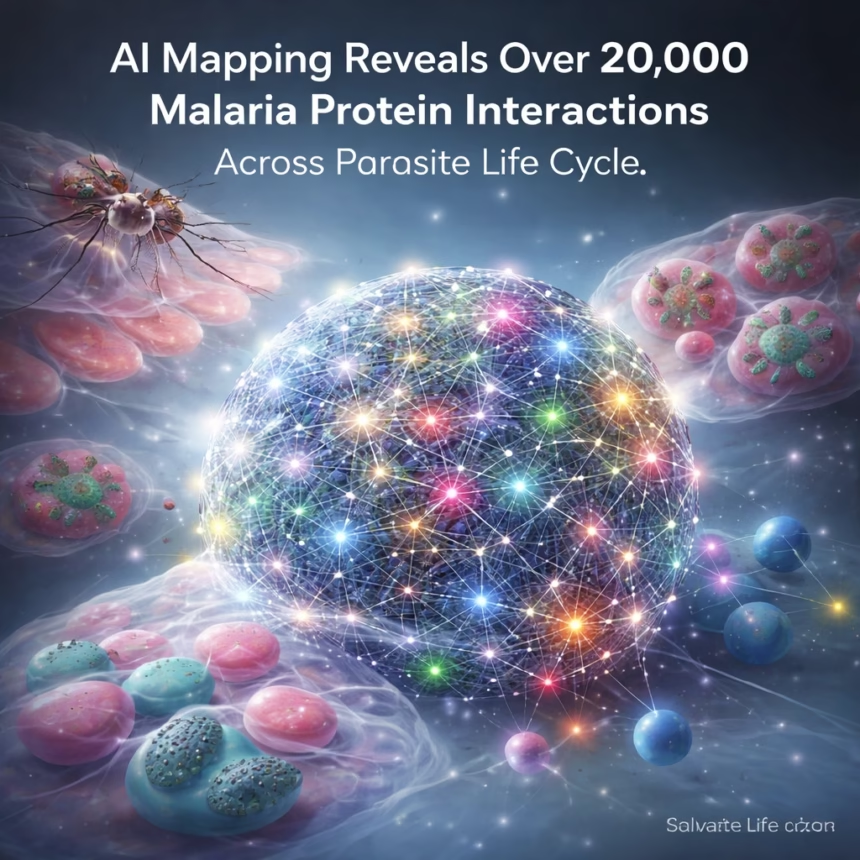
AI Breakthrough: Malaria's Secret Network of 20,000+ Proteins Mapped
AI Breakthrough: Malaria's Secret Network of 20,000+ Proteins Mapped
A groundbreaking application of artificial intelligence has unveiled an unprecedented map of over 20,000 protein interactions within the malaria parasite, *Plasmodium falciparum*. This monumental discovery, recently announced by an international consortium of researchers, offers an unparalleled glimpse into the parasite's complex biology across its entire life cycle, promising to redefine the global fight against malaria.
Conducted at leading computational biology centers and detailed in a major scientific publication this month, the AI-driven analysis provides the most comprehensive blueprint yet of how the parasite operates, from its mosquito vector to its human host.
Background: The Enduring Challenge of Malaria
Malaria remains one of the most devastating infectious diseases globally, responsible for hundreds of thousands of deaths annually, predominantly among children under five in sub-Saharan Africa. Caused by *Plasmodium* parasites transmitted through the bites of infected female *Anopheles* mosquitoes, the disease presents a complex challenge due to the parasite's intricate life cycle and its ability to develop drug resistance.
For decades, scientists have grappled with understanding the minute mechanisms that allow *Plasmodium* to invade human cells, multiply, and evade the immune system. Traditional methods for identifying protein-protein interactions (PPIs) – critical for all cellular processes – are often slow, labor-intensive, and limited in scope. These interactions dictate everything from parasite metabolism and replication to its ability to cause disease and transmit between hosts.
The urgency for new tools has grown as existing antimalarial drugs face increasing resistance and vaccine development proves exceptionally difficult. The parasite's adaptability and the sheer number of proteins involved in its survival have long presented a formidable barrier to comprehensive understanding and, consequently, to effective therapeutic design.
Key Developments: AI Unlocks the Parasite’s Blueprint
The recent breakthrough centers on the deployment of advanced artificial intelligence and machine learning algorithms to predict and map protein interactions at an unprecedented scale. Researchers fed vast datasets of genomic, proteomic, and structural information about *Plasmodium falciparum* into sophisticated AI models.
More Read


The Power of Predictive Algorithms
Unlike previous studies that might identify dozens or hundreds of interactions through experimental means, the AI model was trained to recognize patterns and predict interactions based on protein sequences, structures, and evolutionary relationships. This computational approach allowed for the rapid analysis of thousands of proteins and their potential connections, far exceeding the capacity of traditional laboratory experiments.
The output is a vast interactome map detailing over 20,000 protein-protein interactions. This represents a significant leap from previous knowledge, which had only experimentally validated a fraction of this number. The sheer volume of newly identified interactions provides a holistic view of the parasite’s internal machinery.
More Read

Unraveling the Parasite’s Complex Life Cycle
Crucially, the AI mapping covers the entire life cycle of *Plasmodium falciparum*. This includes interactions vital for the parasite’s survival and replication in the mosquito gut and salivary glands, as well as its various stages within the human host – from liver infection to the symptomatic blood stage, and finally, the formation of gametocytes for transmission back to mosquitoes.
Understanding these stage-specific interactions is paramount. Proteins that are essential during the liver stage might be different from those critical during the blood stage, where clinical symptoms manifest. This comprehensive, multi-stage interactome allows scientists to pinpoint vulnerabilities at each crucial juncture of the parasite’s journey.
Impact: Reshaping Malaria Research and Treatment
The unveiling of this extensive malaria protein interactome is poised to have a transformative impact across multiple facets of malaria research and public health efforts. It provides a foundational dataset that will accelerate discovery and development in ways previously unimaginable.
Accelerating Drug Discovery
For drug developers, the AI-generated map offers a treasure trove of potential new drug targets. By identifying proteins that are central to numerous interactions, or those involved in critical pathways essential for parasite survival, researchers can prioritize targets for therapeutic intervention. The map also reveals how different proteins work together, opening avenues for multi-target therapies that could circumvent drug resistance more effectively.
Furthermore, the interactome can be used to predict the effects of existing drugs or compounds, helping to repurpose medications or identify synergistic drug combinations. This could significantly shorten the timeline and reduce the cost associated with bringing new antimalarials to market.
Paving the Way for Next-Generation Vaccines
Vaccine development for malaria has historically been challenging due to the parasite’s genetic diversity and complex immune evasion strategies. The new map helps to identify surface proteins or secreted proteins that are critical for host invasion or immune modulation. Understanding how these proteins interact with each other and with host factors can inform the design of more effective vaccine candidates that elicit broader, more protective immune responses.
More Read

Identifying essential protein complexes or pathways that are highly conserved across different parasite strains could lead to universal vaccine strategies, overcoming the limitations of current strain-specific approaches.
Broader Implications for Global Health
Beyond drugs and vaccines, this detailed understanding of *Plasmodium* biology could also lead to improved diagnostics, allowing for earlier and more accurate detection of infection. It could also inform strategies for vector control by revealing interactions critical for parasite development within the mosquito, potentially leading to novel approaches to block transmission.
Ultimately, the primary beneficiaries will be the millions of people living in malaria-endemic regions who bear the brunt of this disease. This scientific leap offers renewed hope for more effective tools to prevent, treat, and ultimately eradicate malaria.
What Next: From Map to Medicine
The immediate next steps following this monumental AI mapping effort involve rigorous experimental validation and functional characterization of the predicted interactions. While AI provides predictions with high confidence, laboratory experiments are crucial to confirm these interactions and understand their precise biological roles.
Experimental Validation and Functional Studies
Research teams worldwide will now embark on targeted experiments to confirm key protein interactions, using techniques such as yeast two-hybrid screens, co-immunoprecipitation, and mass spectrometry. Functional studies will then investigate the impact of disrupting these interactions on parasite viability, growth, and infectivity across different life stages.
Focus will be placed on “hub” proteins – those that interact with many other proteins – as they often represent critical control points in cellular networks. Similarly, interactions unique to the parasite and not found in humans will be prioritized as potential drug targets to minimize off-target effects.
Drug Screening and Therapeutic Development
With validated targets in hand, the next phase will involve high-throughput screening of chemical libraries to identify compounds that can disrupt these critical protein interactions. This could involve virtual screening using computational models, followed by *in vitro* and *in vivo* testing of promising drug candidates.
The long-term goal is to translate these findings into new antimalarial drugs and vaccine candidates that can enter preclinical and clinical trials. This will require significant international collaboration among academic institutions, pharmaceutical companies, and public health organizations.
This AI-powered discovery marks a pivotal moment in malaria research, moving from a fragmented understanding to a comprehensive systems-level view of the parasite. It promises to accelerate the pace of discovery and bring humanity closer to a world free from malaria.