Ancient Enigma: Did This Fossil Rewrite Life's History?
A newly published analysis of a remarkably preserved fossil discovered in Western Australia is sparking debate among paleontologists. The find, dating back approximately 550 million years, exhibits characteristics unlike any known animal or plant from that period, potentially representing a previously unknown life form. The research, published in the journal *eLife* on November 14, 2023, is prompting a re-evaluation of early animal evolution.
Background: A Glimpse into the Precambrian Era
The fossil was unearthed in the Pilbara region of Western Australia, a location renowned for its rich collection of ancient rocks detailing Earth's early history. The Pilbara craton, formed over 3.6 billion years ago, offers a unique window into life during the Precambrian Era (roughly 4.5 billion to 541 million years ago). For decades, paleontologists have pieced together the story of early life from fragments of fossils and sedimentary rock formations, revealing the gradual emergence of complex organisms. The fossil in question was initially discovered in 2016, but its true significance remained largely unrecognized until recent advanced imaging and analysis.
Prior to this discovery, the fossil record from the Ediacaran period (635 to 541 million years ago) – the time frame to which this fossil belongs – was relatively sparse and often difficult to interpret. Many Ediacaran fossils represented soft-bodied organisms, making it challenging to determine their evolutionary relationships. The discovery of this particular fossil, with its unusual structure, presents a potentially pivotal moment in understanding the transition from simple microbial life to more complex multicellular organisms.
Key Developments: Unveiling a Unique Structure
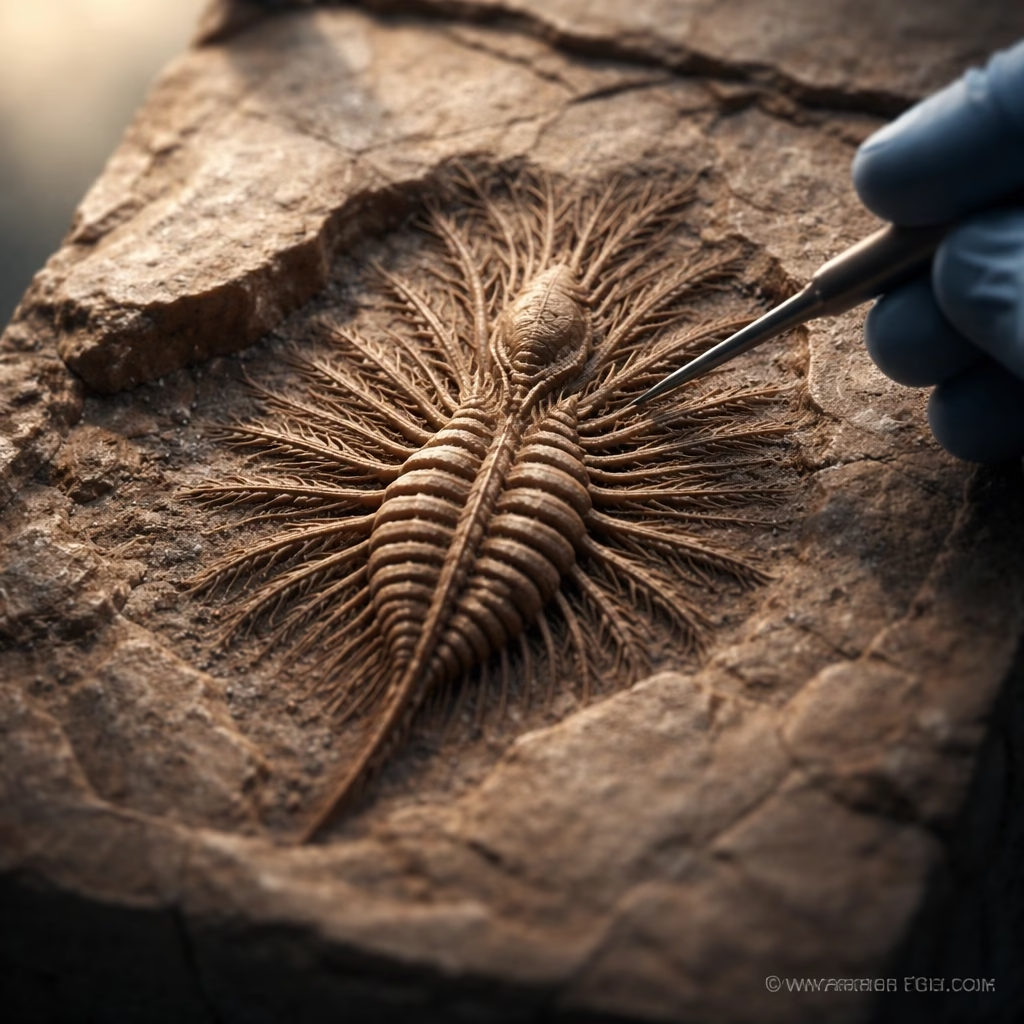
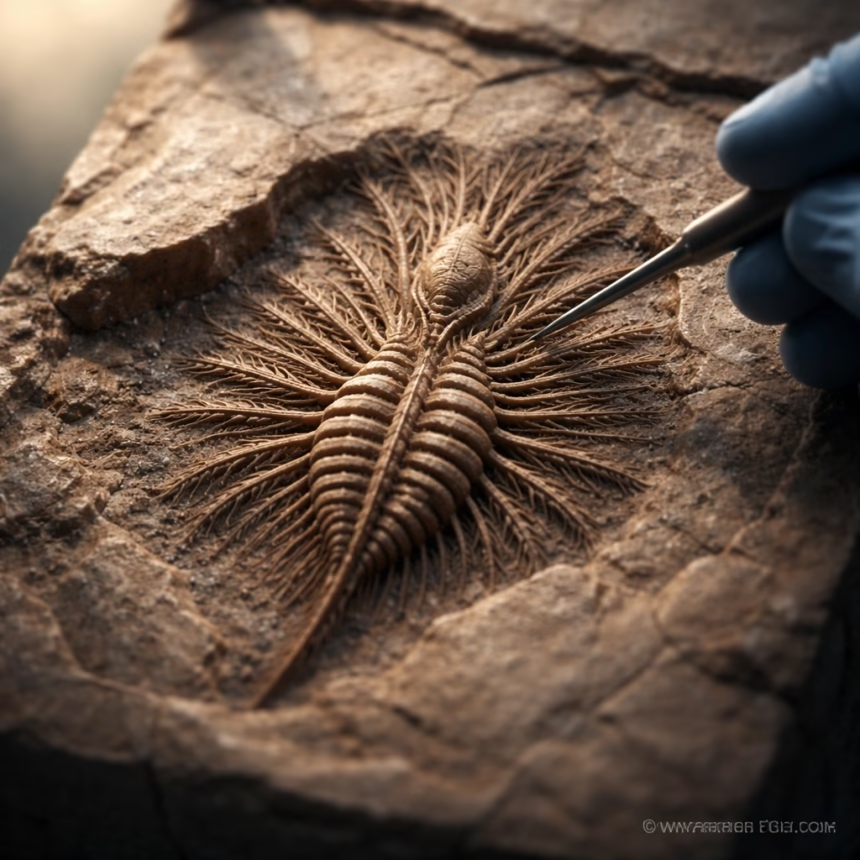
The recent analysis utilizes a combination of high-resolution micro-CT scanning and sophisticated image processing techniques. Researchers at the University of California, Berkeley, and the Australian Museum collaborated on the project. Their findings reveal a complex, branching structure resembling a network of tubes or filaments. The fossil, approximately 3 centimeters long, lacks the clear body plan of any known animal phylum.
More Read

Unlike sponges, jellyfish, or early worms, the fossil doesn't possess a distinct digestive system, skeletal structure, or recognizable organs. The branching network suggests a possible filter-feeding mechanism, but the precise function of the structure remains unclear. The fossil's internal architecture doesn't align with any known animal group, leading scientists to consider the possibility of a completely novel lineage. The team argues that the unusual morphology doesn't fit neatly into existing classifications, suggesting a significant gap in our understanding of early animal evolution.
Impact: Rethinking Early Animal Evolution
The implications of this discovery are far-reaching. If confirmed as a new life form, the fossil could force a significant revision of the evolutionary tree of life. It highlights the potential for previously unknown and highly diverse life forms to have existed during the Ediacaran period. This challenges the prevailing narrative that early animal evolution followed a predictable path, suggesting that experimentation and diversification were more prevalent than previously thought.
The discovery also impacts our understanding of the environmental conditions present during the Ediacaran period. The unique structure may reflect adaptations to specific ecological niches, such as shallow marine environments with abundant organic matter. Further research could shed light on the types of ecosystems that existed before the Cambrian explosion – the rapid diversification of animal life that occurred around 541 million years ago.

What Next: Further Investigation and Debate
The research team plans to conduct further analysis of the fossil, including comparing it to other Ediacaran fossils from different locations. They are also working to create 3D models and simulations to better understand the potential function of the unusual structure.
Future Research Directions
Scientists will be looking for similar fossils in the Pilbara region and other Ediacaran rock formations globally. Advanced analytical techniques, such as isotopic analysis, could provide clues about the fossil's diet and metabolic processes. Comparative genomics, although not feasible for such an ancient organism, could offer insights into its potential evolutionary relationships if related DNA fragments were recovered.
The discovery is already generating considerable discussion within the scientific community. Some researchers are cautiously optimistic about the possibility of a new life form, while others remain skeptical, suggesting that the structure might represent a highly unusual or deformed specimen of a known animal group. The debate is likely to continue as more research is conducted and further evidence emerges. The ultimate determination of whether this fossil represents a new life form will require extensive investigation and rigorous scientific scrutiny.