Nuclear Standoff: Trump's Plea & Vance's Warning – What's the Latest?
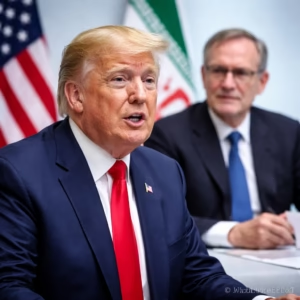
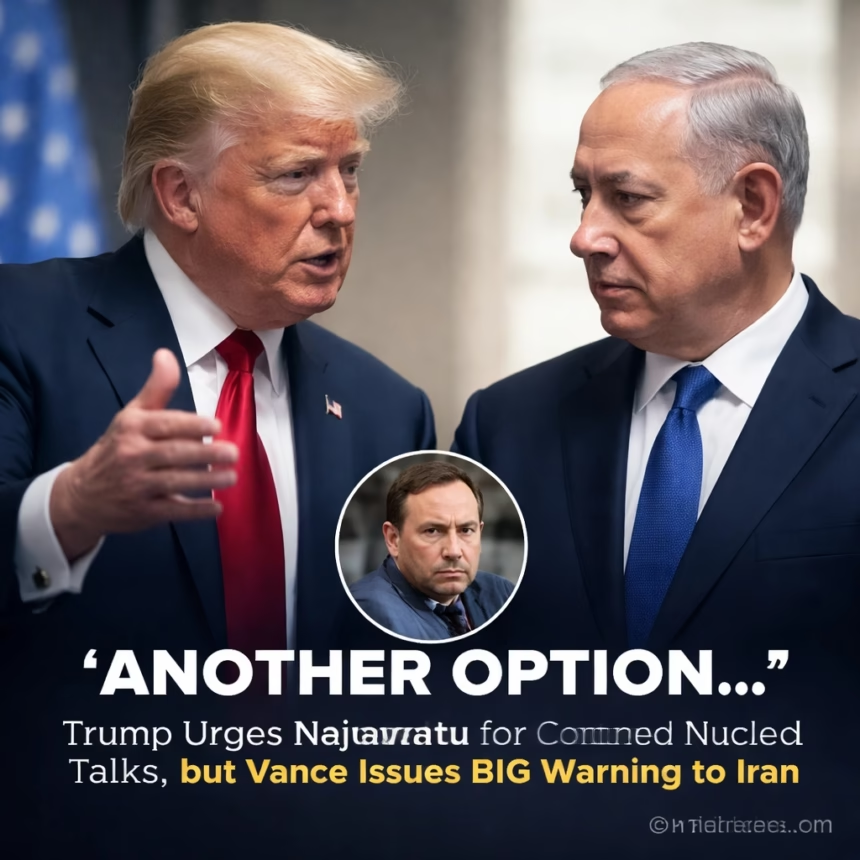
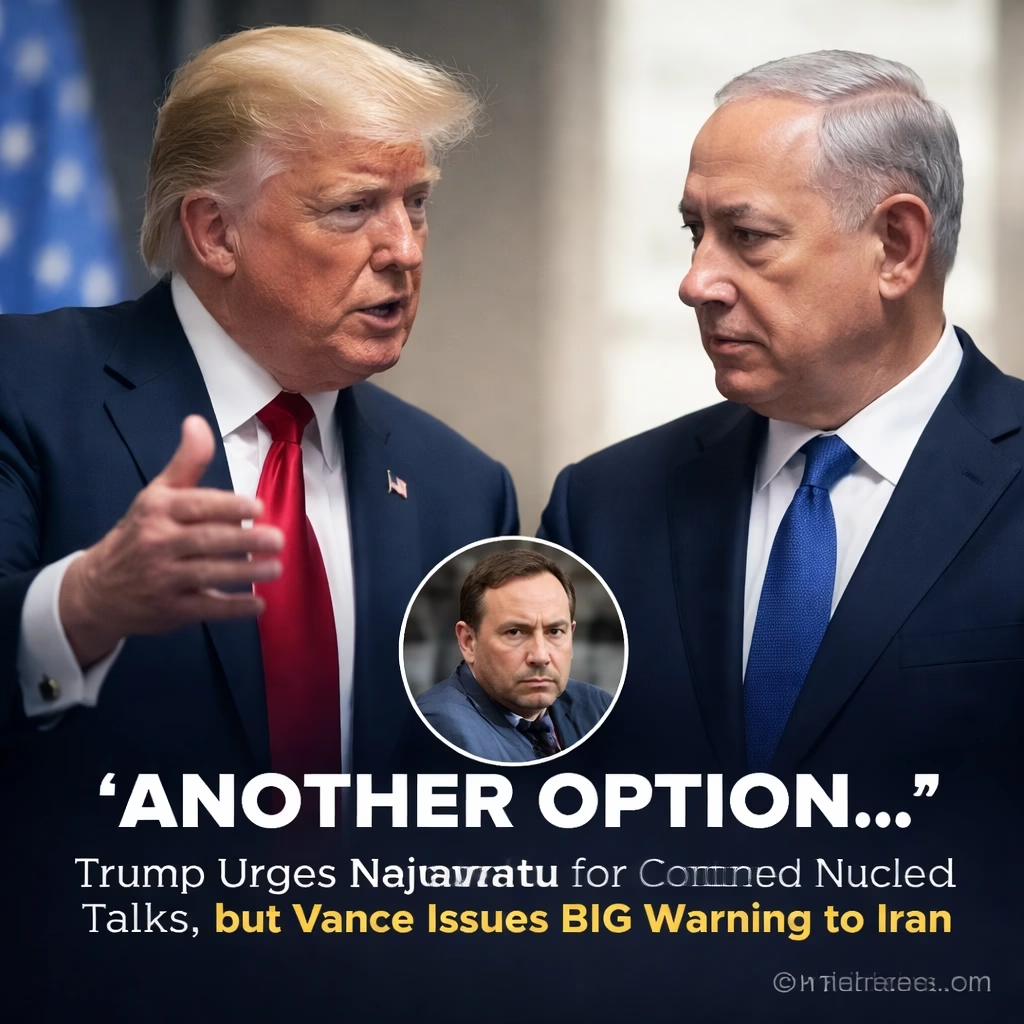
Recent weeks have seen a flurry of diplomatic activity surrounding Iran's nuclear program. Former U.S. President Donald Trump has publicly urged Israeli Prime Minister Benjamin Netanyahu to maintain talks with Iran, while U.S. Secretary of Defense Lloyd Austin has issued a stark warning to Tehran regarding its actions. These developments highlight the complex and rapidly evolving situation in the Middle East.
Background
The Iranian nuclear issue dates back to the early 2000s, with concerns arising over Iran's uranium enrichment activities. The 2015 Joint Comprehensive Plan of Action (JCPOA), also known as the Iran nuclear deal, was reached between Iran and six world powers (the United States, the United Kingdom, France, Germany, China, and Russia). The agreement limited Iran's nuclear program in exchange for sanctions relief. However, the United States withdrew from the JCPOA in 2018 under the Trump administration, citing the deal's shortcomings and Iran’s continued regional destabilizing activities. Following the U.S. withdrawal, Iran gradually rolled back its commitments under the JCPOA, leading to escalating tensions.
Netanyahu, a vocal opponent of the JCPOA in its original form, has consistently expressed reservations about the agreement's long-term effectiveness in preventing Iran from developing nuclear weapons. He has repeatedly called for greater international scrutiny of Iran’s nuclear facilities and has pushed for tougher sanctions.
Key Developments
Trump, in a series of recent statements, has encouraged Netanyahu to continue diplomatic efforts with Iran, emphasizing the potential for a negotiated solution. He suggested that a renewed push for talks could be more effective than solely relying on sanctions or military pressure. Trump’s comments have been met with cautious optimism by some observers, while others remain skeptical of the prospects for success.
More Read

Simultaneously, Secretary of Defense Lloyd Austin delivered a strong warning to Iran during a visit to Israel on April 24, 2024. Austin emphasized the U.S.'s unwavering commitment to Israel's security and reiterated the consequences of Iran acquiring nuclear weapons. He stated that the U.S. would work with its allies to prevent Iran from achieving this goal. The warning followed a series of Iranian missile tests and heightened rhetoric from Iranian officials.
These developments occur against a backdrop of increased intelligence reports suggesting Iran is nearing a production capability of highly enriched uranium.
Impact
These developments have significant implications for regional stability and international relations. Increased diplomatic engagement, should it occur, could potentially de-escalate tensions and provide a path towards a negotiated resolution. However, the prospects for meaningful talks remain uncertain given the deep mistrust between Iran and the United States, as well as the differing views on the JCPOA.
More Read
The U.S. warning to Iran is intended to deter further escalations and underscore the consequences of Iran's nuclear ambitions. It also signals the U.S.'s continued commitment to supporting Israel's security.
Regional countries, particularly those bordering Iran like Saudi Arabia and Iraq, are closely monitoring the situation, as any escalation could have far-reaching consequences for their own security and economic stability.
What Next
Diplomatic Prospects
The immediate future of nuclear talks between Iran and world powers remains unclear. The Biden administration has expressed openness to diplomacy, but has also maintained a firm stance on preventing Iran from acquiring nuclear weapons. Any renewed talks would likely require significant concessions from both sides.
Military Activity
The possibility of military action remains a concern. While the U.S. has repeatedly stated it does not want a military conflict with Iran, it has also emphasized its willingness to defend its allies, including Israel. Increased military activity in the region could escalate tensions and push the situation closer to a crisis.
International Response
The international community is grappling with how to address the Iranian nuclear issue. The International Atomic Energy Agency (IAEA) continues to monitor Iran’s nuclear facilities, and its reports will play a crucial role in shaping the international response.

The coming months are expected to be critical in determining the trajectory of the Iranian nuclear program and the broader geopolitical landscape in the Middle East. The interplay between Trump’s calls for diplomacy and Austin’s firm warnings suggests a complex and potentially volatile period ahead.