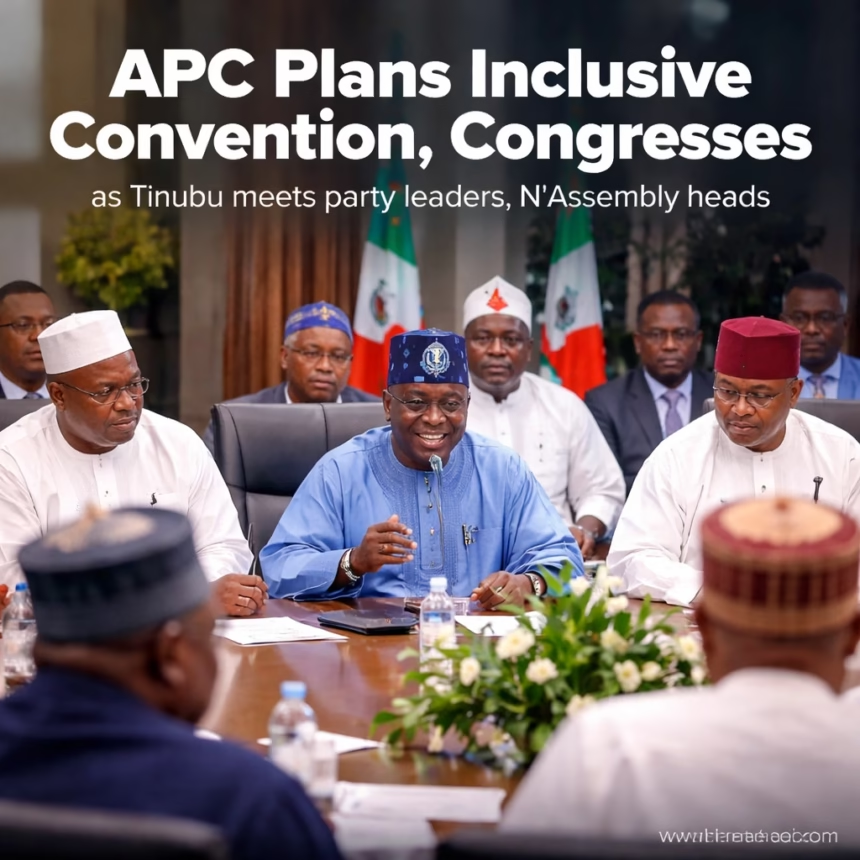
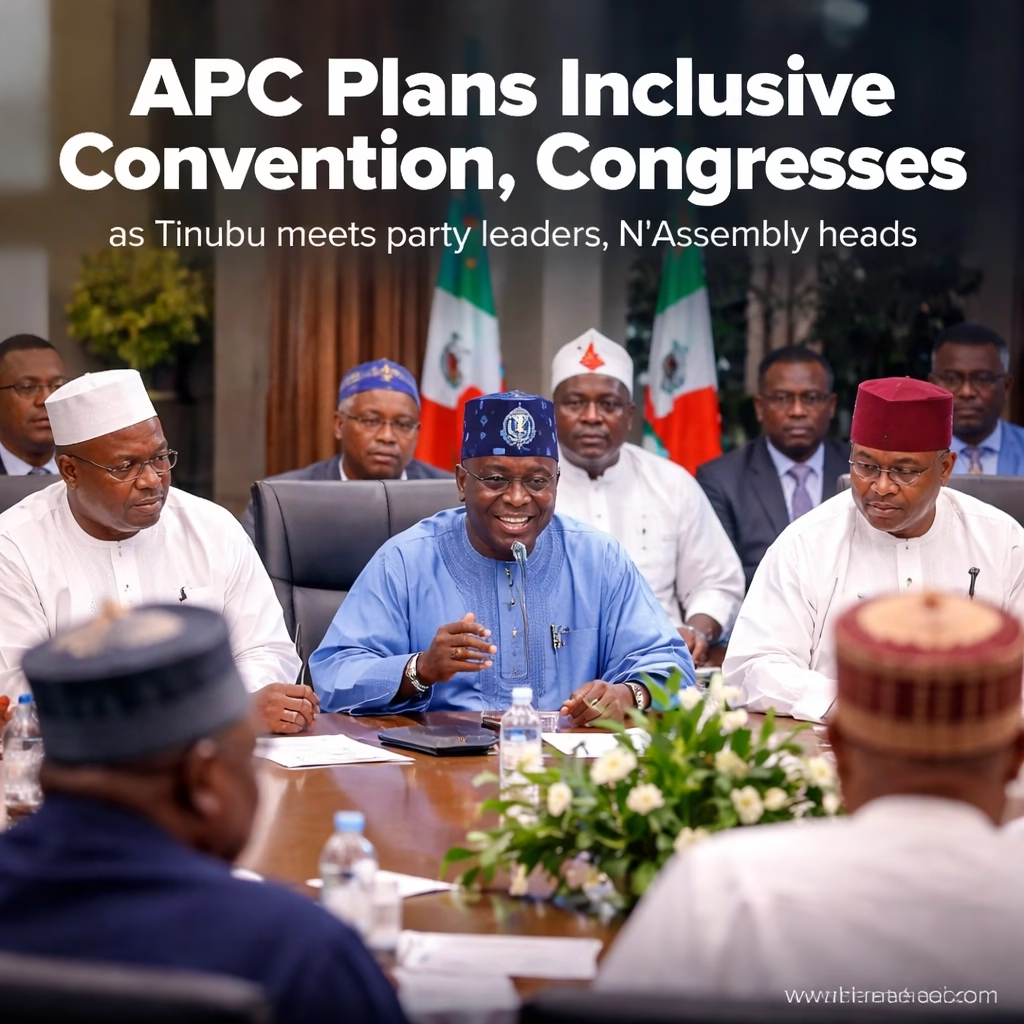
President Bola Ahmed Tinubu recently convened a high-stakes meeting with the leadership of the All Progressives Congress (APC) and heads of the National Assembly in Abuja. The pivotal discussions centered on meticulously planning upcoming party conventions and congresses, with a resolute focus on fostering unprecedented inclusivity across all party strata. This strategic move signals a determined push towards internal party cohesion and broader representation, aiming to solidify the party's foundation.
Background: A Party’s Journey Through Shifting Sands
The All Progressives Congress, formed in 2013 through a merger of several opposition parties, rose to power in 2015, ending a 16-year reign of the Peoples Democratic Party (PDP). Its journey has been marked by periods of internal realignment, leadership transitions, and strategic maneuvering. Following its initial victory, the party navigated various challenges, including factional disputes and the complexities of managing a diverse political coalition.
The immediate post-2023 election period presented a unique context. President Tinubu, having secured the highest office, now carries the dual responsibility of national governance and party leadership. His emergence as the party's presidential candidate and subsequent victory underscored the need for a unified front to deliver on campaign promises and maintain political stability. Previous congresses and conventions, at times, faced criticisms regarding transparency and the perceived imposition of candidates, leading to disaffection among certain party members. The Buni-led Caretaker/Extraordinary Convention Planning Committee (CECPC), which managed the party's affairs for an extended period, eventually paved the way for the current National Working Committee (NWC), headed by Dr. Abdullahi Ganduje. This transition aimed to stabilize the party structure and prepare it for future electoral cycles.
Key Developments: A New Era of Internal Democracy
The recent meeting, held at the Presidential Villa, brought together key figures including President Tinubu, Senate President Godswill Akpabio, Speaker of the House of Representatives Tajudeen Abbas, and APC National Chairman Abdullahi Ganduje. The central theme of the gathering was the imperative for transparent, fair, and inclusive processes in all forthcoming party activities, particularly the ward, local government, state, and national congresses, culminating in the national convention.
President Tinubu reportedly emphasized a "no imposition" stance, urging party leaders to ensure that the will of the grassroots members prevails in selecting their representatives and officials. This directive aims to democratize internal party elections, moving away from practices that might have previously alienated certain factions or aspirants. Discussions highlighted the need for comprehensive participation, ensuring that women, youth, people with disabilities, and various ethnic and religious groups are adequately represented and given a voice in party affairs. The party leadership was tasked with developing clear guidelines and a robust framework to achieve these inclusivity goals, potentially involving extensive consultations across all geopolitical zones.
More Read

Strategic Consultations and Consensus Building
A significant aspect of the new approach involves widespread consultations. The APC National Chairman, Dr. Ganduje, affirmed the party's commitment to engaging with all stakeholders, including former governors, federal and state legislators, and other influential party figures. These consultations are designed to build consensus, address grievances, and foster a sense of collective ownership over the party's direction. The goal is to minimize internal strife and present a united front, both to party members and the wider Nigerian populace. This proactive engagement seeks to prevent the emergence of parallel congresses or splinter groups, a challenge that has historically plagued political parties in Nigeria.
Focus on Grassroots Empowerment
The emphasis on inclusivity extends directly to the grassroots. Party officials are encouraged to create an environment where ordinary members feel empowered to participate in decision-making processes. This means ensuring accessible registration drives, transparent nomination procedures, and fair electoral practices at the ward and local government levels. By strengthening the base, the party aims to build a resilient structure capable of withstanding external pressures and internal disagreements. This bottom-up approach is intended to re-energize the party's base and deepen its democratic credentials.
Impact: Reshaping the Political Landscape
The proposed inclusive approach has far-reaching implications for the APC and Nigeria's political landscape. Internally, it is expected to significantly reduce factionalism and internal squabbles that have, at times, distracted the party from its core objectives. By providing a platform for diverse voices, the party aims to foster greater loyalty and commitment among its members. This could lead to a more stable and cohesive party structure, capable of effectively supporting the government's policies and programs.
For governance, a unified APC can translate into more effective policy implementation and legislative synergy between the executive and legislative arms, both controlled by the party. Reduced internal wrangling means more focus on national issues, potentially leading to better service delivery and governance outcomes for Nigerian citizens. Furthermore, a truly inclusive party could attract new members, particularly from demographics that might have felt marginalized in the past, thereby broadening its appeal and electoral strength.
Strengthening Party Democracy
If successfully implemented, this initiative could set a new standard for internal party democracy in Nigeria. By demonstrating a commitment to fairness and representation, the APC could inspire other political parties to adopt similar practices, leading to an overall improvement in the democratic health of the nation's political institutions. This could also enhance public trust in the political process, as citizens observe parties operating with greater transparency and accountability.
Implications for Future Elections
A unified and inclusive party is inherently better positioned for future electoral contests. With internal divisions minimized, the party can channel its resources and energy towards engaging the electorate and articulating its vision. This strategy could also help in consolidating the party's gains in regions where it traditionally performs well and making inroads into areas where it faces stronger opposition. The ability to present a united front, free from internal dissent, projects strength and stability to the electorate.
What Next: Milestones on the Path to Unity
The immediate next steps involve the APC National Working Committee (NWC) translating President Tinubu's directive into actionable plans. This includes setting specific timelines for the conduct of ward, local government, state, and national congresses. The party will need to establish various committees responsible for electoral planning, appeals, and logistics, ensuring they are composed of credible and impartial individuals.
Upcoming Milestones
1. Release of Congress Guidelines: The NWC is expected to issue detailed guidelines for the conduct of all congresses, outlining eligibility criteria, nomination processes, and electoral procedures. These guidelines will be crucial in ensuring uniformity and fairness.
2. Formation of Congress Committees: Ad-hoc committees will be constituted at various levels to oversee the conduct of the congresses, including screening committees for aspirants and electoral committees to manage voting processes.
3. Ward Congresses: These will be the foundational elections, where party officials are elected at the grassroots level. Their successful conduct is critical for the legitimacy of subsequent congresses.
4. Local Government and State Congresses: Following the ward congresses, elections will be held at these higher levels, building towards the national leadership.
5. National Convention: The culmination of the process will be the national convention, where the party's national executives, including the National Chairman, will be elected or affirmed. This event will also serve as a platform to review the party's manifesto and strategic direction.
Challenges remain, including managing the aspirations of numerous party members, resolving lingering disputes from past elections, and ensuring compliance with the new inclusive directives across all states. However, the President's clear mandate for unity and inclusivity provides a strong framework for navigating these complexities. The success of this initiative will largely depend on the commitment of all party stakeholders to uphold the principles of fairness, transparency, and genuine internal democracy. The nation watches as the APC embarks on this critical internal restructuring, hoping it translates into stronger governance and a more robust democratic culture.