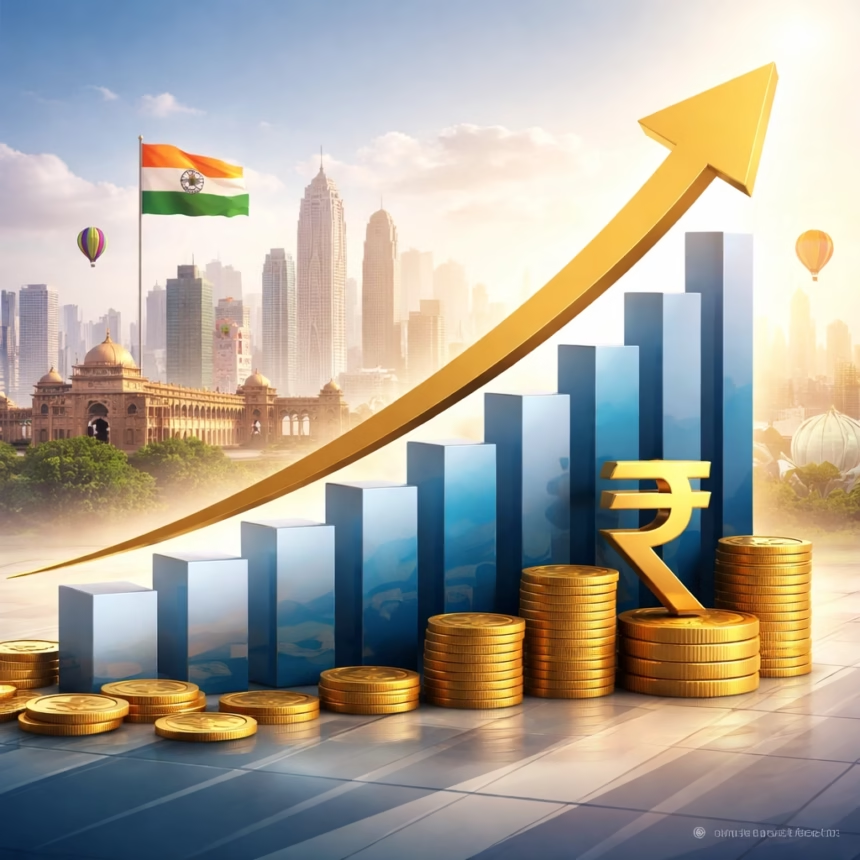
India's Economic Leap: A New Global Power?
India is experiencing a period of rapid economic growth, transforming its position on the global stage. This surge, largely fueled by domestic demand and strategic reforms, has positioned the nation as one of the fastest-growing major economies worldwide. The trajectory began gaining momentum in the early 2000s and continues to accelerate.
Background: A History of Transformation
Prior to 1991, India followed a socialist economic model with significant government control. The economic liberalization policies initiated in 1991, spearheaded by Prime Minister P.V. Narasimha Rao and Finance Minister Manmohan Singh, marked a pivotal turning point. This involved deregulation, privatization, and opening up to foreign investment. The reforms gradually shifted the economy from a closed, primarily agricultural base towards a more market-oriented structure, fostering growth in sectors like IT and services.
The subsequent decades witnessed consistent, albeit sometimes uneven, growth. GDP growth averaged around 6% annually from 2003 to 2019. However, the COVID-19 pandemic in 2020 caused a significant contraction, with GDP falling by 7.3%. Since then, India has demonstrated remarkable resilience, rebounding strongly and consistently exceeding previous growth projections.
Key Developments: Driving the Growth Engine
Several key developments have propelled India’s economic ascent. A significant factor is the robust growth of the services sector, particularly information technology (IT) and business process outsourcing (BPO). The IT industry, centered in cities like Bangalore, Hyderabad, and Chennai, contributes significantly to India’s GDP and exports.

Government initiatives like "Make in India," launched in 2014, aim to boost domestic manufacturing and attract foreign investment. This has led to increased investment in infrastructure, including roads, railways, and ports. The Goods and Services Tax (GST), implemented in 2017, simplified the complex indirect tax system, enhancing efficiency and transparency in the economy. Furthermore, the Digital India initiative has promoted digital literacy and access to technology, driving innovation and entrepreneurship.
Recent policy changes, including reforms in labor laws and privatization efforts across various sectors, are also contributing to increased investor confidence and attracting foreign direct investment (FDI). India has consistently ranked among the top destinations for FDI globally, attracting significant investments from countries like the United States, Singapore, and the United Kingdom.
More Read

The Rise of the Middle Class
The expanding middle class is a crucial driver of consumption and economic growth. Increased disposable incomes have fueled demand for consumer goods, services, and housing, further boosting economic activity. This demographic shift is particularly evident in urban centers but is also spreading to smaller towns and rural areas.
Impact: Transforming Lives and Industries
India’s economic growth has had a profound impact on its citizens. Poverty rates have declined significantly, although challenges remain, particularly in rural areas. Millions have been lifted out of poverty, and a growing segment of the population is enjoying a higher standard of living. Increased access to education and healthcare is also contributing to improved social outcomes.
Industries across the board are benefiting from the economic expansion. The manufacturing sector is experiencing a resurgence, driven by government policies and increased domestic demand. The agricultural sector, while still facing challenges, is witnessing increased productivity and adoption of modern farming techniques. The financial sector is also strengthening, with increased access to credit and financial services.
What Next: Navigating the Path Forward
India aims to become a $5 trillion economy by 2025, a goal that is increasingly within reach. Achieving this ambitious target will require sustained growth, structural reforms, and continued investment in infrastructure and human capital.
Key areas of focus include further strengthening the manufacturing sector, improving infrastructure connectivity, promoting innovation and technological development, and addressing social inequalities. The government is also prioritizing investments in renewable energy and sustainable development to address climate change. Successfully navigating these challenges will be crucial for India to solidify its position as a leading global economic power.
Challenges Remain
Despite the impressive growth, India still faces significant challenges. These include unemployment, income inequality, inadequate infrastructure in certain regions, and environmental concerns. Addressing these issues will be essential to ensure that the benefits of economic growth are shared by all segments of society and that the growth is sustainable in the long term.