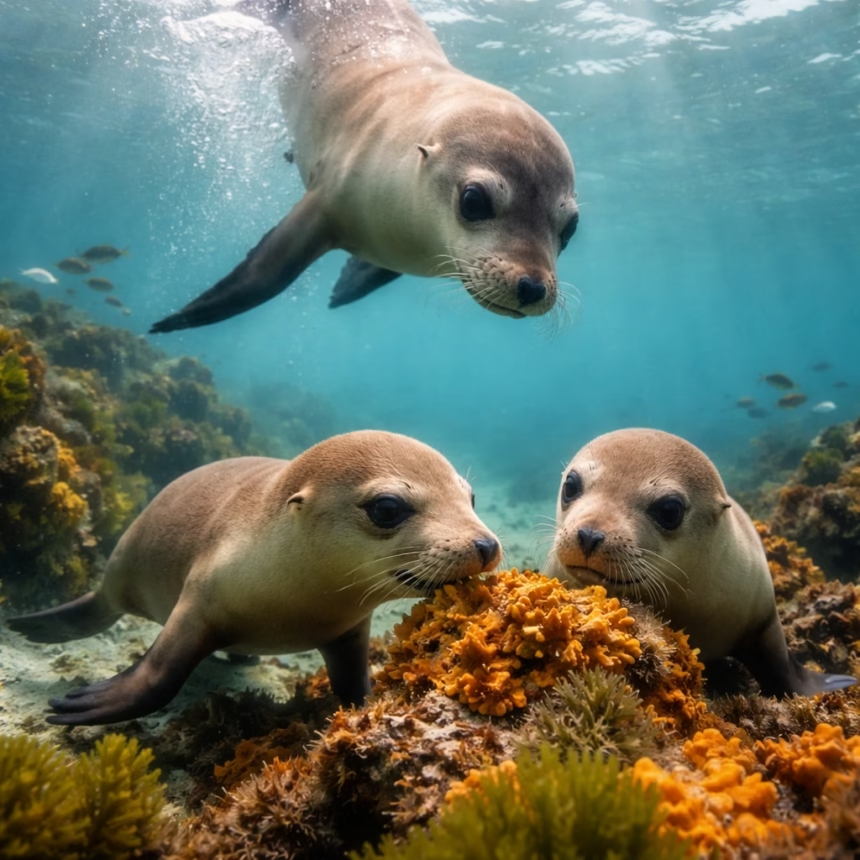
Along the rugged coastlines of South and Western Australia, a critical phase of life unfolds for Australian sea lion pups. These young pinnipeds embark on an intensive, months-long curriculum with their mothers, learning essential diving and foraging skills for survival. Observed particularly in breeding colonies like Seal Bay on Kangaroo Island, this vital educational period ensures the next generation is equipped to thrive.
Background: A Unique Path to Independence
The Australian sea lion (*Neophoca cinerea*), Australia's only endemic pinniped, is an endangered species whose survival hinges on each new generation's success. Unlike most seal species, *Neophoca cinerea* has an asynchronous 17.5-month breeding cycle, meaning pups are born year-round and remain with mothers for an extended period. This prolonged maternal care is crucial for imparting complex survival skills.
Pups, weighing 6 to 8 kilograms at birth, spend their first four to five months entirely reliant on their mother's milk, confined to breeding beaches and shallow rock pools. Located in colonies such as Seal Bay on Kangaroo Island or islands off the Eyre Peninsula, these sites offer initial safety. During this foundational phase, pups build strength and coordination through play and tentative dips, always under their mother's watchful eye.
As they grow, their curiosity expands, marking a gradual shift from a purely terrestrial existence to exploring the immediate marine environment. This extended dependency allows for a unique, drawn-out learning process, vital for a species facing significant conservation challenges. The asynchronous breeding also means that pups of various ages can be present in a colony simultaneously, though direct maternal instruction remains paramount.
Key Developments: From Play to Predator
The journey from playful splashing to serious hunting marks a pivotal developmental leap for Australian sea lion pups, intensifying around six to eight months of age. Mothers actively involve pups in foraging expeditions, initially short and close to the colony, introducing them to the open ocean.
More Read

A primary skill learned is effective diving and breath-holding. Mothers demonstrate techniques, with pups mimicking in shallower waters. Gradually, dive duration and depth increase. Researchers using dive recorders have documented pups progressing from a few meters for under a minute to over 20 meters for several minutes by their first year.
Foraging itself is a complex skill. Mothers teach prey identification, pursuit, and capture. Observations show mothers bringing partially incapacitated prey, like small fish, octopus, or squid, to the surface for pups to practice catching. This hands-on approach builds coordination and predatory instincts. The shift from milk to solid food is gradual; pups continue nursing while supplementing their diet. By 12 to 14 months, solid food forms a significant portion of their intake.
Pups also learn about preferred foraging grounds and dangers. Mothers guide them to specific reefs or seagrass beds known for prey, teaching them to navigate currents and avoid predators. This comprehensive "ocean education" provides essential spatial awareness and environmental knowledge, critical for independent survival in a vast marine world.
More Read

Impact: A Future in the Balance
The successful transfer of diving and foraging skills is paramount for individual Australian sea lion pups and the entire endangered species. Pups failing to master these complex abilities face grim prospects, often succumbing to starvation or predation post-weaning. This intensive maternal investment, spanning nearly a year and a half, underscores the high stakes.
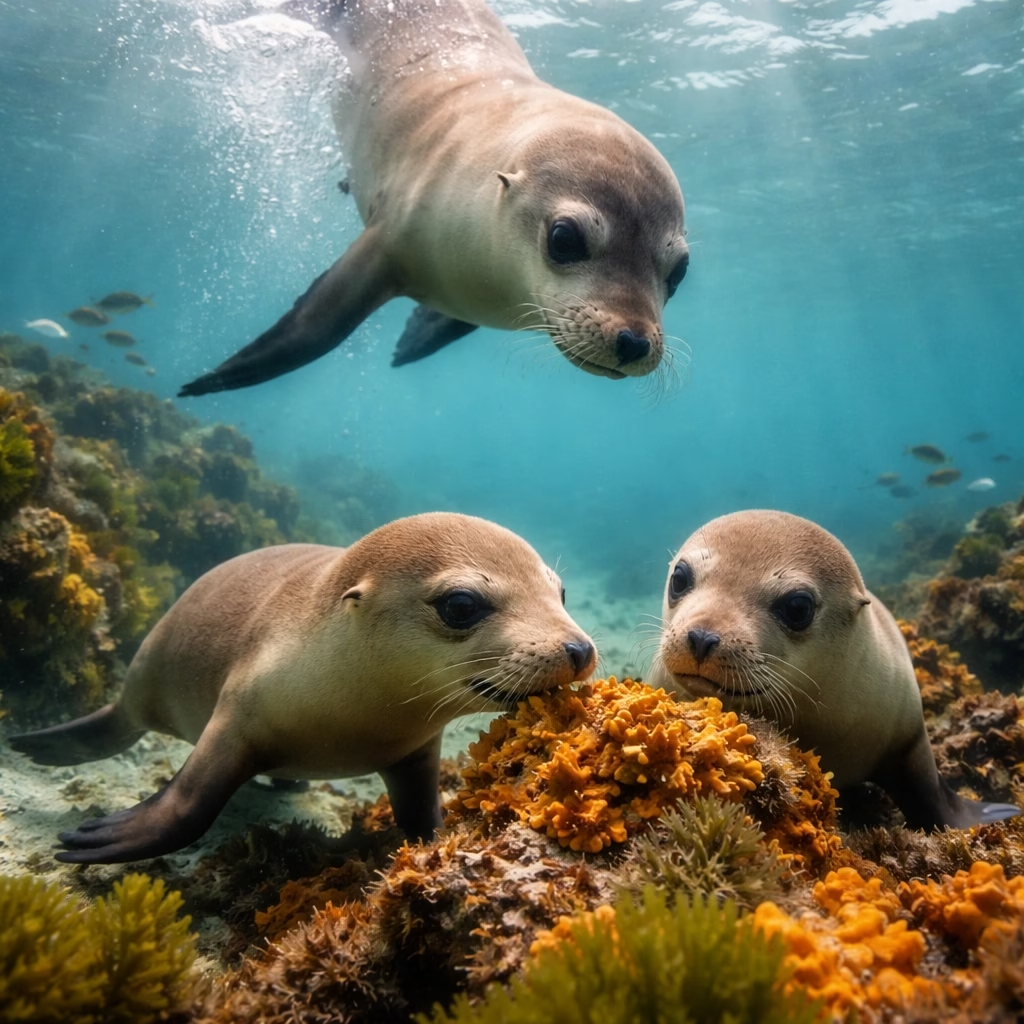
For individual pups, acquiring these skills ensures food security, strength, and evasion of marine threats. Inadequate training leads to malnutrition and increased vulnerability. This period acts as a natural selection filter, ensuring only the most capable individuals survive to reproduce.
Mothers incur significant energetic costs, producing milk and expending energy guiding and protecting offspring. This prolonged commitment impacts their own body condition and ability to re-breed quickly, contributing to the species' slow population growth. Thus, a pup's learning success directly influences the mother's reproductive efficiency and colony health.
At the species level, effective skill transmission is vital for population viability. With only 10,000 to 12,000 individuals, every successful recruitment is crucial. The unique breeding cycle and reliance on maternal teaching make the species vulnerable to disruptions. Ocean warming, prey depletion from overfishing, and human disturbance can impede this learning process, exacerbating threats. Conservation efforts, therefore, focus on protecting critical breeding and foraging habitats to ensure these vital lessons continue uninterrupted.
What Next: Towards Full Independence
As Australian sea lion pups approach their second year, maternal instruction wanes, leading to full independence. The final stages involve a complete transition from milk to a diet of self-caught prey, coupled with refinement of advanced hunting strategies.

By 16 to 18 months, pups are expected to be proficient divers and foragers, capable of extended solo trips. Weaning typically occurs around this age, marking a critical milestone where young sea lions rely entirely on their acquired skills. Researchers assess readiness by monitoring dive depth, duration, and foraging success. Studies show juveniles can dive over 100 meters for more than five minutes, demonstrating adult-like mastery.
Post-weaning, independent juveniles continue honing skills, exploring new foraging grounds, and adapting to seasonal prey changes. They navigate competition and avoid predators without direct maternal protection. Their survival rates during this initial independence are crucial for the species' long-term health. Young sea lions will mature over several years, reaching reproductive age around four to five years for females and six to eight for males.
Ongoing research by entities like the South Australian Research and Development Institute (SARDI) utilizes satellite tags and observational studies to track dispersal, foraging success, and survival. These insights are vital for informing conservation management, identifying threats to juvenile survival, and ensuring critical habitat protection. The journey from dependent pup to self-sufficient adult is a testament to maternal instruction and a beacon of hope for this unique Australian marine mammal.