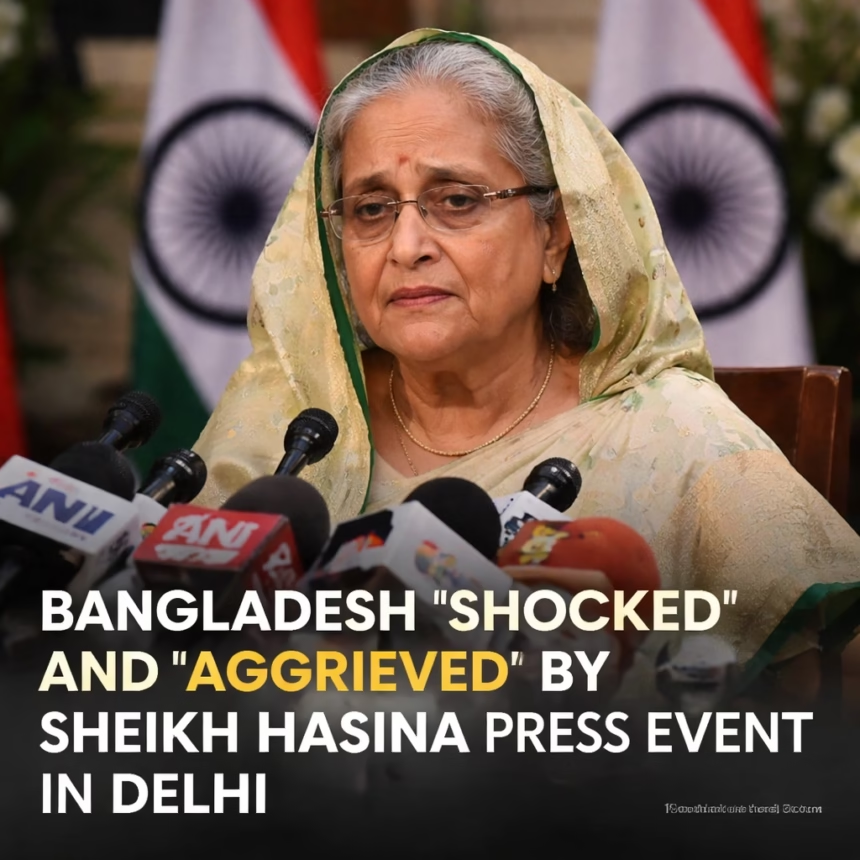
Bangladesh is grappling with significant diplomatic and political fallout following a recent press event involving Prime Minister Sheikh Hasina during her state visit to New Delhi, India. The event, held in early June 2024, has provoked widespread condemnation across the Bangladeshi political spectrum, with critics describing it as "shocking," "aggrieved," and setting a "dangerous precedent" for the nation's foreign policy and sovereignty. The unexpected nature and perceived implications of the press briefing have triggered an intense debate within the country about its diplomatic protocols and national dignity.
Background to a Strained Partnership
The relationship between Bangladesh and India, historically robust and rooted in shared liberation struggles, often navigates complex geopolitical sensitivities. India was a crucial ally during Bangladesh’s 1971 War of Independence, fostering a bond that has shaped decades of diplomatic, economic, and cultural exchanges. However, this close proximity also brings inherent challenges, including issues like transboundary river water sharing, border management, and trade imbalances, which periodically test the relationship.
Prime Minister Sheikh Hasina, the veteran Awami League leader, has consistently championed strong ties with India throughout her multiple terms in office. Her foreign policy stance has often emphasized regional cooperation and mutual benefit, leading to numerous bilateral visits and high-level engagements. Typically, such visits involve carefully choreographed media interactions, often culminating in joint statements or press conferences where both leaders address selected media from both nations, or where the Bangladeshi Prime Minister addresses her own nation's media upon return.
The context of this particular visit to Delhi in early June 2024 was set against a backdrop of increasing regional strategic competition and domestic political considerations in Bangladesh, following recent national elections. Expectations were high for discussions on critical bilateral issues, including economic partnerships, energy security, and regional connectivity projects. Established diplomatic norms usually dictate that significant policy announcements or sensitive national positions are either communicated through joint communiques or reserved for domestic platforms to first inform the Bangladeshi public and media. The perceived deviation from these established norms at the Delhi press event forms the core of the current controversy.

The Delhi Press Event: A Departure from Norms
The contentious event occurred on June 8, 2024, at Hyderabad House in New Delhi, following bilateral talks between Prime Minister Hasina and her Indian counterpart. While joint press statements are customary, reports from Dhaka indicate that the format and content of this particular briefing diverged significantly from previous practices. Instead of a typical joint address, the event reportedly featured a specific setup or series of statements perceived by many in Bangladesh as disproportionately favoring the Indian narrative or allowing the Bangladeshi Prime Minister to make announcements that should have been first communicated domestically.
Bangladeshi media outlets, often accompanying the Prime Minister on foreign tours, found themselves with limited or no direct access to question their own head of government on critical issues. This perceived sidelining of domestic journalists ignited the initial wave of criticism. Further exacerbating the situation were specific remarks made by Prime Minister Hasina during the event, which some Bangladeshi political analysts and opposition figures interpreted as potentially compromising Bangladesh's sovereign interests or making concessions without prior domestic consultation. Details emerging from the event suggested discussions touching upon sensitive security cooperation, regional energy projects, and even internal Bangladeshi political dynamics, all aired on foreign soil without what many deemed adequate prior transparency or public discourse in Bangladesh.
Specific Statements Under Scrutiny
While the full transcript was closely analyzed, particular focus fell on comments related to regional security frameworks and potential future bilateral agreements on resource sharing. Critics argued these were matters of significant national import that merited extensive public and parliamentary debate within Bangladesh before any public utterance on foreign territory. The perception was that the Prime Minister was effectively addressing an international audience, primarily Indian, on matters that directly impacted Bangladeshi citizens, while her own constituents remained largely uninformed or had to rely on foreign media reports.
More Read

Criticism from Opposition and Civil Society
The immediate aftermath saw a torrent of condemnations from Bangladesh’s opposition parties, including the Bangladesh Nationalist Party (BNP) and various Islamist groups. They lambasted the event as an affront to national dignity and a betrayal of democratic principles. Civil society organizations, academics, and prominent journalists also voiced their “shock” and “aggrievement,” questioning the rationale behind such a departure from established diplomatic protocols. They highlighted concerns about transparency, accountability, and the potential erosion of national pride in the international arena.
Profound Impact on Domestic and Diplomatic Fronts
The fallout from the Delhi press event has been immediate and far-reaching, reverberating through Bangladesh’s domestic political landscape and potentially straining its crucial relationship with India. At home, the incident has provided fresh ammunition to the opposition, which has long accused the ruling Awami League of being overly deferential to India. This narrative has been amplified, leading to renewed calls for greater transparency in foreign policy and a more assertive stance on national interests.
Domestic Political Landscape
The controversy has reignited debates about governmental accountability and the role of the Prime Minister’s office in communicating significant policy decisions. Opposition leaders have seized upon the perceived gaffe to rally public sentiment, portraying the event as a symbol of the government’s disconnect from its own people and its willingness to compromise national dignity on foreign soil. This could potentially destabilize the political environment, especially given the recent general elections and ongoing domestic political tensions. Within the ruling Awami League itself, while official statements have defended the Prime Minister’s actions, there are whispers of unease among certain factions regarding the optics and potential long-term implications of the event.
Bangladesh-India Relations
On the diplomatic front, the incident poses a subtle but significant challenge to the carefully cultivated relationship between Dhaka and New Delhi. While both governments are likely to downplay the controversy publicly, the strong reaction in Bangladesh cannot be ignored. It could lead to increased pressure on the Bangladeshi government to adopt a more cautious approach in future bilateral engagements, potentially slowing down progress on certain joint initiatives. India, too, might need to reassess its understanding of Bangladeshi domestic sensitivities to avoid similar diplomatic missteps. The perception of a “dangerous precedent” could foster an environment of mistrust, making future high-level interactions more fraught with domestic scrutiny.
Media Freedom and Public Perception
Bangladeshi journalists, who felt sidelined during the Delhi event, have expressed deep frustration. Editorials in leading newspapers have questioned the access granted to domestic media during crucial foreign visits and have called for clearer guidelines. This incident has sparked a broader conversation about media freedom and the government’s communication strategy, both domestically and internationally. Public opinion, fueled by social media debates and news coverage, appears divided, with a significant portion expressing disappointment and concern over the perceived slight to national pride. The incident has arguably diminished public trust in official narratives surrounding foreign policy engagements.
What Lies Ahead: Navigating the Aftermath
The repercussions of the Delhi press event are expected to unfold over the coming weeks and months, shaping future diplomatic engagements and domestic political discourse in Bangladesh. The government in Dhaka faces the immediate challenge of managing the public outcry and addressing the criticisms leveled against Prime Minister Hasina’s conduct.

Official Clarifications and Parliamentary Debates
It is highly anticipated that the Bangladeshi government will issue official clarifications regarding the nature and purpose of the Delhi press event. These statements will likely aim to reassure the public and counter the narrative of a “dangerous precedent.” We can also expect heated debates in the Jatiya Sangsad (National Parliament), with opposition parties likely to demand explanations and accountability from the foreign minister and potentially the Prime Minister herself. Such parliamentary sessions will be crucial battlegrounds for shaping public understanding and government policy.
Re-evaluating Diplomatic Protocols
The incident will likely prompt a re-evaluation of diplomatic protocols for foreign visits, particularly concerning media engagement. There may be calls for stricter guidelines ensuring equitable access for Bangladeshi journalists and clearer communication strategies for sensitive announcements made abroad. This could lead to a more formalized approach to joint press conferences and statements, ensuring that domestic audiences are adequately informed and respected.
Future Bangladesh-India Engagements
While the fundamental strategic alignment between Bangladesh and India is unlikely to be derailed, future high-level engagements may proceed with increased caution. Both sides will likely be more sensitive to the domestic political implications of their public interactions. There might be a greater emphasis on pre-briefings for domestic media and a more measured approach to public statements on contentious issues. The incident serves as a reminder of the delicate balance required in maintaining strong bilateral ties while upholding national sovereignty and dignity.
Long-term Implications for Regional Diplomacy
Beyond immediate concerns, the episode could have long-term implications for how Bangladesh conducts its regional diplomacy. It might encourage a more assertive posture in multilateral forums and a greater emphasis on diversifying diplomatic engagements to mitigate any perceived over-reliance on a single partner. The “dangerous precedent” narrative, if it takes root, could influence public expectations for all future foreign policy endeavors, demanding greater transparency and a clearer articulation of national interests on the global stage. The coming months will reveal the true extent of this diplomatic tremor and how Bangladesh chooses to navigate its path forward.