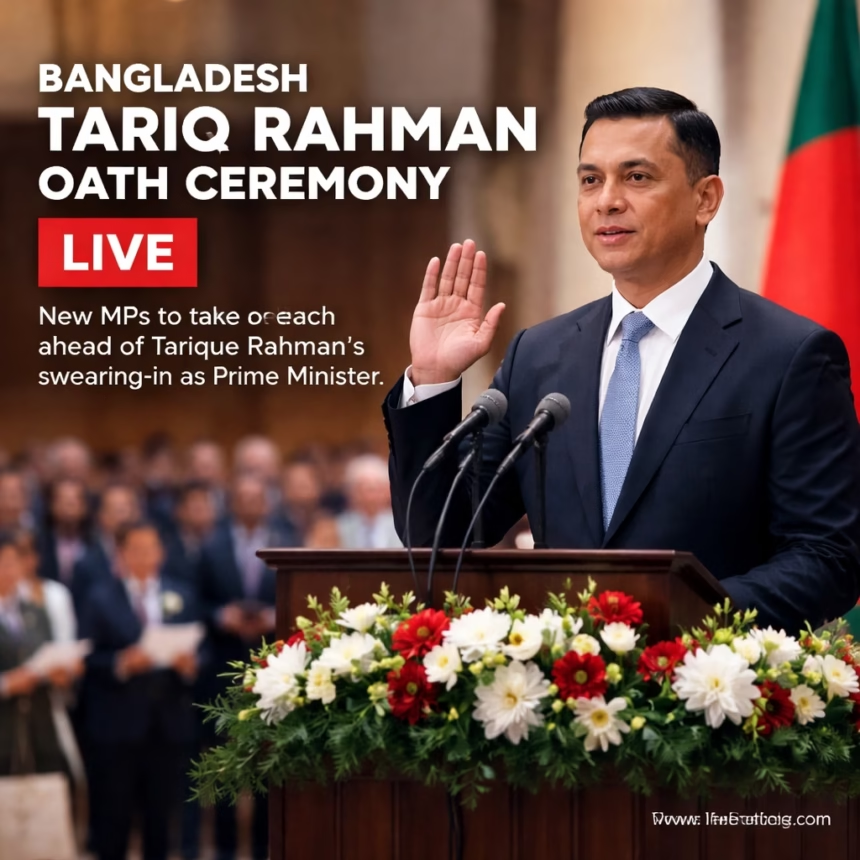
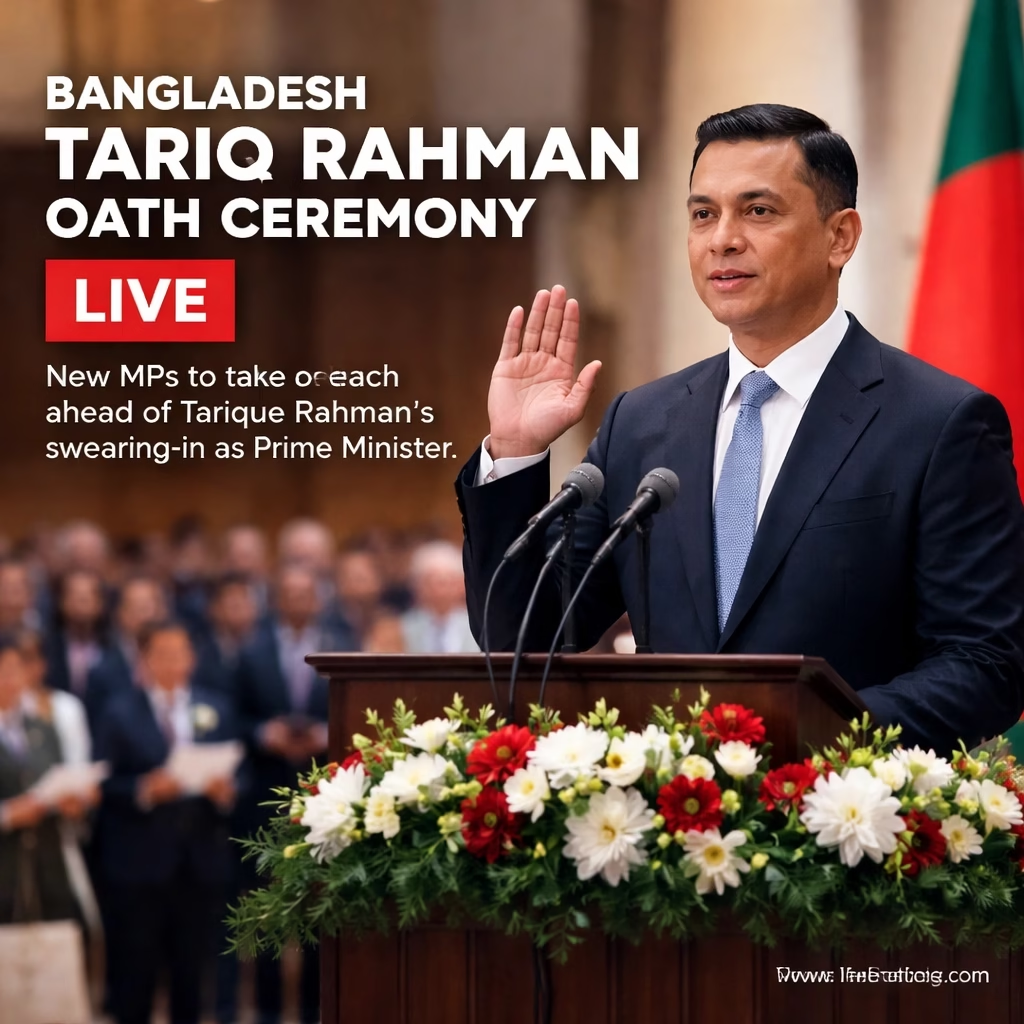
A pivotal moment in Bangladesh's political landscape unfolded today, November 15, 2024, as newly elected Members of Parliament were sworn into office at the historic Jatiya Sangsad Bhaban in Dhaka. This crucial ceremony paves the way for the much-anticipated swearing-in of Mr. Tarique Rahman as the nation's next Prime Minister, signaling a significant shift in the country's governance.
Background to a Political Resurgence
The journey to this day has been long and fraught with political complexities for Mr. Tarique Rahman, the eldest son of former President Ziaur Rahman and former Prime Minister Khaleda Zia. As the Senior Vice Chairman of the Bangladesh Nationalist Party (BNP), his political career has been characterized by periods of intense influence, legal challenges, and a prolonged self-imposed exile. For over a decade, Mr. Rahman resided in London, directing the party from abroad amidst various legal convictions and an Interpol red notice.
The BNP, a formidable political force, has spent a significant portion of the last decade in opposition, often boycotting general elections and demanding a non-partisan caretaker government to oversee polls. This stance led to a period of political stagnation and heightened tensions, with widespread protests and calls for electoral reform dominating the national discourse. The party's minimal representation in the previous parliament underscored the depth of its political struggles.
The path to this momentous day began with a series of intensive, internationally mediated political dialogues earlier this year. These discussions, involving major political parties and civil society organizations, culminated in a landmark agreement to hold a snap general election on October 20, 2024. This consensus marked a significant departure from previous stalemates and saw the BNP participate fully, ending its long electoral boycott.
The October 20 election delivered a surprising and decisive victory for the BNP-led alliance, securing a clear majority of 205 out of 300 directly elected seats in the Jatiya Sangsad. This outcome defied many pre-election predictions and reflected a strong public desire for change and a more inclusive political process. The high voter turnout, estimated at over 70%, further validated the mandate.

Following the election results, the legal hurdles that had long prevented Tarique Rahman's return to Bangladesh and participation in active politics were reportedly addressed. This involved a combination of judicial review processes and a special presidential decree, which facilitated the resolution of his outstanding legal matters and cleared his path for candidacy. He returned to Bangladesh on November 10, 2024, to a massive and jubilant reception at Hazrat Shahjalal International Airport, marking his first presence in the country in over 16 years. His return immediately energized the party base and set the stage for his leadership role.
Key Developments Leading to the Oath
The immediate days following the general election have been a whirlwind of political activity, culminating in today's significant parliamentary oath ceremony.
The Election Commission of Bangladesh officially certified the results of the October 20 general election on October 25. This formal declaration confirmed the overwhelming victory of the BNP and its allies, validating the public's mandate and setting the constitutional clock for the formation of the new government. The gazette notification listed all 300 elected members, including the 50 reserved seats for women that were subsequently allocated based on party strength.
More Read

Acting on his constitutional mandate, President Mohammed Shahabuddin officially summoned the newly elected Members of Parliament to convene for their oath-taking ceremony on November 15. The President's Proclamation outlined the schedule and venue, ensuring the smooth transition of parliamentary power. The Jatiya Sangsad Bhaban, designed by Louis Kahn, was prepared for the grand event.
At precisely 10: 00 AM BDT today, Speaker Shirin Sharmin Chaudhury commenced the solemn ceremony at the Jatiya Sangsad Bhaban. A total of 298 newly elected MPs from various constituencies across the country took their oaths, pledging allegiance to the Constitution and the nation. Each MP, in groups, stepped forward to recite the oath, committing to uphold the sovereignty and integrity of Bangladesh. Notable absences included two independent candidates whose elections are currently under judicial review following allegations of irregularities, and their oaths will be administered once their legal status is resolved.
Yesterday, November 14, the newly elected BNP MPs held a crucial parliamentary party meeting at the party's central office in Naya Paltan. During this highly anticipated session, Tarique Rahman was unanimously elected as the leader of the parliamentary party. This formal endorsement by his peers solidified his position as the presumptive Prime Minister, confirming the party's confidence in his leadership. The meeting was attended by all elected BNP MPs and senior party leaders.
Following the parliamentary party's decision, a high-level delegation led by BNP Secretary General Mirza Fakhrul Islam Alamgir formally met with President Shahabuddin at Bangabhaban, the presidential palace. The delegation presented the resolution confirming Mr. Rahman's election as parliamentary leader. The President subsequently extended an official invitation to Mr. Rahman to form the new government, setting the final stage for his swearing-in as Prime Minister. This act completed the constitutional requirements for the transfer of power.
Impact on Bangladesh and Beyond
The political shift heralded by Tarique Rahman's impending premiership is expected to have far-reaching impacts across various sectors, both domestically and internationally.
More Read

The most immediate and profound impact is the ushering in of a new political era. This marks the end of a prolonged period of governance by the Awami League and the return of the BNP to power after a significant hiatus. This shift is anticipated to reconfigure the entire political landscape, from the dynamics of parliamentary debates to the governance structures at local levels. Analysts suggest this could lead to a more vibrant multi-party system, fostering greater checks and balances.
Business communities and investors are keenly observing the new government's economic agenda. Initial reactions suggest a cautious optimism, with expectations of policy reforms aimed at attracting foreign direct investment, stabilizing the currency, and addressing persistent inflation. Experts from the Dhaka Chamber of Commerce and Industry (DCCI) highlighted the need for consistent and transparent policy frameworks to ensure sustained economic growth and investor confidence. Key sectors like garments, pharmaceuticals, and IT are particularly attentive to forthcoming policy announcements.
The public mood is a complex mix of hope and apprehension. Supporters of the BNP celebrate the return to what they perceive as a more inclusive democratic process and an end to political polarization. However, segments of society remain wary, given the country's history of political volatility and past allegations against some political figures. Discussions around human rights, freedom of expression, and the independence of state institutions are prominent, with civil society organizations urging the new government to prioritize these areas.
Global powers are closely monitoring the developments in Bangladesh. India, a key regional ally and neighbor, has already issued a congratulatory message, emphasizing continued bilateral cooperation on trade, security, and connectivity. Western nations, including the United States and the European Union, have expressed their hopes for a strengthened democratic process, respect for human rights, and good governance under the new administration. China has also reiterated its commitment to existing economic partnerships, particularly concerning infrastructure projects under the Belt and Road Initiative. The international community largely welcomes the peaceful transition of power.
What Lies Ahead: Milestones and Challenges
As Bangladesh stands on the cusp of a new administration, several critical milestones are anticipated in the coming days and weeks, each carrying significant implications for the nation's future.
The most immediate next step is the official swearing-in of Tarique Rahman as Prime Minister. This momentous ceremony is scheduled for tomorrow, November 16, at 11:00 AM BDT, at Bangabhaban, the official residence of the President. Dignitaries from across the political spectrum, foreign envoys, and senior government officials are expected to attend, making it a high-profile event that will be broadcast live nationwide.
Following his oath, Mr. Rahman is expected to announce his cabinet within the next 48 hours. Speculation is rife regarding key ministerial portfolios, with prominent BNP leaders such as Dr. Moin Khan for Finance, Amir Khasru Mahmud Chowdhury for Foreign Affairs, and Abdul Moyeen Khan for Home Affairs frequently mentioned. The composition of the cabinet, particularly the allocation of crucial ministries, will offer crucial insights into the new government's priorities, its approach to governance, and the balance of power within the ruling alliance.
The inaugural session of the 12th Jatiya Sangsad is anticipated to be called within the first week of December. This session will be pivotal for several reasons, including the election of a new Deputy Speaker, the formation of various parliamentary committees, and the outlining of the legislative agenda for the coming months. It will also be the first opportunity for the opposition to engage with the new government in a formal parliamentary setting.
The new government faces pressing challenges and will need to articulate an immediate policy agenda. Analysts anticipate an initial focus on economic stabilization, including measures to control the soaring inflation, boost exports, and address the rising cost of living that has burdened ordinary citizens. Governance reforms, including strengthening anti-corruption bodies, ensuring judicial independence, and reforming the public administration, are also high on the agenda, reflecting key promises made during the election campaign.
Mr. Rahman's administration will need to navigate a complex political landscape, manage high public expectations, and foster national unity after a period of intense political division. Reconciling differing factions, addressing historical grievances, and ensuring equitable development across all regions of Bangladesh will be paramount to its long-term success and to building a stable, prosperous future for the nation. The ability to deliver on its electoral promises while maintaining peace and order will define its early tenure.