Shifting Alliances: Cambodia's Gambit in the Geopolitical Arena
Cambodia is navigating a complex geopolitical landscape, strategically distancing itself from its long-standing ties with China while simultaneously seeking closer relations with the United States. This shift, observed prominently throughout 2023 and early 2024, raises questions about Cambodia's future foreign policy direction.
Background: Decades of Chinese Influence
For decades, China has been a dominant economic and political force in Cambodia. Beginning in the 1990s, Chinese investment surged, particularly in infrastructure projects such as roads, bridges, and power plants. China became Cambodia’s largest investor, and a significant provider of development aid. The relationship deepened with the establishment of the Free Trade Area between China and ASEAN in 2010. Cambodia has consistently supported China’s Belt and Road Initiative (BRI), even hosting the 2023 ASEAN Summit, where China exerted considerable influence on the agenda. This close relationship, however, has also raised concerns within the international community regarding Cambodia's autonomy and potential vulnerability to Chinese pressure.
Key Developments: A Strategic Realignment
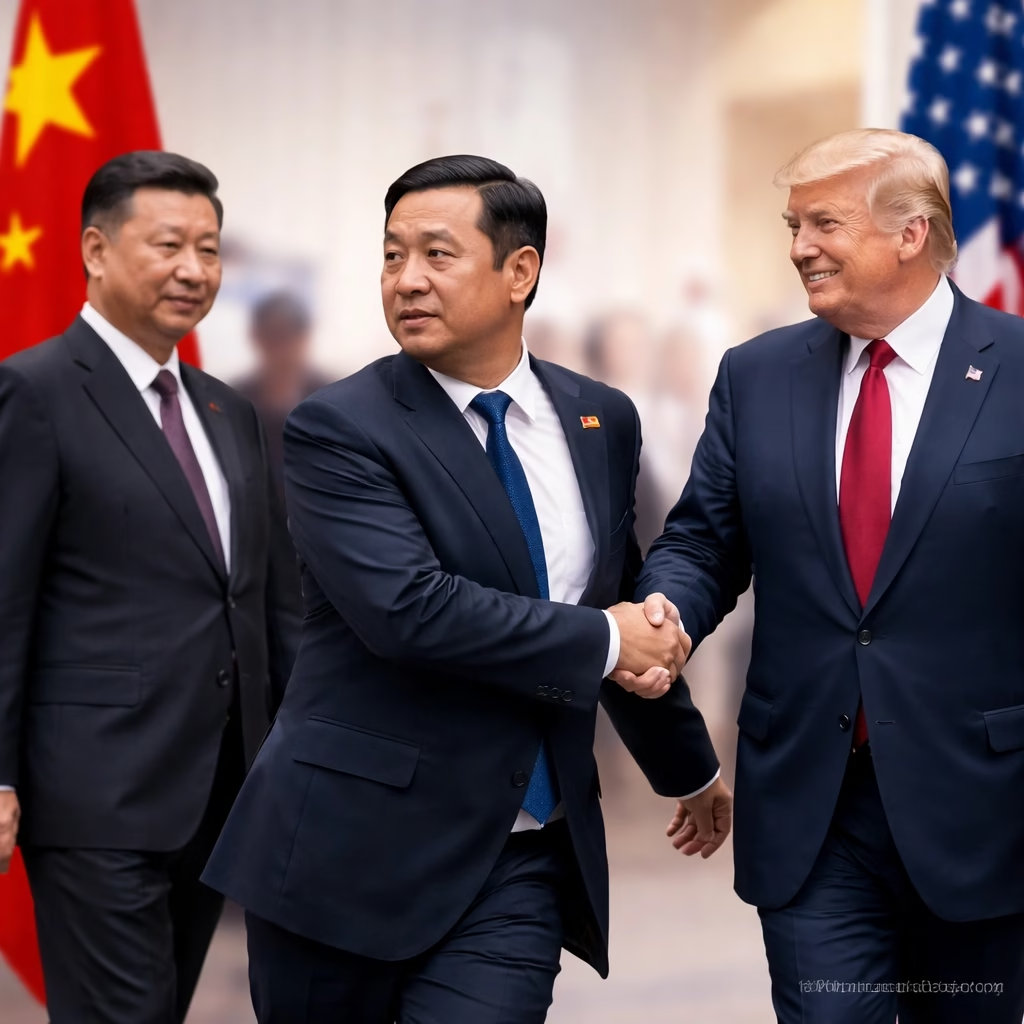
Recent months have witnessed a noticeable shift in Cambodia's foreign policy stance. A key indicator is Cambodia's decision to host the 2025 SEA Games with significant support from the United States. This event represents a tangible strengthening of ties with Washington. Furthermore, Cambodian Prime Minister Hun Sen has engaged in more frequent and visible interactions with former U.S. President Donald Trump, including a meeting in San Francisco in April 2024.
More Read

Cambodia has also taken a more cautious approach to some BRI projects, particularly those perceived as overly debt-laden or strategically disadvantageous. While not a complete rejection, this signals a willingness to diversify its economic partnerships. Statements from Cambodian officials increasingly emphasize the importance of maintaining good relationships with all major powers, including the U.S., China, and Vietnam. The country has also been actively participating in initiatives championed by the U.S. and its allies, such as the Indo-Pacific Economic Framework (IPEF).
The Role of Hun Sen
Prime Minister Hun Sen, who has ruled Cambodia for over three decades, has been the driving force behind this strategic realignment. His decision-making, influenced by both domestic political considerations and a pragmatic assessment of the global power dynamics, suggests a desire to balance Cambodia’s relationships and safeguard its national interests.
Impact: Implications for Regional Power Dynamics
Cambodia’s shift has several potential impacts. It could signal a weakening of China's influence in Southeast Asia, although China remains a crucial economic partner. The move also strengthens the U.S.’s position in the region, particularly in countering China's growing assertiveness.
Some analysts believe Cambodia’s actions are motivated by a desire to avoid becoming overly reliant on China, which could jeopardize its sovereignty. Others view it as a calculated move to secure greater economic benefits from the U.S. and other partners. Vietnam, a long-standing rival of China, is likely to view Cambodia’s shift with cautious optimism.
What Next: Future Trajectory
The trajectory of Cambodia’s foreign policy remains uncertain, but several milestones are likely. The 2025 SEA Games will be closely watched as a demonstration of the deepening U.S.-Cambodia relationship. Cambodia’s stance on future BRI projects will also be a key indicator of its commitment to diversifying its partnerships.
Economic Considerations
Cambodia's economic future will likely depend on its ability to attract investment from a wider range of sources. Diversifying its trade partners and reducing its reliance on China could be crucial for long-term economic stability.
Navigating the Great Power Competition
Cambodia faces the challenge of navigating the intensifying competition between the U.S. and China. Maintaining a balanced foreign policy and avoiding entanglement in their geopolitical rivalry will be essential for preserving its sovereignty and promoting its own interests.