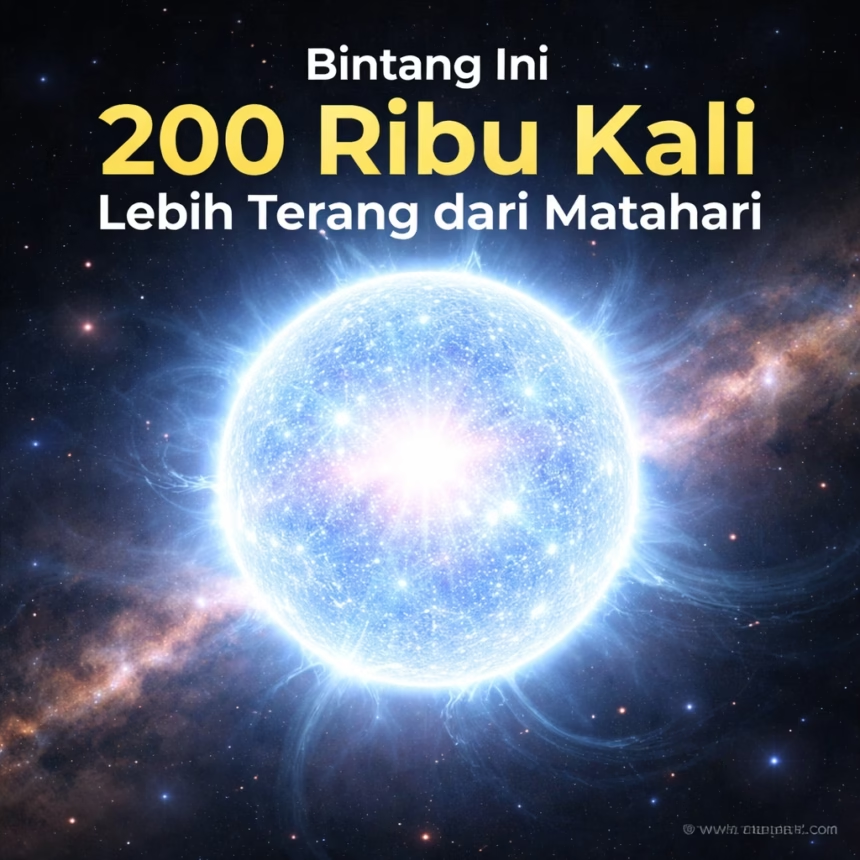
Dazzling Discovery: A Star Unlike Any Other
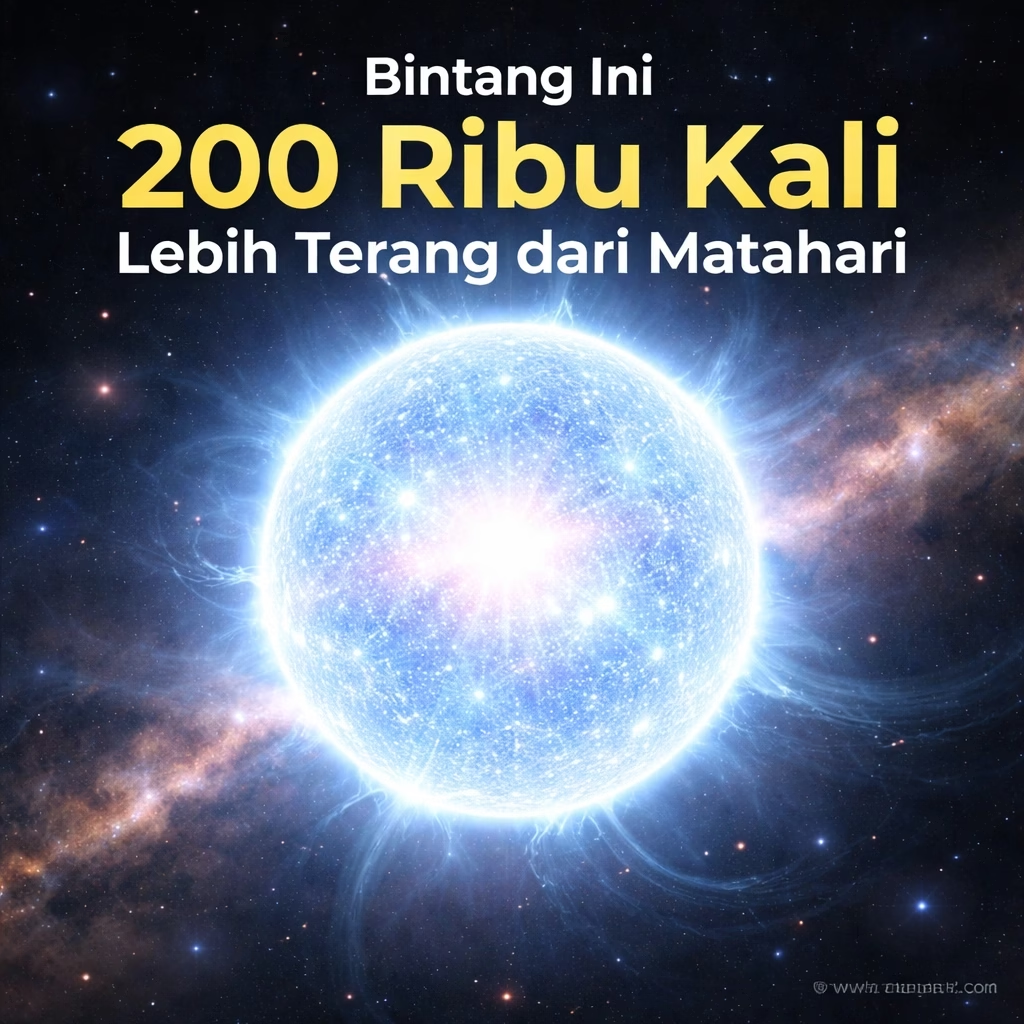
Astronomers have identified a star, designated KIC 8462852, exhibiting an extraordinary luminosity – 200,000 times brighter than our Sun. Located approximately 1,480 light-years away in the constellation Cygnus, this celestial object has captivated the scientific community with its unusual and fluctuating light patterns, sparking intense study since 2015.
Background: A Star Under Observation
KIC 8462852 was first brought to the attention of the public in 2015 by the Kepler Space Telescope, a NASA mission designed to search for exoplanets. While initially flagged for its unusual dimming events, the star quickly became a subject of intense scrutiny. Its light curve – a graph of its brightness over time – revealed a series of irregular dips that didn't align with typical planetary transits. This anomaly immediately raised questions about the star’s nature and the potential causes of its peculiar behavior.
The star is a K-type giant, meaning it’s larger and hotter than our Sun, but not as massive as some of the most extreme stars in the universe. Estimates place its radius at roughly 1.7 billion kilometers (1.1 billion miles), making it significantly larger than the Sun. The star’s age is estimated to be around 500 million years, though precise dating remains a challenge.
Key Developments: Unveiling the Mystery
Since 2015, numerous observations from ground-based telescopes, including the Very Large Telescope (VLT) in Chile and the Keck Observatory in Hawaii, have been dedicated to analyzing KIC 8462852. These observations have confirmed the star's immense brightness and the unusual nature of its dimming events. The dimming isn't consistent with planets passing in front of the star; the patterns are far more irregular and complex.
More Read

One particularly intriguing aspect is the "Tabby's Star" event, as it became popularly known. In 2017, the star experienced a dramatic and unexplained dimming event that reduced its brightness by 22%. This event lasted for several weeks and fueled speculation about various potential explanations, ranging from dust clouds to more exotic possibilities.
Recent analysis using data from the James Webb Space Telescope (JWST), launched in December 2021, has provided valuable insights. JWST's infrared capabilities have allowed astronomers to study the star's atmosphere with unprecedented detail. While the findings have not definitively solved the mystery, they have ruled out some earlier hypotheses and provided clues about the composition of the surrounding environment.
Impact: A Cosmic Enigma
The discovery and ongoing study of KIC 8462852 have had a significant impact on the scientific community and the public imagination. The unusual dimming events have prompted researchers to reconsider their understanding of stellar behavior and planetary systems.
More Read

Beyond the scientific implications, the star's mystery has captured the public’s attention, leading to widespread discussion about the possibility of extraterrestrial intelligence. While most scientists emphasize the need for rigorous scientific investigation, the star’s anomalous behavior has inevitably fueled speculation about unconventional explanations.
The research effort has also spurred advancements in astronomical observation techniques and data analysis methods, pushing the boundaries of our ability to study distant stars and exoplanets. The sheer scale of the star's luminosity and the complexity of its dimming events demand sophisticated tools and innovative approaches.
What Next: Continuing the Investigation
Scientists are continuing to monitor KIC 8462852 using various telescopes and instruments. The primary goals of future observations include:
Detailed Atmospheric Analysis: Further JWST observations will focus on refining the understanding of the star's atmospheric composition and searching for any unusual chemical signatures.
Precise Light Curve Mapping: Continued monitoring will allow astronomers to create a more complete and detailed light curve, which may reveal subtle patterns or periodicities that could provide clues about the cause of the dimming events.
Exclusion of Natural Explanations: Researchers are actively working to rule out various natural phenomena, such as dense dust clouds, circumstellar disks, and unusual stellar activity.
Searching for Artificial Structures: While highly speculative, some researchers continue to explore the possibility that the dimming events might be caused by an advanced extraterrestrial megastructure, such as a Dyson sphere. However, this remains a very low-probability hypothesis.
The investigation into KIC 8462852 is an ongoing process, and it may take years, even decades, to fully unravel the mystery of this extraordinary star. Each new observation and analysis brings us closer to a more complete understanding of its nature and behavior, potentially revolutionizing our knowledge of the universe.
More Read

Possible Explanations Under Consideration
Several hypotheses have been proposed to explain KIC 8462852’s behavior. These include:
- Circumstellar Dust Disk: A large dust disk orbiting the star could be partially obscuring its light.
- Multiple Companion Stars: The star might have several unseen companion stars that periodically eclipse it.
- Unusual Stellar Activity: Extreme magnetic activity or other unusual processes on the star’s surface could be responsible for the dimming.