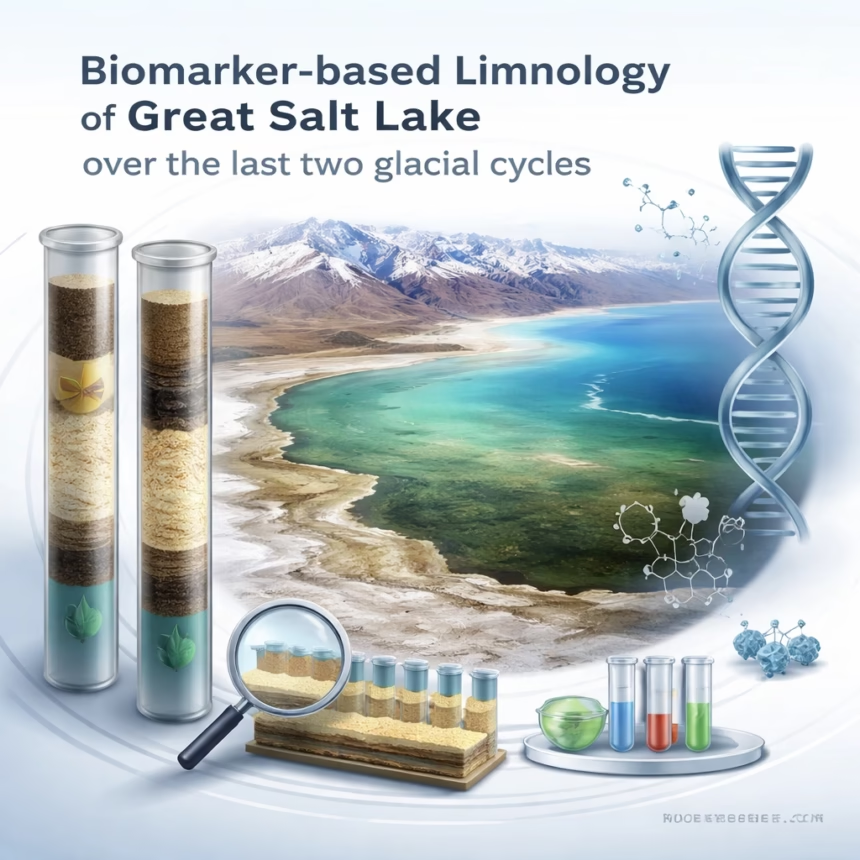
A new study published in *Geophysical Research Letters* has used biomarker analysis to reconstruct the climate history of Utah's Great Salt Lake over the past two glacial cycles. Researchers from the University of Utah and the U.S. Geological Survey (USGS) examined lake sediments spanning 200,000 years to understand how the lake responded to ancient climate changes.

Great Salt Lake, the largest saltwater lake in the Western Hemisphere, has experienced significant fluctuations in size and salinity throughout its history. The study focused on two key periods: the last glacial maximum (around 20,000 years ago) and the Holocene epoch (the last 11,700 years). By analyzing biomarkers—organic molecules produced by living organisms—scientists were able to infer past environmental conditions, including temperature, precipitation, and lake levels.
The researchers discovered that during the last glacial maximum, the lake was significantly larger and fresher due to higher precipitation and lower evaporation rates. In contrast, during the Holocene, the lake shrank and became saltier as the climate warmed. The study also identified multiple periods of rapid drying and expansion, suggesting that Great Salt Lake has been highly sensitive to climate variability.
The findings provide valuable insights into how arid regions like Utah may respond to future climate change. Understanding the lake's past behavior can help water managers prepare for potential water shortages and ecosystem shifts. The study also highlights the importance of preserving Great Salt Lake, which supports diverse wildlife and economic activities such as mineral extraction and tourism.

The researchers plan to extend their analysis to other ancient lakes in the region to compare their responses to climate changes. Additionally, they aim to refine their techniques to better predict how Great Salt Lake might evolve under different climate scenarios. The study underscores the need for continued monitoring and conservation efforts to protect this critical natural resource.