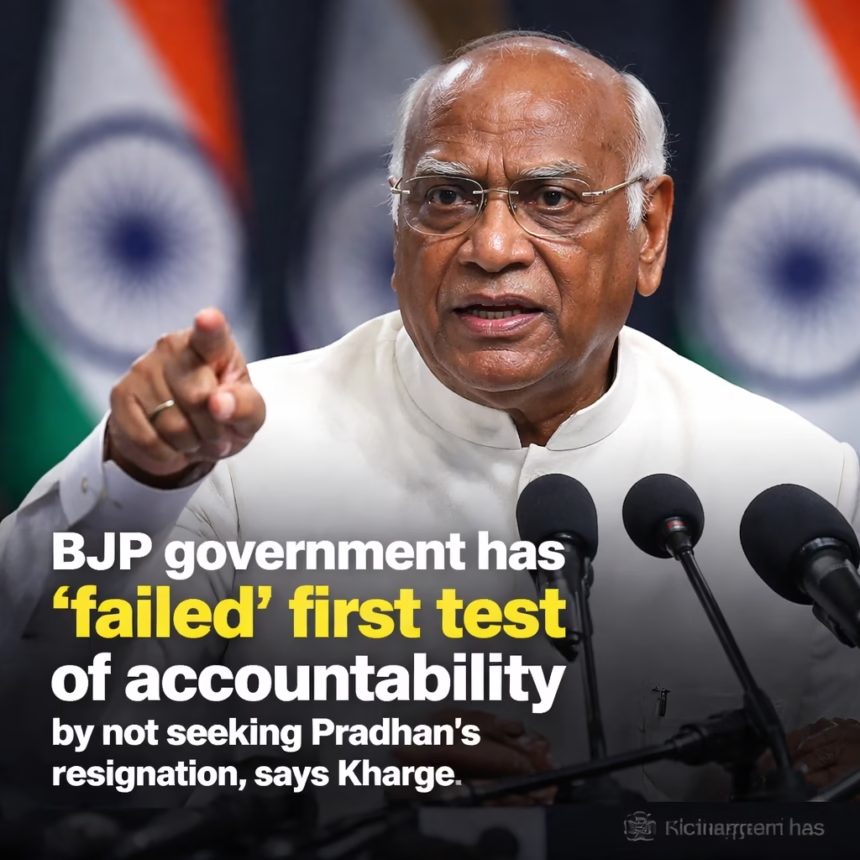
Political Firestorm Erupts: Kharge Declares BJP Failed 'First Test' of Accountability Over Pradhan Controversy
New Delhi, India – In a sharp critique delivered on Monday, Congress President Mallikarjun Kharge accused the ruling Bharatiya Janata Party (BJP) government of failing its initial test of accountability by not seeking the resignation of Union Education Minister Dharmendra Pradhan amidst swirling national controversies. Kharge's statement has ignited a fresh political battle, intensifying calls for ministerial responsibility in the face of widespread public concern.
Background: Mounting Pressure on the Education Ministry
The demand for Minister Pradhan's resignation stems from a series of high-profile controversies surrounding the integrity of national examinations and the administration of the education sector. Over the past several weeks, India has witnessed significant public outcry and student protests following allegations of widespread irregularities and paper leaks in crucial entrance tests, including the National Eligibility-cum-Entrance Test (NEET-UG) and the University Grants Commission-National Eligibility Test (UGC-NET).
Dharmendra Pradhan, serving as the Union Minister of Education since July 2021, has been at the helm during this period of escalating crisis. His ministry is responsible for the policies and oversight of national testing agencies and higher education bodies. The controversies have not only raised questions about the fairness of the examination system but also cast a shadow over the credibility of institutions designed to ensure merit-based selection.
Timeline of Recent Events
- Early June 2024: Results for NEET-UG are declared, sparking immediate concerns over unusually high scores, particularly the unprecedented number of perfect scores and allegations of grace marks awarded without clear justification.
- Mid-June 2024: Petitions are filed in the Supreme Court of India, challenging the NEET-UG results and demanding re-examinations, citing paper leaks and other discrepancies.
- Late June 2024: The National Testing Agency (NTA), responsible for conducting these examinations, faces intense scrutiny. The Ministry of Education announces the cancellation of UGC-NET just a day after it was conducted, citing inputs from cybercrime authorities indicating compromised integrity.
- Early July 2024: Further allegations surface regarding other examinations, intensifying the pressure on the NTA and, by extension, the Ministry of Education. Student bodies and opposition parties begin to demand accountability from the top echelons of the ministry.
Against this backdrop, the Congress party, led by Mallikarjun Kharge, has been at the forefront of demanding answers and action from the government, framing the issue as a systemic failure requiring ministerial accountability.

Key Developments: Kharge’s Scathing Indictment
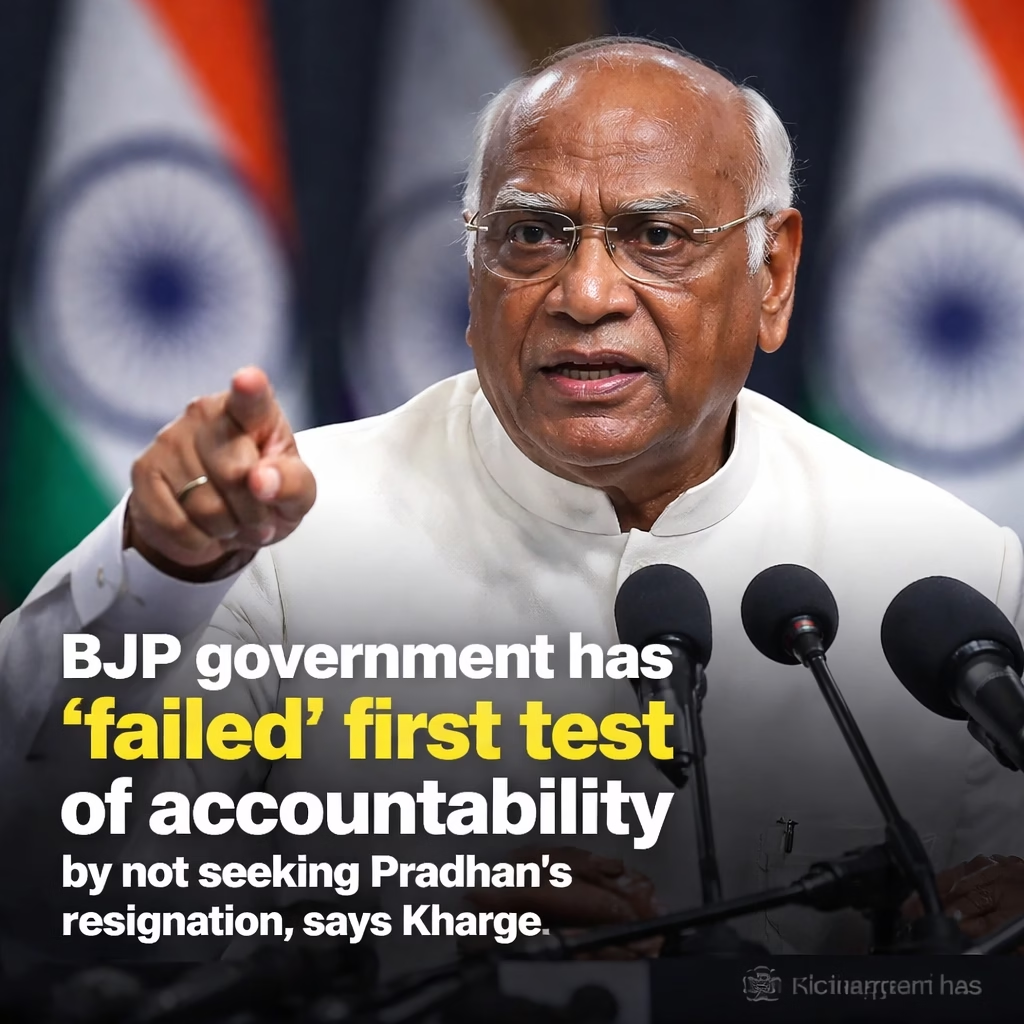
Mallikarjun Kharge's statement on Monday was a direct and forceful challenge to the BJP government. Speaking from the Congress headquarters in New Delhi, he asserted that the government's refusal to remove Minister Pradhan demonstrated a fundamental failure in upholding democratic accountability and transparency. "This government has failed its first test of accountability," Kharge declared, "by not seeking the resignation of the Education Minister, Dharmendra Pradhan, who presides over a ministry riddled with controversies."
Kharge elaborated on his accusations, highlighting what he termed as the government's "double standards." He pointed out that in previous instances, ministers from opposition parties or even within the BJP's own ranks have faced calls for resignation, and sometimes tendered them, over far less significant controversies. "Why is there a different yardstick when it comes to safeguarding their own?" he questioned, implying a protective stance towards Pradhan.
Specific Allegations and Demands
- Moral Responsibility: Kharge emphasized that a minister’s role extends beyond administrative duties to encompass moral responsibility for the failures within their department. He argued that the widespread distress among students and parents necessitates a higher degree of accountability.
- Erosion of Trust: The Congress President stated that the ongoing controversies have severely eroded public trust in national institutions and the fairness of the education system. He contended that only a decisive action, such as a ministerial resignation, could begin to restore this trust.
- Call for Independent Probe: Alongside the demand for Pradhan’s resignation, Kharge reiterated the Congress party’s call for a Supreme Court-monitored independent investigation into the alleged irregularities across all affected examinations.
The BJP, through its spokespersons, has largely defended Minister Pradhan, asserting that investigations are underway and actions are being taken against those found responsible. They have characterized Kharge’s demands as politically motivated attempts to destabilize the government and gain mileage from a sensitive issue. However, no official statement has indicated any intention to seek Pradhan’s resignation.

Impact: Repercussions Across Political and Social Spheres
The escalating political rhetoric and the ongoing controversies have far-reaching implications. For Dharmendra Pradhan, his political standing and public image are under significant strain. While the BJP has so far stood by him, continued pressure could make his position untenable in the long run, particularly if new revelations emerge or public outrage persists.
The BJP government's credibility on issues of governance, transparency, and its commitment to meritocracy is also at stake. The handling of the education crisis will be a crucial test of its ability to manage large-scale public grievances and uphold accountability, especially in the run-up to various state elections and the next general election. A perception of inaction or protection of ministers could significantly impact voter sentiment.
For the Congress party and the broader opposition, Kharge's strong stance aims to project them as vigilant guardians of public interest and accountability. This issue provides a potent platform to unite opposition forces and challenge the government on a matter that directly affects millions of young people and their families. It could galvanize their base and attract fence-sitters concerned about the future of education.
Most critically, the millions of students and parents affected by the examination controversies bear the brunt of this crisis. Their aspirations, career paths, and faith in the system have been severely impacted. The uncertainty surrounding examination results and future processes creates immense psychological stress and financial burden. The demand for accountability from the minister reflects their desperate plea for justice and a fair system.
What Next: Awaiting Government’s Next Move
The coming days are expected to witness a further intensification of political activity surrounding this issue. The Congress party, along with other opposition members, is likely to press its demands in Parliament when it reconvenes, potentially disrupting proceedings and forcing debates on the matter. Calls for a no-confidence motion or specific adjournment motions cannot be ruled out.
More Read

The government faces a critical choice: either to continue defending Minister Pradhan and risk further erosion of public trust, or to take decisive action to demonstrate its commitment to accountability. This could involve an internal review, a reshuffle, or eventually, yielding to the demands for resignation. However, the BJP's historical stance has often been to resist such demands, framing them as political attacks.
Beyond the political theatre, the Supreme Court continues to hear petitions related to the examination controversies. The judiciary's interventions and directives will play a significant role in shaping the government's response and determining the future course of action regarding the affected examinations. The NTA itself is undergoing reforms and increased scrutiny, which may lead to structural changes in how national tests are conducted.
The outcome of this "first test of accountability," as termed by Kharge, will not only define the immediate political landscape but also set a precedent for how ministerial responsibility is perceived and enforced in India's democratic framework.