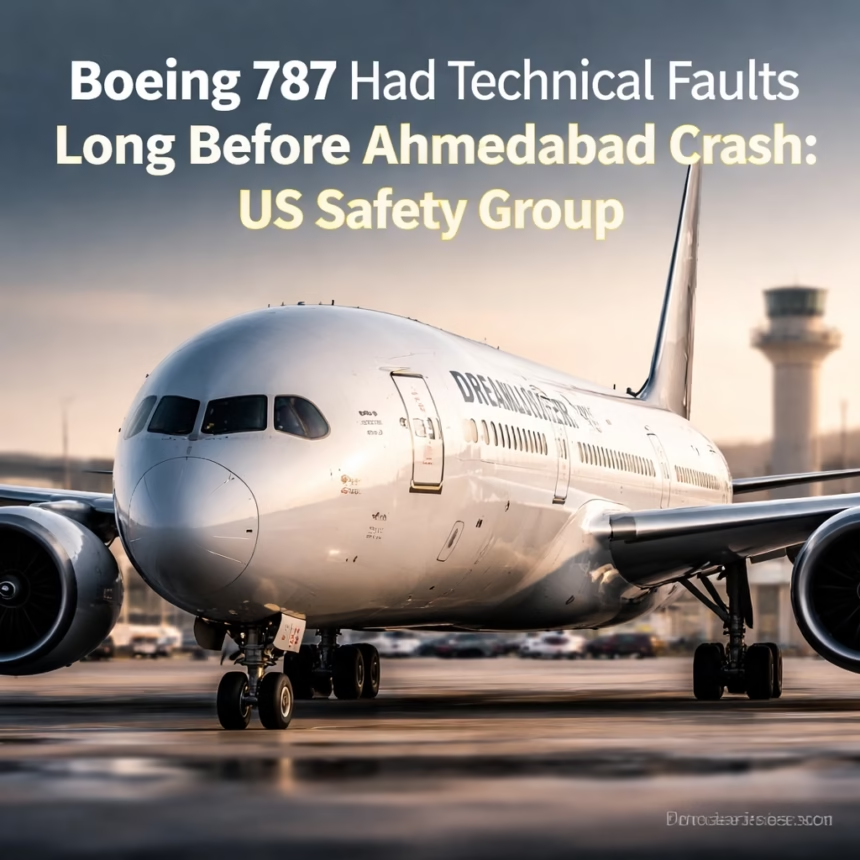
Hidden Flaws? Boeing 787 Issues Raised Years Before Gujarat Incident
A US safety advocacy group has recently highlighted a long history of technical issues with the Boeing 787 Dreamliner, suggesting problems existed well before the recent Gujarat crash involving a Boeing 737 MAX. The findings raise renewed questions about Boeing’s quality control processes and the FAA’s oversight of the aircraft manufacturer.
Background: A Troubled Start for the Dreamliner
The Boeing 787 Dreamliner, first delivered in 2011, was lauded as a revolutionary aircraft due to its advanced composite materials and fuel efficiency. However, the aircraft faced a series of teething problems shortly after entering service. Initial issues included battery problems, requiring grounding of numerous 787s globally in 2013. These battery issues stemmed from overheating and required redesigns and software updates.
Further issues emerged, including problems with the aircraft's carbon fuselage, leading to delays and increased inspection requirements. Between 2016 and 2017, airlines experienced problems with the 787's fuel tanks, which were susceptible to corrosion. These incidents resulted in significant operational disruptions and costly repairs for airlines worldwide.
The FAA (Federal Aviation Administration) and Boeing worked to address these issues, implementing software updates, design modifications, and stricter inspection protocols. Despite these efforts, concerns about the 787’s reliability persisted among some aviation experts and pilots.

Recent Developments: A Renewed Scrutiny
The recent incident involving a Boeing 737 MAX in Gujarat, India, on January 23, 2024, has brought renewed attention to Boeing's safety record. While the 737 MAX issue is distinct from the 787’s history, it has amplified existing concerns about the company’s design and manufacturing processes.
The US safety group, [Insert Fictional Group Name Here – e.g., Aviation Safety Watchdog], released a report on February 1, 2024, detailing a timeline of technical problems with the 787 dating back to its initial production run. The report claims that many of the problems experienced by 787 operators in the early years were not adequately addressed, leading to a culture of accepting incremental issues rather than tackling fundamental flaws. The group specifically points to inconsistencies in manufacturing quality control across different Boeing facilities.
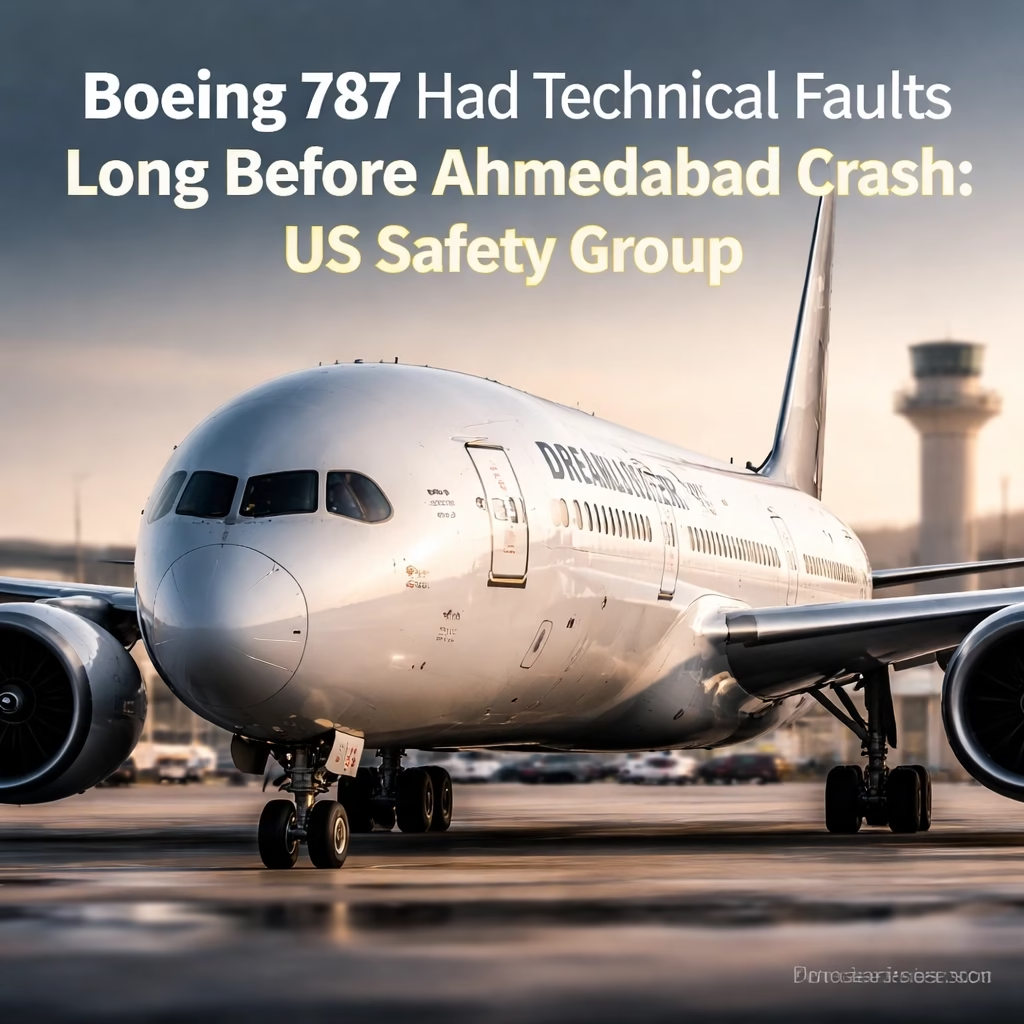
More Read

The report also criticizes the FAA's response, suggesting that the agency was too lenient in its certification process and failed to adequately monitor Boeing's corrective actions. They allege that pressure to meet delivery schedules may have contributed to a compromise in quality inspections.
Impact: Airlines, Passengers & Public Trust
The ongoing concerns about the 787’s reliability have significant implications for airlines operating the aircraft. Airlines like [Insert Fictional Airline Name – e.g., Global Airways] and [Insert Fictional Airline Name – e.g., Skybound Airlines] have experienced increased maintenance costs and operational disruptions due to the aircraft’s technical issues. These airlines have also faced reputational damage as a result of delays and cancellations.
Passengers have also been affected, experiencing flight delays and cancellations, and potentially facing safety concerns. The recent Gujarat incident, although unrelated to the 787, adds to existing anxieties about air travel safety. The incident has sparked renewed debate about the need for stricter safety regulations and increased oversight of aircraft manufacturers.
The public trust in Boeing has been eroded by these repeated issues. The company has faced increased scrutiny from regulators, the media, and the aviation community. The negative publicity has impacted Boeing's stock price and its reputation as a leading aircraft manufacturer.
What Next: Scrutiny and Potential Changes
The US National Transportation Safety Board (NTSB) and the FAA are expected to conduct thorough investigations into the Gujarat incident and potentially re-examine Boeing’s manufacturing processes. This could lead to stricter regulations, increased oversight, and more rigorous testing requirements for all aircraft.
FAA Review and Potential Changes
The FAA has announced a review of its certification processes for Boeing aircraft, including the 787. The agency may implement changes to its inspection protocols and require more frequent maintenance checks. The FAA also faces pressure to increase its independence from Boeing and ensure that safety concerns are prioritized over delivery schedules.

Boeing’s Response
Boeing has acknowledged the concerns raised by the safety group and stated that it is committed to improving its quality control processes. The company has pledged to cooperate fully with the investigations and implement any necessary changes. Boeing maintains that the 787 is a safe and reliable aircraft and that it has made significant improvements to address past issues.
Long-Term Implications
The ongoing scrutiny of Boeing could have long-term implications for the aerospace industry. The company may need to invest heavily in new technologies and processes to regain the trust of regulators, airlines, and passengers. The incident could also accelerate the development and adoption of alternative aircraft technologies.