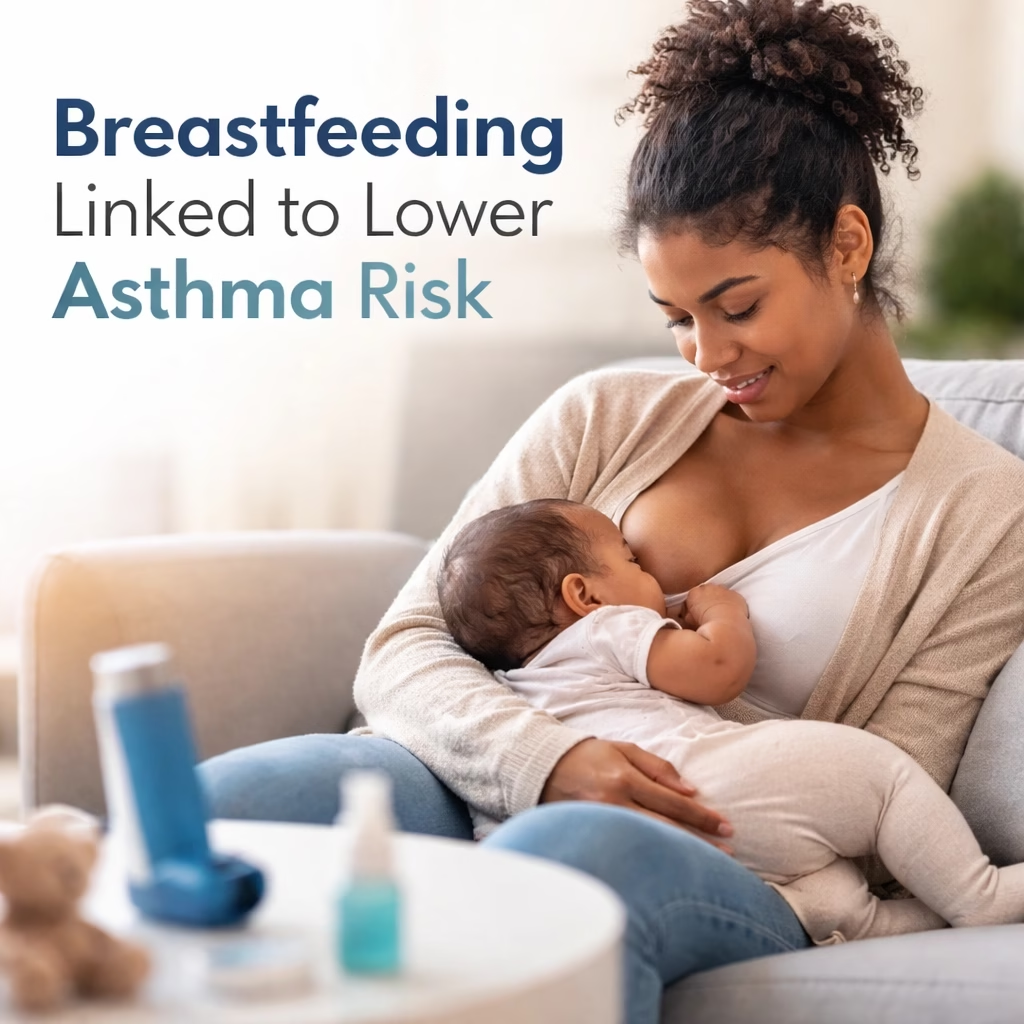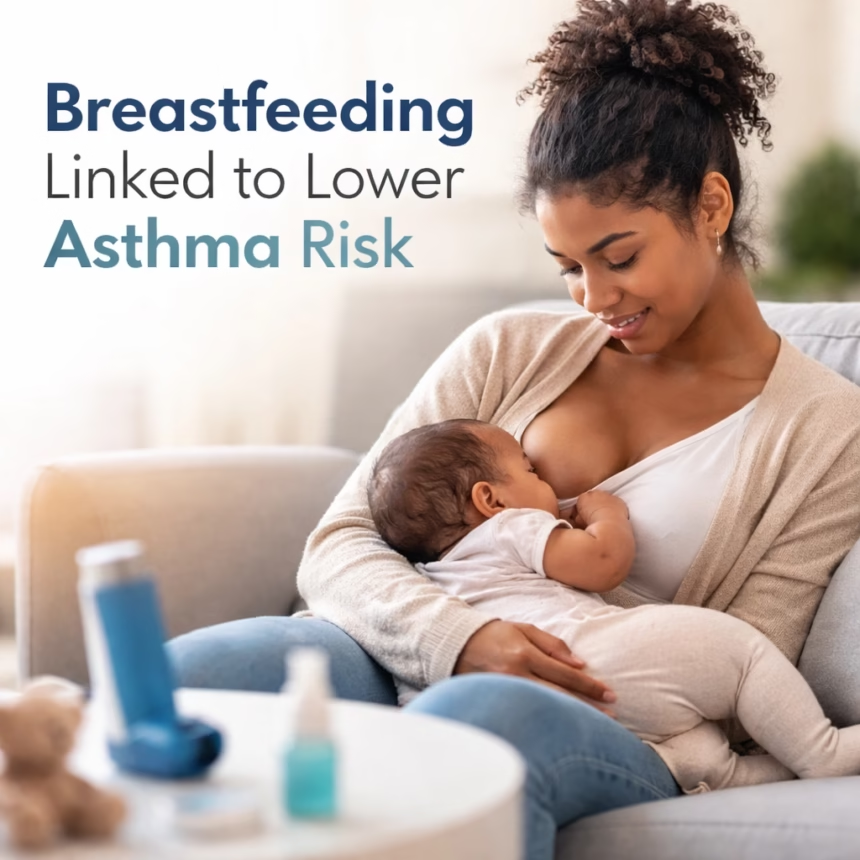
Groundbreaking new research, compiling data from major cohort studies across North America, Europe, and Asia, has significantly reinforced the long-suspected link between early infant feeding practices and a child's susceptibility to asthma. Published in leading medical journals earlier this year, these comprehensive analyses suggest that breastfeeding, particularly exclusive breastfeeding, offers a potent protective effect against the development of the chronic respiratory condition.
Background: Decades of Discovery
The notion that breastfeeding confers health benefits to infants is ancient, embedded in cultural practices for millennia. However, the scientific exploration of its specific protective effects against conditions like asthma is a more recent endeavor, gaining momentum in the latter half of the 20th century. As industrialized societies witnessed a decline in breastfeeding rates alongside a puzzling rise in allergic diseases and asthma, researchers began to investigate potential connections.
Early Epidemiological Challenges
Initial epidemiological studies in the 1980s and 1990s presented a mixed picture. While some observational data hinted at a protective effect of breastfeeding against respiratory illnesses and allergies, others yielded conflicting results. This inconsistency was often attributed to methodological challenges, including confounding factors such as parental smoking, socioeconomic status, maternal diet, and genetic predispositions. Researchers struggled to isolate the specific impact of breastfeeding amidst a complex web of environmental and hereditary influences. For instance, early studies often failed to differentiate between various types of asthma or the duration and exclusivity of breastfeeding, leading to broad and sometimes inconclusive findings.
The Gut Microbiome Hypothesis Emerges
By the early 2000s, the focus began to sharpen. Scientists started exploring the biological mechanisms through which breast milk might exert its protective influence. A key area of interest became the infant gut microbiome – the vast community of microorganisms inhabiting the digestive tract. It was hypothesized that breast milk, rich in prebiotics and beneficial bacteria, played a crucial role in shaping a healthy gut environment, which in turn could modulate the developing immune system. This hypothesis gained traction as studies began to demonstrate a clear difference in the gut flora of breastfed versus formula-fed infants, with breastfed babies typically exhibiting a more diverse and beneficial microbial profile. Organizations like the World Health Organization (WHO) and UNICEF had long advocated for breastfeeding, and these emerging scientific insights provided a stronger biological underpinning for their public health recommendations.
Key Developments: Unraveling the Mechanisms
Recent scientific endeavors have moved beyond mere correlation, delving into the intricate biological mechanisms underpinning this protective effect. A significant shift has been the application of advanced 'omics' technologies – genomics, proteomics, and metabolomics – to analyze both breast milk composition and infant physiological responses. Researchers are now pinpointing specific components and pathways.
The Role of Human Milk Oligosaccharides (HMOs)
One of the most exciting breakthroughs centers on Human Milk Oligosaccharides (HMOs), complex sugars unique to human milk. These are not digestible by the infant but act as crucial prebiotics, selectively feeding beneficial bacteria in the infant’s gut, particularly Bifidobacteria. Studies conducted over the past five to ten years, often involving large birth cohorts in countries like the Netherlands (e.g., the Generation R Study) and the UK (e.g., ALSPAC), have shown that HMOs help establish a robust and diverse gut microbiome. This microbial ecosystem, established early in life, is increasingly understood to play a pivotal role in immune system maturation and the regulation of inflammatory responses. By fostering a healthy gut environment, HMOs indirectly reduce systemic inflammation and help “train” the immune system to respond appropriately to allergens and pathogens, thereby directly impacting asthma susceptibility.
Immunomodulatory Factors in Detail
Beyond HMOs, breast milk is a living fluid teeming with immunomodulatory factors. These include a rich array of antibodies (especially IgA), lactoferrin, lysozyme, cytokines, chemokines, and even live immune cells like macrophages and lymphocytes. Recent investigations, utilizing sophisticated cellular and molecular biology techniques, have elucidated how these components directly interact with the infant’s developing immune system. For instance, secretory IgA coats the intestinal lining, preventing pathogens and allergens from entering the bloodstream and triggering inflammatory responses. Lactoferrin, an iron-binding protein, possesses antimicrobial and anti-inflammatory properties. These factors work synergistically to provide passive immunity and actively guide the maturation of the infant’s own immune defenses, leading to a more balanced immune response less prone to allergic hypersensitivity, a hallmark of many asthma cases.
Epigenetics and Early Nutrition
Another cutting-edge area of research explores the epigenetic effects of breastfeeding. Epigenetics refers to changes in gene expression that do not involve alterations to the underlying DNA sequence but can be influenced by environmental factors, including nutrition. Emerging evidence suggests that early nutritional experiences, particularly breastfeeding, can induce epigenetic modifications in infants, such as DNA methylation patterns, that influence genes related to immune function and inflammation. These modifications can have long-lasting effects on health outcomes, potentially “programming” the immune system for resilience against conditions like asthma. This research, often conducted at institutions like the Karolinska Institute in Sweden and various U.S. National Institutes of Health centers, highlights how early life nutrition can have profound and enduring impacts on a child’s health trajectory, extending beyond direct nutrient provision.
More Read

Impact: A Breath of Fresh Air for Generations
The ramifications of these findings extend far beyond individual health, touching families, healthcare systems, and public health policy globally. The strengthened evidence for breastfeeding's protective role against asthma offers a tangible pathway to improving population health.
Reducing Healthcare Burden
For children, the direct benefit is a potentially healthier childhood, free from the wheezing, breathlessness, and recurrent hospitalizations associated with asthma. This translates into fewer missed school days, greater participation in physical activities, and an overall enhanced quality of life. Families, often burdened by the emotional and financial strain of managing a child’s chronic illness, stand to gain immense relief. Reduced medication costs, fewer doctor’s appointments, and a decrease in emergency room visits can significantly alleviate parental stress and improve household stability. From a broader public health perspective, a reduction in asthma prevalence and severity could lead to substantial savings for healthcare systems, freeing up resources that are currently allocated to managing this chronic condition. Projections suggest that even a modest increase in breastfeeding rates could prevent thousands of asthma diagnoses annually, leading to millions in healthcare cost reductions across developed nations.
Addressing Health Disparities
Crucially, these insights also hold potential for addressing health disparities. Asthma disproportionately affects children from lower socioeconomic backgrounds and certain ethnic minority groups, often linked to environmental factors and access to healthcare. Promoting and supporting breastfeeding in these vulnerable populations, where rates might traditionally be lower due to systemic barriers, could serve as a powerful intervention to mitigate health inequities. Public health initiatives focused on providing accessible lactation support, education, and resources can empower more mothers to breastfeed, thereby offering a foundational health advantage to children who might otherwise face greater health challenges. This approach moves beyond treating symptoms to fostering fundamental health resilience from the earliest stages of life.
What Next: Policy, Research, and Future Interventions
Looking ahead, the scientific community, public health agencies, and policymakers are poised for several key milestones. The robust evidence base necessitates a multi-faceted approach to leverage these findings for optimal population health.
Policy and Public Health Imperatives
The reinforced link between breastfeeding and lower asthma risk provides compelling justification for strengthening public health campaigns and policy support for breastfeeding globally. This includes advocating for comprehensive paid parental leave, ensuring supportive workplace environments for nursing mothers, and expanding access to skilled lactation consultants in healthcare settings. Educational initiatives targeting expectant parents and healthcare providers will be crucial to disseminate this updated knowledge, emphasizing the long-term respiratory benefits of breastfeeding. Governments and healthcare organizations are expected to integrate these findings into national infant feeding guidelines, aiming to increase rates of exclusive breastfeeding for the first six months of life, in line with WHO recommendations.
Future Therapeutic Avenues
On the research front, deeper mechanistic studies will continue to dissect the precise components of breast milk responsible for its protective effects. This could lead to novel therapeutic targets or nutritional supplements for infants who cannot be breastfed. Clinical trials are anticipated to explore interventions that mimic these protective mechanisms, such as specific prebiotic or probiotic formulations designed to modulate the infant gut microbiome in a way that confers similar asthma protection. Researchers are also investigating whether specific genetic profiles in infants interact with breast milk components to enhance or diminish the protective effect, moving towards personalized nutrition strategies. The ultimate goal is to translate this profound understanding of nature’s first food into actionable strategies that can reduce the global burden of childhood asthma, offering a healthier future for generations to come.