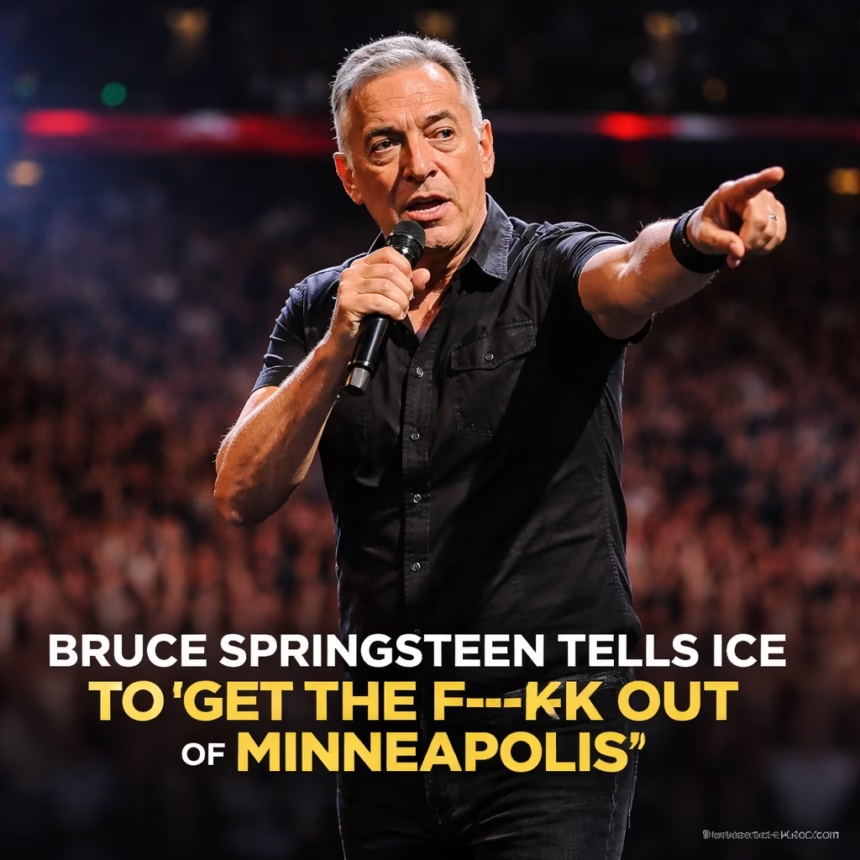
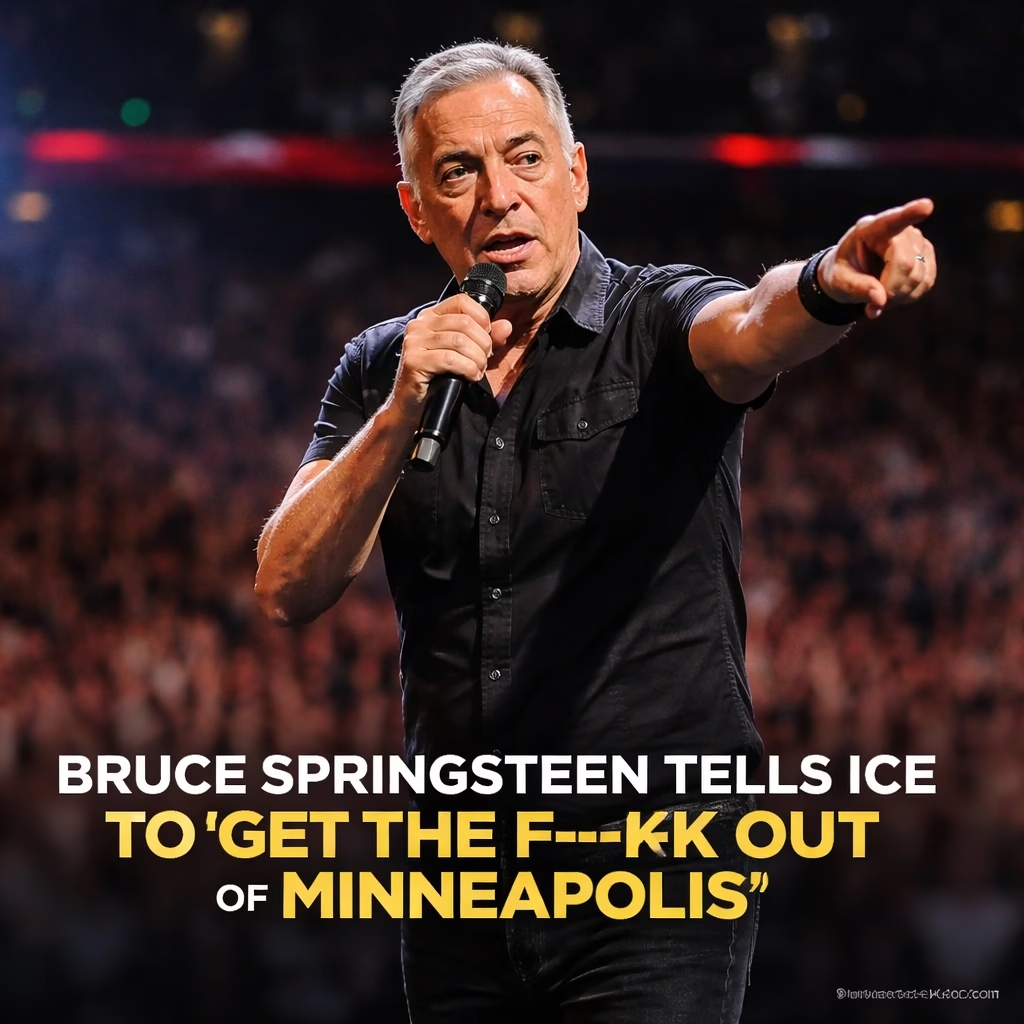
During a recent electrifying performance in Minneapolis, Minnesota, legendary rock icon Bruce Springsteen delivered an unequivocal message directed at U.S. Immigration and Customs Enforcement (ICE). On the evening of October 27, 2023, at the packed Target Center, Springsteen paused his set to address immigration policies, culminating in a direct and expletive-laden command for ICE to leave the city. The unexpected interjection swiftly became a viral moment, reigniting national conversations on immigration enforcement and artistic activism.
Background: A Legacy of Social Commentary
Bruce Springsteen has long been recognized not just for his anthemic rock music, but also for his consistent engagement with American social and political issues. From chronicling the struggles of the working class in "Born in the U.S.A." to addressing economic disparity and war, his discography is interwoven with narratives of justice, hardship, and the American experience. This history provides crucial context for his recent statement, positioning it as part of a career-long commitment to speaking out on matters of public concern.
Springsteen's activism often surfaces during critical junctures in American politics. His support for various social causes, including efforts against homelessness and advocating for veterans, has been well-documented. The Minneapolis incident marks a more direct and confrontational stance than some of his previous political statements, signaling a heightened urgency in his message regarding immigration enforcement. The concert took place amidst ongoing national debates surrounding border security, asylum policies, and the role of federal agencies like ICE in local communities. Cities across the United States, including Minneapolis, have grappled with the balance between federal immigration mandates and local community values, often leading to tensions and protests. Minneapolis itself has a diverse immigrant population and has been a site of significant community organizing around immigrant rights, providing a local backdrop for Springsteen's remarks.
Key Developments: The Immediate Aftermath
The moment Springsteen delivered his message was met with a thunderous ovation from the Minneapolis audience, a blend of cheers and applause that quickly spread beyond the arena. Videos of the incident, captured by concertgoers, rapidly circulated across social media platforms such as X (formerly Twitter) and TikTok, garnering millions of views within hours. News outlets across the political spectrum picked up the story, analyzing the artist's motivations and the potential implications of his words.
More Read

The directness of Springsteen's language, "get the f—k out of Minneapolis," resonated particularly strongly. It transcended a general critique of policy, becoming a direct challenge to the presence and operations of a federal agency within a specific locale. While ICE itself did not issue an immediate official response to Springsteen's statement, the incident sparked a flurry of reactions from various public figures and organizations. Immigration advocacy groups lauded Springsteen's courage and amplified his message, seeing it as a powerful endorsement of their long-standing calls for more humane immigration policies and less intrusive federal enforcement in local communities. Conversely, some conservative commentators and politicians criticized the artist, accusing him of overstepping his bounds or promoting an anti-law enforcement agenda. This polarized reaction underscored the deep divisions within the American public regarding immigration issues and the role of federal agencies.
Locally, the statement brought renewed attention to Minneapolis's own complex relationship with federal immigration enforcement. While not officially a "sanctuary city," Minneapolis has adopted policies aimed at limiting cooperation between local law enforcement and federal immigration authorities. Springsteen's public declaration was seen by many as a high-profile validation of these local efforts and the sentiments of many residents and city officials who advocate for a more welcoming environment for immigrants.
Impact: Ripple Effects Across Stakeholders
Springsteen's Minneapolis declaration has had a multifaceted impact, influencing public discourse, immigrant communities, and the perception of federal agencies.
More Read

Immigrant Communities and Advocacy
For immigrant communities, particularly those in Minneapolis and surrounding areas, the statement served as a significant morale booster. It provided a sense of validation and support from a highly respected public figure, reinforcing the idea that their concerns are being heard and championed. Advocacy groups quickly leveraged the viral moment, integrating Springsteen's words into their campaigns and using it to draw further attention to ongoing immigration challenges, including detention conditions, family separations, and the pathways to legal status. The high-profile nature of the comment also helped to humanize the issue, bringing it into mainstream conversations beyond typical political debates.
Federal Agencies and Political Discourse
While ICE did not officially comment, the statement undoubtedly added another layer of scrutiny to their operations. Public perception of federal immigration enforcement is often shaped by such high-profile incidents, and Springsteen's words contributed to an ongoing narrative that questions the agency's methods and necessity in certain contexts. Politically, the event further energized both sides of the immigration debate. Supporters of stricter enforcement viewed it as an example of celebrity overreach, while proponents of more lenient policies saw it as a powerful call to action. The incident provided fresh talking points for politicians and pundits, ensuring that immigration remained a prominent issue in public discourse.
The Artist and Fan Base
For Bruce Springsteen, the statement reaffirmed his image as an artist deeply committed to social justice. While some fans might have disagreed with his political stance, the overwhelming reaction from his core audience and the broader public suggested that his willingness to speak out resonated positively with many. It reinforced the idea that artists have a role to play in public dialogue, using their platforms to challenge norms and advocate for change. The incident also sparked conversations among his fanbase about the intersection of music, politics, and personal values.
What Next: Anticipated Trajectories
The reverberations from Bruce Springsteen's Minneapolis declaration are expected to continue shaping discussions around immigration and artistic activism in the coming months.
Continued Public and Media Scrutiny
The immediate aftermath has seen a surge in media analysis and public commentary, a trend likely to persist. Pundits will continue to dissect the statement's implications, comparing it to past instances of celebrity activism and speculating on its long-term effects. Social media platforms will remain a key arena for these discussions, with hashtags related to Springsteen and ICE continuing to trend. This sustained attention could influence public opinion and maintain pressure on policymakers.
Advocacy Group Mobilization
Immigration advocacy organizations are poised to capitalize further on the momentum generated by Springsteen's words. They may incorporate his message into public awareness campaigns, organize rallies, or lobby local and federal officials with renewed vigor. The high visibility of the incident provides a unique opportunity to draw new supporters and resources to their causes, potentially leading to increased grassroots activism and policy advocacy efforts.
More Read

Potential for Further Artistic Engagement
Springsteen's bold statement could also inspire other artists and public figures to take more direct stances on immigration and other contentious social issues. The incident sets a precedent for how influential individuals can use their platforms to challenge authority and advocate for change, potentially fostering a wave of similar declarations or artistic expressions from the entertainment industry. Future concerts or public appearances by Springsteen himself will undoubtedly be watched closely for any follow-up comments or further engagement on the topic.
Policy Debates and Local Impact
While unlikely to cause an immediate overhaul of federal immigration policy, the Minneapolis incident could contribute to ongoing policy debates, particularly at the local level. City councils and community leaders in other areas might feel emboldened to re-examine their own cooperation with federal immigration enforcement, potentially leading to discussions about sanctuary policies or local ordinances aimed at protecting immigrant communities. The event underscores the tension between federal mandates and local autonomy, a dynamic that will continue to play out in cities across the nation.