Sun-Powered Farms: Bulacan Embraces Renewable Irrigation
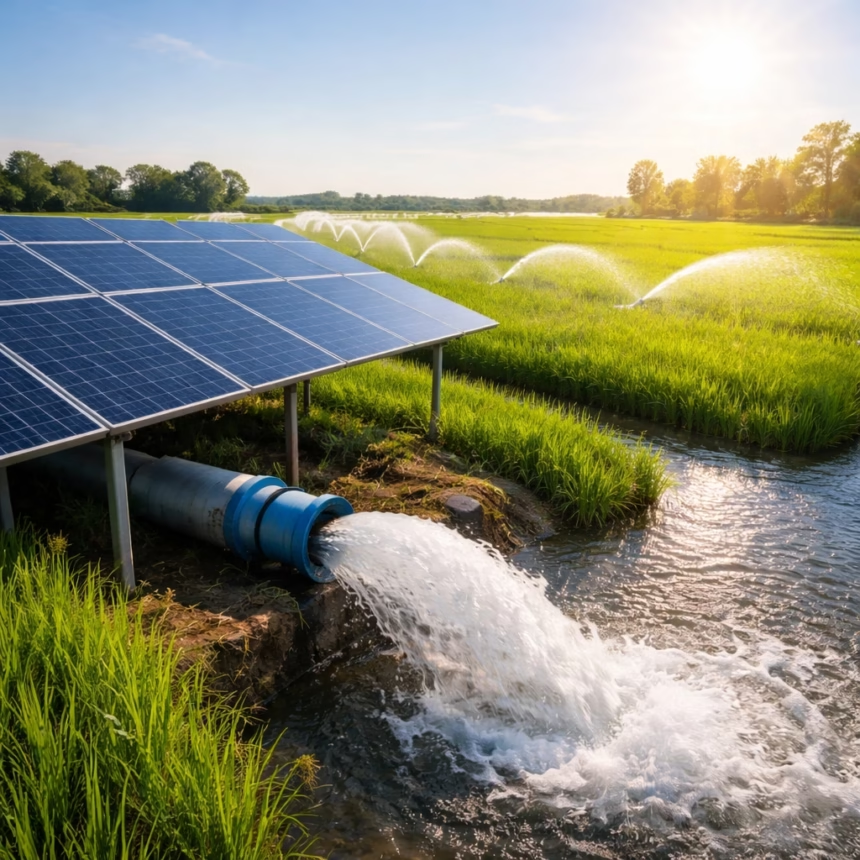
Bulacan province in the Philippines is making a significant move towards sustainable agriculture, transitioning to solar-powered irrigation systems. The initiative, gaining momentum since 2022, aims to reduce reliance on fossil fuels and lower operational costs for local farmers.
Background: A Need for Sustainable Solutions
For decades, Bulacan's agricultural sector has heavily depended on diesel-powered pumps for irrigation. This reliance has resulted in high energy expenses, contributing to the overall cost of farming and impacting profitability. Furthermore, the use of fossil fuels raises environmental concerns related to carbon emissions and air quality. The Department of Agriculture (DA) and the Provincial Government of Bulacan recognized this challenge, initiating explorations into renewable energy alternatives starting in late 2021.
Initial pilot projects focused on feasibility studies and identifying suitable locations for solar installations across various municipalities. The selection process prioritized areas with high solar irradiance and significant irrigation needs. Early discussions involved collaboration with private solar energy companies and financial institutions to secure funding for the projects.
Key Developments: Solar Takes Root
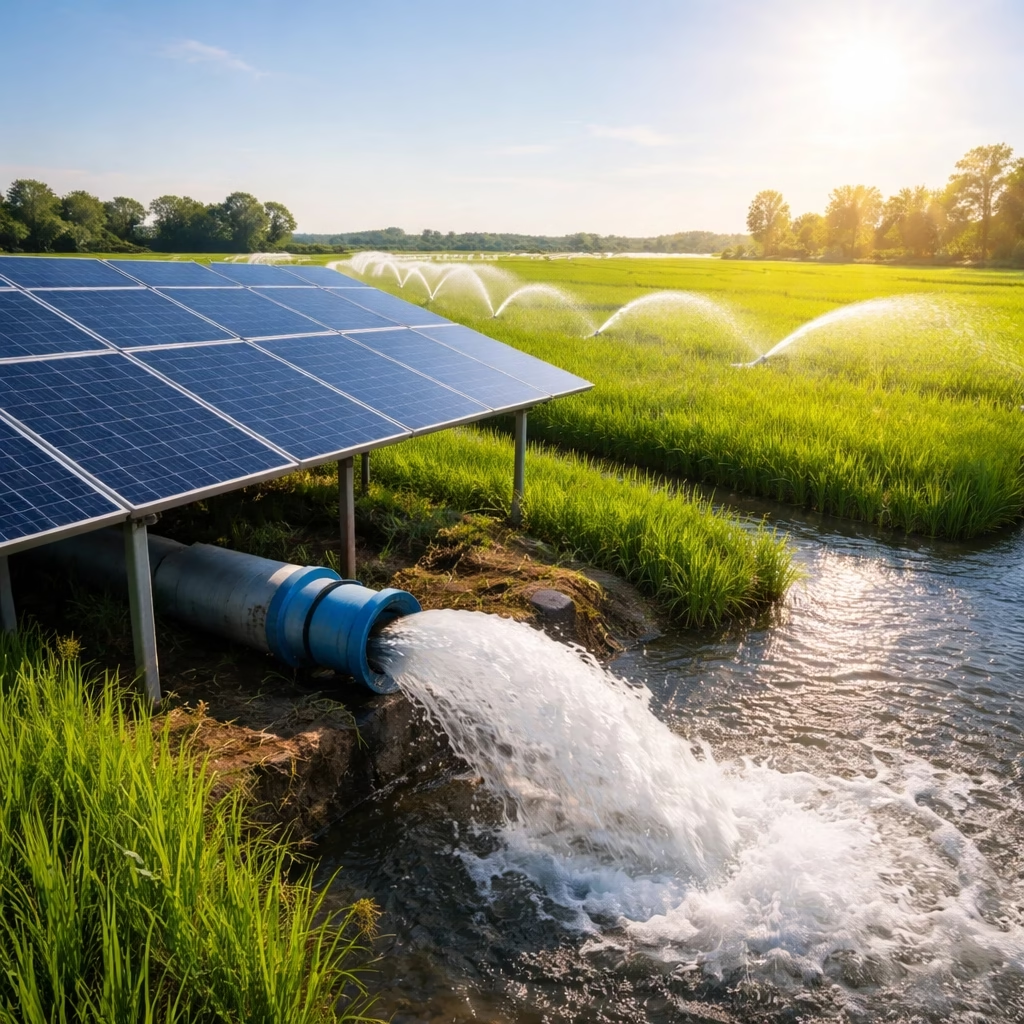
The past year has witnessed a rapid expansion of solar irrigation projects in Bulacan. By June 2023, over 50 farms across municipalities like San Miguel, Malolos, and Obra have been equipped with solar-powered irrigation systems. These systems typically consist of solar panels, inverters, and pumps, all working in harmony to provide water to crops.
More Read

The Provincial Government of Bulacan actively facilitated the installation process, providing technical assistance and streamlining permitting procedures. A key component of the program involves farmer training on the operation and maintenance of the solar systems, ensuring long-term sustainability. The program received a substantial boost in funding in early 2024, allowing for the expansion to include more farms and larger-scale installations.
Recently, a partnership between the Bulacan Water Resources Management Authority (BWRAMA) and a local solar technology firm, Solar Solutions PH, was announced. This partnership will focus on developing and implementing advanced solar irrigation solutions tailored to the specific needs of Bulacan's diverse agricultural landscape. The agreement, signed on April 26, 2024, includes a commitment to supporting farmers in adopting smart irrigation techniques that optimize water usage.
More Read

Impact: Farmers Benefit from Lower Costs
The transition to solar irrigation is already generating positive impacts for Bulacan farmers. Reduced energy costs are the most immediate benefit, with farmers reporting savings of up to 60% compared to diesel-powered pumps. This translates to increased profitability and improved financial stability for farming families.
Beyond financial benefits, the solar irrigation systems contribute to environmentally friendly farming practices. The adoption of renewable energy helps reduce the province's carbon footprint and promotes sustainable agricultural development. Farmers also appreciate the reliability of solar power, which is less susceptible to disruptions caused by fuel shortages or price fluctuations.
Furthermore, the program has created new employment opportunities in the installation, maintenance, and operation of the solar systems. Local technicians are being trained to support the growing solar energy infrastructure in the province.
Specific Examples of Farmer Impact
Maria Santos, a rice farmer in San Miguel, shared her experience: "Before, I spent a significant portion of my income on diesel. Now, with the solar pump, my expenses are much lower, and I have more money to invest in my farm." Another farmer, Juan dela Cruz, noted, "The system is reliable, and I don't have to worry about running out of fuel during the dry season."
What Next: Expanding the Green Revolution
The Bulacan government has ambitious plans to further expand solar irrigation across the province. The goal is to cover at least 20% of all irrigation needs with solar power by 2027. This expansion will involve additional investments in solar infrastructure, technical support for farmers, and capacity building programs.
Future initiatives will also focus on integrating solar irrigation with smart farming technologies, such as soil moisture sensors and automated irrigation controllers. This will enable farmers to optimize water usage and improve crop yields. The province is also exploring opportunities to develop community-based solar irrigation projects, empowering farmers to collectively manage and benefit from renewable energy resources.
More Read

The DA is expected to conduct a comprehensive assessment of the program’s effectiveness by December 2024, providing data to inform future policy decisions and guide the expansion of solar irrigation initiatives in other regions of the Philippines.