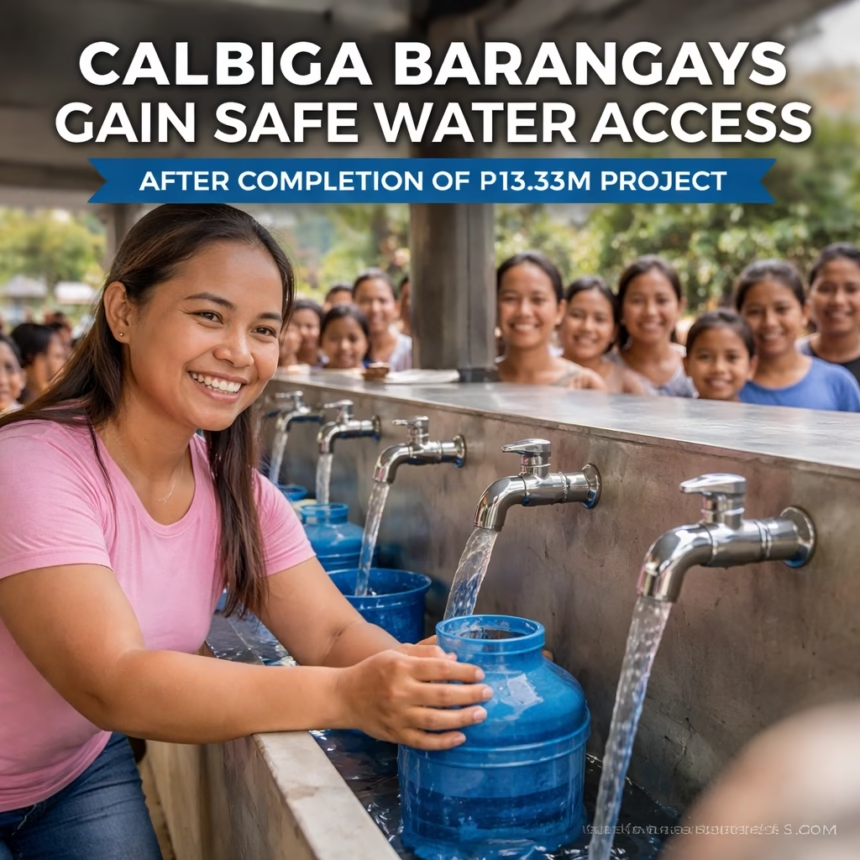
Calbiga, Samar – Residents in several barangays across the municipality of Calbiga, Samar, are now enjoying reliable access to safe and potable water following the official completion and turnover of a significant ₱13.33-million infrastructure project spearheaded by the Department of the Interior and Local Government (DILG). The crucial initiative, which concluded in early October 2023, marks a pivotal moment for communities long grappling with water scarcity and quality issues.
A Long-Standing Challenge Addressed
For generations, many communities in Calbiga have faced significant hurdles in accessing clean water. The municipality, like many rural areas in Samar, is characterized by its challenging topography, making the establishment of centralized water systems both complex and costly. Historically, residents relied on shallow wells, communal springs, or rainwater collection, sources often susceptible to contamination, especially during the rainy season, leading to recurrent health issues. Women and children, in particular, bore the brunt of this challenge, often spending hours daily fetching water from distant or unsafe sources, impacting their education and productivity.
The DILG, recognizing the critical need for basic services in underserved communities, identified Calbiga as a priority area for water infrastructure development. The project was initiated under the DILG's broader commitment to empowering local government units (LGUs) to deliver essential services, particularly through programs aimed at improving water supply and sanitation. Initial feasibility studies conducted in 2021 highlighted the dire situation in several barangays, underscoring the urgent need for a robust and sustainable water system. Community consultations were integral to the planning phase, ensuring the proposed solutions were tailored to local needs and conditions.
From Vision to Reality: Project Implementation
The ₱13.33-million project commenced in late 2022, following a rigorous procurement process and detailed engineering designs. The undertaking involved a multi-faceted approach to address the unique water supply challenges of the beneficiary barangays. Key components included the development of a new, reliable water source, likely from a protected spring or deep well, coupled with the construction of an advanced pumping station designed to efficiently draw and transport water.
More Read

A significant portion of the investment went into laying extensive transmission and distribution lines, ensuring that water reached individual households. This network comprised kilometers of durable piping, meticulously installed to withstand environmental factors and ensure long-term service. Furthermore, the project included the construction of elevated storage tanks or reservoirs in strategic locations. These tanks serve as critical buffers, maintaining consistent water pressure and ensuring a steady supply even during peak demand periods. The entire system was designed with sustainability in mind, incorporating features for efficient water management and minimal environmental impact.
The construction phase, while facing typical logistical challenges in a rural setting, was completed ahead of schedule, culminating in the final system testing and commissioning in September 2023. The official turnover ceremony, held in early October, was attended by DILG officials, representatives from the provincial government of Samar, municipal leaders of Calbiga, and overjoyed residents. The event marked not just the completion of an infrastructure project but the fulfillment of a long-held dream for many.
Transformative Impact on Lives and Livelihoods
The immediate and long-term impacts of the newly completed water system are profound and far-reaching. An estimated several thousand residents across multiple barangays in Calbiga are now direct beneficiaries of the project. For these communities, the daily struggle for water has been significantly alleviated. Households now have access to clean, safe water directly from their taps, eliminating the arduous task of fetching water from distant sources.
More Read

This newfound access translates into tangible improvements in public health. The reduction in reliance on unsafe water sources is expected to drastically decrease the incidence of waterborne diseases such as cholera, typhoid, and diarrhea, which have historically plagued these areas. Improved hygiene and sanitation practices, previously hampered by water scarcity, are now more feasible, contributing to a healthier environment for everyone, especially children.
Beyond health, the project has a significant socio-economic ripple effect. The time saved from water collection can now be redirected towards productive activities, education, or leisure. Children, particularly girls, who often miss school to fetch water, can now attend classes regularly, improving their educational outcomes. Women, traditionally responsible for water provision, gain valuable time to engage in income-generating activities or community involvement, fostering greater empowerment. Local businesses, from small eateries to agricultural endeavors, also stand to benefit from a reliable water supply, potentially stimulating local economic growth. The overall quality of life has demonstrably improved, fostering a sense of dignity and progress within the community.
Sustaining the Flow: The Path Forward
The completion of the water system is just the first step; ensuring its long-term sustainability and efficient operation is paramount. The DILG and the LGU of Calbiga have outlined clear plans for the ongoing management and maintenance of the new infrastructure. The municipal government of Calbiga will assume primary responsibility for the system's operation and maintenance (O&M), working closely with the beneficiary communities.
To facilitate this, a dedicated water utility unit or a Water and Sanitation (WATSAN) Council is expected to be established or strengthened within the LGU. This body will be responsible for overseeing daily operations, managing tariffs, conducting regular maintenance, and addressing any issues that may arise. Community participation will be crucial, with residents encouraged to form water user associations to ensure transparent management, equitable distribution, and active involvement in protecting the water source and infrastructure. Training programs for local personnel on system operation, minor repairs, and water quality monitoring are also being planned to build local capacity.
Looking ahead, the success of this project could serve as a blueprint for similar initiatives in other underserved areas of Calbiga and beyond. The LGU is already exploring possibilities for expanding the network to reach more households and considering climate-resilient features for future water infrastructure development, ensuring the system can withstand environmental changes. Regular monitoring and evaluation will be conducted to assess the project's impact and identify areas for continuous improvement, solidifying the commitment to providing safe and sustainable water access for all residents of Calbiga.