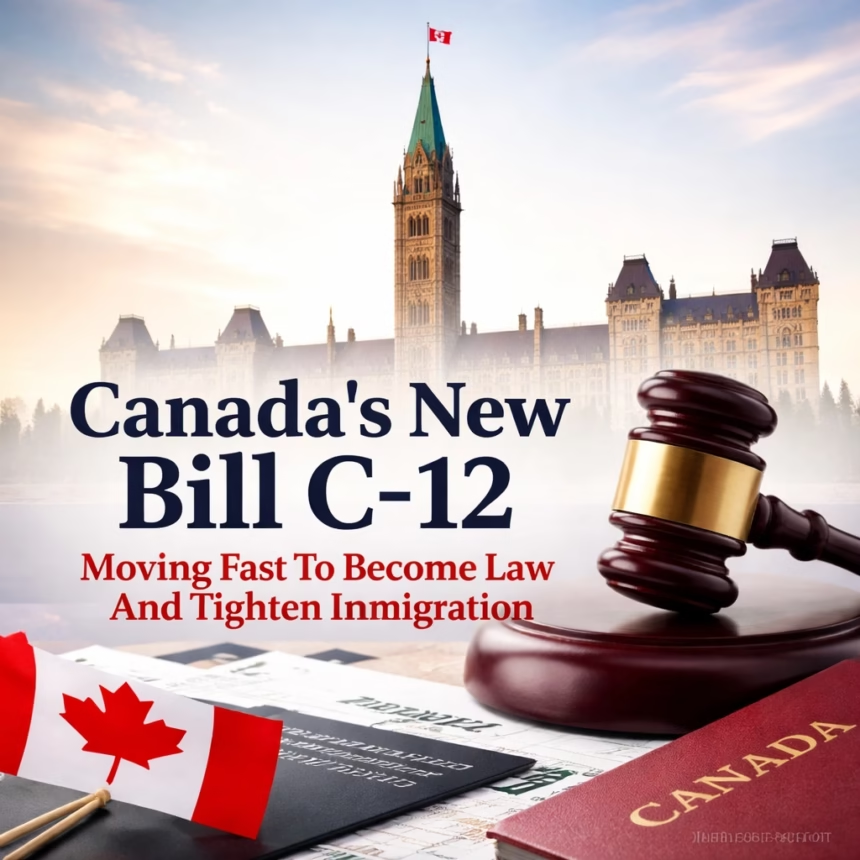
OTTAWA – A significant legislative shift is rapidly unfolding in Canada, as Bill C-12, an ambitious piece of legislation designed to tighten the nation's immigration framework, speeds through Parliament. Introduced amidst growing public discourse on population growth and resource strain, this bill is poised to fundamentally alter who can enter Canada and under what conditions, with its final passage anticipated in the coming months.
Background: The Shifting Sands of Canadian Immigration
For years, Canada has championed an open and robust immigration policy, often setting ambitious targets for welcoming new permanent residents, temporary foreign workers, and international students. This approach has been a cornerstone of the nation's economic strategy, addressing labour shortages and fostering multicultural growth across major urban centers like Toronto, Vancouver, and Montreal, as well as smaller communities.
However, recent years have seen an escalating public debate regarding the sustainability of these high immigration levels. Concerns have mounted over the strain on housing affordability, healthcare services, and public infrastructure in provinces such as Ontario, British Columbia, and Quebec. This growing sentiment, coupled with economic uncertainties, has prompted a re-evaluation of the country's immigration strategy by the current government.
Bill C-12, officially titled the "Sustainable Immigration and Population Growth Act," was first introduced in the House of Commons on September 12, 2024. Its introduction marked a clear departure from previous policy rhetoric, signaling a proactive move to address the aforementioned pressures. The bill quickly passed its First Reading and proceeded to a swift Second Reading debate, where it garnered significant, albeit sometimes contentious, support from various parliamentary blocs.
Following its Second Reading, the bill was referred to the Standing Committee on Citizenship and Immigration (CIMM) for detailed review. Committee hearings, held throughout late October and early November, saw testimony from a wide range of stakeholders, including immigration lawyers, economists, provincial representatives, and advocacy groups. Despite calls for more extensive consultations, the committee concluded its review in record time, recommending only minor amendments before sending the bill back to the House for Report Stage and Third Reading.

Key Developments: Provisions and Policy Shifts
The core of Bill C-12 lies in its comprehensive set of provisions aimed at recalibrating Canada's immigration intake. These changes represent a significant tightening across multiple immigration streams, marking a strategic pivot from the growth-focused policies of the preceding decade.
New Caps and Quotas
One of the most impactful changes proposed by Bill C-12 is the introduction of stricter, legally binding caps on the total number of permanent residents Canada will admit annually. The bill mandates a reduction of overall permanent resident targets by 20% compared to the 2023-2025 Immigration Levels Plan, aiming for a ceiling of approximately 300,000 permanent residents per year, effective January 1, 2025. Similar caps are also introduced for temporary foreign workers and international students, with specific limits to be determined by ministerial instructions published quarterly.
More Read

Enhanced Screening Processes and Eligibility
The legislation introduces more rigorous screening processes for all applicants. This includes an expanded points-based system for economic class immigrants, placing greater emphasis on in-demand skills, proficiency in both official languages (English and French), and verifiable job offers outside major metropolitan areas. For family reunification streams, while the commitment remains, new income thresholds for sponsors and extended processing times are anticipated, potentially affecting applicants from regions such as South Asia and the Philippines.
Provincial Nominee Program (PNP) Adjustments
Bill C-12 seeks to assert greater federal oversight over the Provincial Nominee Programs. While provinces like Alberta, Saskatchewan, and Manitoba will retain their ability to nominate candidates based on local labour market needs, the federal government will gain the power to adjust provincial allocations more dynamically. This aims to align provincial immigration targets more closely with national population distribution goals and infrastructure capacity across the country.
Reforms to Temporary Resident Streams
The bill also targets temporary resident streams, which have seen exponential growth in recent years. It proposes stricter conditions for extending work permits and study permits, particularly for individuals without a clear pathway to permanent residency. New regulations are expected to limit the types of jobs eligible for Temporary Foreign Worker Program (TFWP) permits in certain sectors already experiencing high unemployment, particularly in urban centres of British Columbia and Ontario.
Strategic Focus on Specific Skills and Regions
A central tenet of Bill C-12 is the strategic prioritization of immigrants who possess skills critical to specific, underserved sectors of the Canadian economy, such as healthcare, skilled trades, and technology, especially outside the country’s three largest cities. The bill also includes provisions to incentivize settlement in rural and northern communities, potentially through enhanced points or dedicated streams, to address regional demographic imbalances.
Impact: Who Will Be Affected?
The implications of Bill C-12 are far-reaching, poised to affect millions of individuals both within Canada and abroad, as well as various sectors of the Canadian economy and society.
Prospective Immigrants and International Students
For individuals aspiring to immigrate to Canada, the path will likely become more challenging. Reduced quotas mean increased competition, and the enhanced screening processes will demand higher qualifications and more thorough documentation. International students, particularly those without clear post-graduation employment prospects in high-demand fields, may find it harder to secure study permits or transition to permanent residency. Universities and colleges across Canada, from Halifax to Victoria, could see a dip in international enrollments.
More Read

Canadian Businesses and Labour Markets
Businesses, particularly those in sectors heavily reliant on immigrant labour such as agriculture, hospitality, and certain areas of manufacturing, may face significant labour shortages. Small and medium-sized enterprises (SMEs) in regions like the Maritimes and the Prairies, which have historically depended on new arrivals to fill critical roles, could be particularly impacted. The government anticipates that by focusing on specific skills, the bill will better match immigrant talent with genuine labour market needs, but the transition period may be disruptive.
Provinces and Municipalities
Provinces and municipalities that have based their growth strategies on high immigration levels will need to adjust their planning for housing, infrastructure, and social services. While the bill aims to alleviate some pressures, the sudden shift in population growth trajectories could create new challenges for urban planning and resource allocation in major cities and smaller towns alike.
Advocacy Groups and Public Opinion
Immigration advocacy groups have voiced strong concerns, arguing that the bill could harm Canada’s international reputation as a welcoming nation and undermine its commitment to family reunification. Public opinion remains divided, with some supporting the measures as necessary for sustainable growth, while others fear the economic and social consequences of a less open immigration policy.
What Next: The Road to Royal Assent and Implementation
As Bill C-12 enters its final stages, attention turns to its ultimate passage and the subsequent implementation process. The legislative journey is nearing its conclusion, but the real work of adapting to the new framework will just begin.
Final Parliamentary Stages
Following its expected passage in the House of Commons during the third week of November, Bill C-12 will proceed to the Senate for review. While the Senate can propose amendments, it is generally expected to concur with the will of the elected House, especially for a bill that has gained significant governmental backing. A final Senate vote is anticipated before the winter parliamentary recess, potentially in early December 2024.
Royal Assent and Coming into Force
Upon successful passage through both chambers, Bill C-12 will receive Royal Assent, formally becoming law. The government has indicated that most provisions of the “Sustainable Immigration and Population Growth Act” will come into effect on January 1, 2025, allowing for a brief period of transition. However, some specific measures, such as new processing fee structures or updated application forms, may be phased in throughout the first quarter of 2025.
Regulatory Framework and Ministerial Instructions
The immediate aftermath of the bill’s enactment will involve the development of detailed regulations and ministerial instructions by Immigration, Refugees and Citizenship Canada (IRCC). These will provide the operational specifics of the new caps, screening procedures, and program adjustments. Public guidance documents and updated application portals are expected to be released swiftly to inform prospective applicants and stakeholders worldwide.
Monitoring and Future Adjustments
The government has committed to closely monitoring the impact of Bill C-12 on Canada’s economy, labour market, and social fabric. A mandatory annual review mechanism is built into the legislation, allowing for potential adjustments to targets and policies based on ongoing data and public consultation. This suggests that while the bill marks a significant shift, its long-term application may evolve in response to national needs and global circumstances.