China's Auto Invasion: Will Canadians Embrace the Deal?
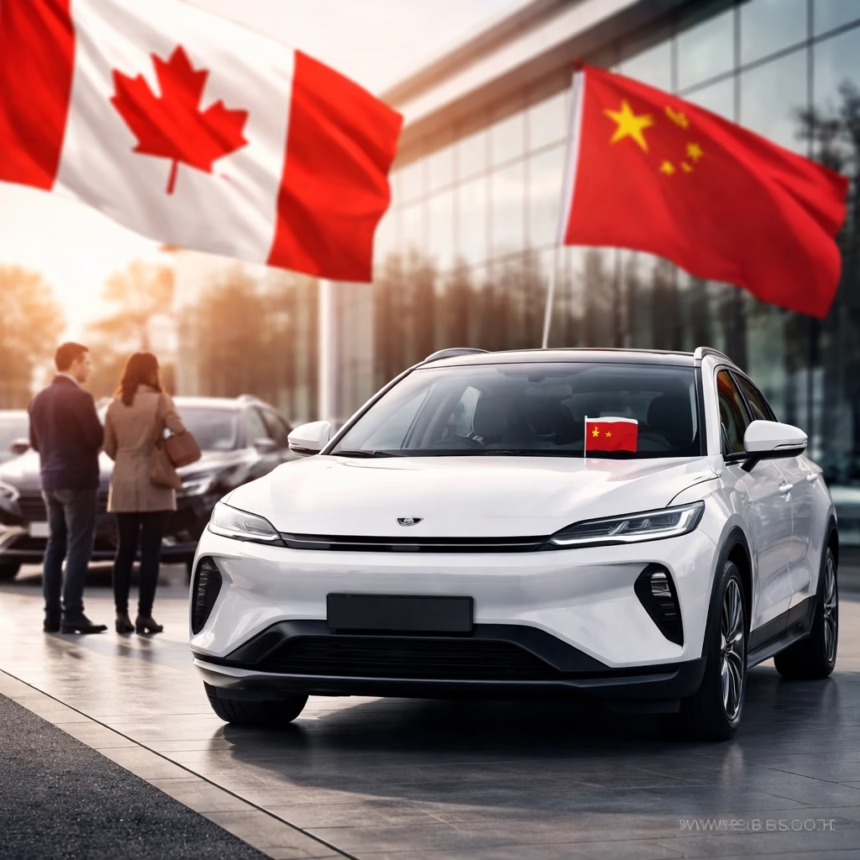
Canadian consumers are increasingly open to purchasing electric vehicles (EVs) manufactured in China, fueled by government incentives and rapidly improving technology. This shift, gaining momentum since 2023, presents both economic opportunities and significant security considerations for the country. Experts are weighing the potential benefits against the risks associated with relying on foreign-made vehicles from a geopolitical rival.
Background: A Shifting Landscape
For years, the Canadian automotive market was dominated by manufacturers like Ford, General Motors, and Toyota. However, a confluence of factors has altered this landscape. The Canadian government, under Prime Minister Justin Trudeau, has actively encouraged the adoption of EVs as part of its climate goals. Simultaneously, Chinese automakers, including BYD, Nio, and Xpeng, have been aggressively expanding their presence in Canada, leveraging technological advancements and competitive pricing.
The initial push for EV adoption began in 2019 with the federal government announcing investments in charging infrastructure. Provincial governments, such as Ontario and Quebec, followed suit with their own incentives. However, the real surge in Chinese auto interest began in late 2023 with BYD's entry into the Canadian market and subsequent announcements from other manufacturers regarding Canadian production facilities.

Key Developments: From Curiosity to Consideration
The most significant recent development is the announcement of potential manufacturing plants in Canada by several Chinese EV companies. In February 2024, BYD confirmed plans to build a factory in Lake St. Clair, Ontario, with an estimated investment of $1.8 billion. Nio has also expressed interest in establishing a presence in Canada, although specific plans remain less concrete. These investments promise to create jobs and stimulate economic growth, but also raise concerns about supply chain dependencies.
Furthermore, the federal government's increased focus on EV incentives, including the $5,000 federal tax credit for eligible EV purchases, has made Chinese-made vehicles more attractive to consumers. While the incentive is not exclusively for foreign-made cars, it disproportionately benefits imported vehicles due to the current supply situation. Consumer surveys conducted by Ipsos in April 2024 show a growing willingness among Canadians to consider purchasing EVs from Chinese brands, with 45% expressing openness to the idea.
Impact: Who’s Feeling the Ripple?
The shift towards Chinese-made EVs has a broad impact. Consumers benefit from potentially lower prices and access to advanced technology. The automotive industry as a whole is undergoing a transformation, with established manufacturers facing increased competition. The manufacturing sector in regions like Ontario and Quebec stand to gain from the creation of new jobs and investment. However, established auto workers are also concerned about potential job losses as production shifts and new technologies are adopted.
More Read

Beyond the immediate economic effects, the increased reliance on Chinese-made vehicles raises geopolitical concerns. The Canadian government and security agencies are actively assessing the potential risks associated with incorporating technology from a foreign power, particularly in areas deemed critical infrastructure. These concerns revolve around data security, potential vulnerabilities in vehicle systems, and possible espionage.
Security Concerns: A Closer Look
Canadian security agencies, including the Canadian Security Intelligence Service (CSIS), have issued warnings about the potential risks associated with Chinese-made electronics and vehicles. Concerns center on the possibility of backdoors in vehicle systems that could allow for data collection or remote control. The potential for data breaches and the sharing of sensitive information are major areas of concern. The government is currently reviewing existing security protocols and considering new regulations to mitigate these risks.
What Next: Navigating the Future
The coming years will be crucial in determining the extent to which Chinese-made EVs become a dominant force in the Canadian market. The completion of the BYD factory in Ontario, expected in 2025, will be a significant milestone. Further investments from other Chinese automakers are likely, but the pace of expansion remains uncertain.
The Canadian government is expected to continue refining its policies to balance the economic benefits of attracting foreign investment with the need to protect national security. This will likely involve stricter regulations on data security, independent audits of vehicle systems, and enhanced intelligence sharing between government agencies and the automotive industry. Consumer awareness and informed decision-making will also play a critical role in shaping the future of the Canadian automotive market.
Government Initiatives
The Canadian government is actively collaborating with industry stakeholders to develop cybersecurity standards for connected vehicles. In March 2024, Innovation, Science and Economic Development Canada announced a new initiative to support research and development in automotive cybersecurity. This initiative aims to foster innovation and ensure that Canadian-made and imported vehicles meet the highest security standards.