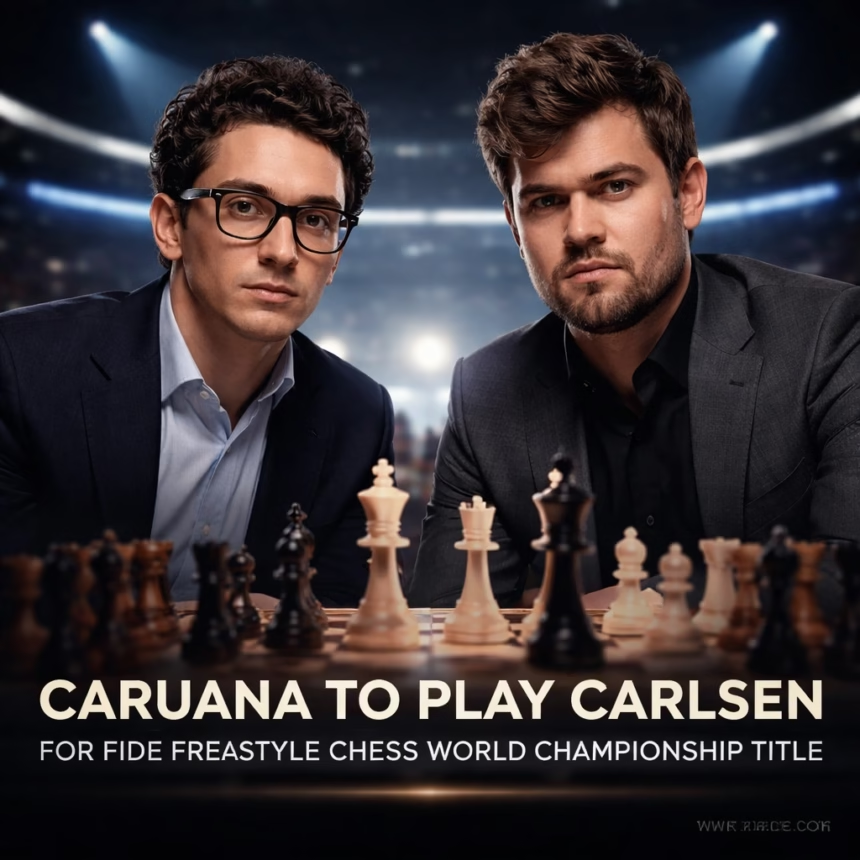
The chess world is abuzz as Grandmasters Fabiano Caruana and Magnus Carlsen are set to clash in the highly anticipated final of the inaugural FIDE Freestyle Chess World Championship. This historic confrontation unfolded at the luxurious Weissenhaus Private Nature Resort in Germany, culminating a groundbreaking tournament that redefined competitive chess with its innovative format.
Background: The Dawn of Freestyle Chess
The concept of Freestyle Chess, also widely known as Chess960 or Fischer Random Chess, serves as a radical departure from traditional chess. Its core innovation lies in the randomization of the back-rank pieces, resulting in 960 possible starting positions. This eliminates the extensive memorization of opening theory, a cornerstone of modern classical chess, forcing players to rely purely on their strategic understanding, tactical prowess, and on-the-spot creativity from the very first move. The format was conceived by the legendary Bobby Fischer, aiming to inject fresh dynamism and reduce the impact of rote learning in elite play.
The "Freestyle Chess G.O.A.T. Challenge," held from February 9 to 16, 2024, marked the official launch of this new FIDE-sanctioned format. Hosted in the picturesque setting of Weissenhaus, Germany, the tournament brought together an elite field of eight of the world's strongest grandmasters. The roster included reigning World Champion Ding Liren, alongside former World Champion Magnus Carlsen, Fabiano Caruana, Levon Aronian, Alireza Firouzja, Nodirbek Abdusattorov, Gukesh D, and Vincent Keymer, who replaced Ian Nepomniachtchi. This stellar lineup underscored the significance and prestige of the new event.
The tournament commenced with a rapid round-robin phase, where each player faced every other participant. This initial stage determined the seeding for the subsequent knockout playoffs. Magnus Carlsen displayed remarkable dominance throughout the round-robin, securing the top spot with a commanding performance that saw him rarely challenged. His ability to adapt quickly to diverse starting positions and consistently find optimal plans highlighted his unparalleled chess intuition.
Fabiano Caruana, known for his deep preparation and strategic acumen in classical chess, proved equally adept at the freestyle format. He navigated the challenging round-robin phase with precision, earning a high seed for the knockout stage. His journey to the final was marked by a series of impressive victories, demonstrating his versatility and readiness to embrace the format's unique demands. The stage was thus set for a monumental clash between two of chess's most formidable intellects.

Key Developments: The Road to the Championship Match
The "Freestyle Chess G.O.A.T. Challenge" unfolded with a structured format designed to maximize excitement and determine the most adaptable player. Following the initial rapid round-robin, the top four players advanced to a knockout semifinal stage. These semifinals, played with a blend of rapid games and potential blitz tie-breaks, showcased the intense strategic battles that the freestyle format inherently produces.
Magnus Carlsen, having dominated the preliminary rapid stage, faced Alireza Firouzja in his semifinal match. Carlsen's performance was a masterclass in adaptability and tactical precision. He leveraged his deep understanding of chess principles to navigate the unfamiliar starting positions, often outmaneuvering Firouzja in complex middle-game scenarios. Carlsen's ability to maintain composure under pressure and convert slight advantages into decisive wins secured his place in the final, affirming his status as a frontrunner in any chess format.
In the other semifinal, Fabiano Caruana squared off against Levon Aronian. This match was a testament to Caruana's strategic depth and resilience. Aronian, a renowned Chess960 expert himself, presented a formidable challenge, leading to highly complex and dynamic games. Caruana, however, demonstrated exceptional calculation and positional judgment, often finding creative solutions to intricate problems posed by the randomized setups. His victory over Aronian was hard-fought and showcased his capacity to excel in high-stakes, unpredictable environments, earning him a coveted spot opposite Carlsen.
More Read

The championship final itself was scheduled to consist of four rapid games. Should the score remain tied after these four games, a series of blitz tie-breaks would be employed to determine the ultimate winner. This format ensured that the champion would be a player capable of performing consistently under various time controls and maintaining peak performance across multiple games. The anticipation for this final was palpable, with fans and commentators eager to witness the strategic fireworks between two players who had proven themselves to be masters of improvisation and pure chess skill.
Impact: Reshaping the Chess Landscape
The introduction and successful execution of the FIDE Freestyle Chess World Championship carry significant implications for various stakeholders within the global chess community. For professional players, this new format represents both a challenge and an opportunity. It compels them to broaden their chess understanding beyond opening theory, emphasizing fundamental principles, dynamic calculation, and on-the-fly decision-making. This could lead to shifts in training methodologies, with more focus placed on universal chess skills rather than memorization, potentially extending the competitive lifespan of players who possess strong intuitive and analytical abilities.
For FIDE, the governing body of international chess, the event marks a bold and successful step towards diversifying competitive chess. By embracing and sanctioning Freestyle Chess, FIDE demonstrates a forward-thinking approach, aiming to keep the game relevant and exciting in the modern era. The positive reception of the Weissenhaus tournament validates this initiative, potentially paving the way for more Freestyle Chess events, a dedicated rating system, and even a regular circuit, solidifying its place alongside classical, rapid, and blitz chess formats. This move could also help FIDE attract new sponsors and investments, drawn by the format's innovative appeal.
Spectators and media outlets have also experienced a significant impact. Freestyle Chess offers a more unpredictable and engaging viewing experience. Without the constraints of established opening lines, every game feels fresh and unique, making it easier for both casual fans and seasoned enthusiasts to follow the unfolding drama. The high-quality production, expert commentary, and star power of the participating grandmasters at Weissenhaus amplified this appeal, generating considerable media attention and drawing new audiences to the sport. The prize fund of $200,000, with $60,000 allocated to the winner, further underscored the professional gravitas of the event.
Finally, the legacy of Magnus Carlsen and Fabiano Caruana will be uniquely shaped by this championship. The winner will be crowned the inaugural FIDE Freestyle Chess World Champion, adding a distinctive and pioneering title to their already illustrious careers. For Carlsen, it would further cement his status as arguably the greatest chess player of all time, demonstrating his supremacy across all formats. For Caruana, a victory would highlight his exceptional versatility and adaptability, proving his mettle in a format designed to test pure chess intellect, and perhaps even hint at a future where he could challenge Carlsen in other domains.
More Read

What Next: The Future of Freestyle Chess
As the curtains close on the inaugural FIDE Freestyle Chess World Championship, the chess world eagerly anticipates what the future holds for this innovative format. The immediate aftermath of the final will undoubtedly involve extensive analysis of the games, post-match interviews with the champion and challenger, and a celebration of the event's success. This championship has laid a robust foundation for Freestyle Chess, suggesting a strong likelihood of its continued presence and growth in the competitive landscape.
FIDE is expected to build upon this successful precedent. Given the overwhelmingly positive feedback from players, fans, and media, it is highly probable that a more formalized Freestyle Chess circuit or series will be established. This could include annual championships, Grand Prix-style tournaments, and potentially even a dedicated FIDE rating system for Freestyle Chess, mirroring the existing systems for classical, rapid, and blitz. Such developments would provide a clearer pathway for players to specialize in or incorporate this format into their professional careers.
The success of the "Freestyle Chess G.O.A.T. Challenge" will also likely attract increased sponsorship and investment. The format's appeal to a broader audience, its dynamic nature, and the star power it draws make it an attractive proposition for commercial partners. This influx of resources could lead to larger prize funds, more elaborate event productions, and greater global reach for future tournaments, further solidifying Freestyle Chess's position as a significant component of the chess world.
While Freestyle Chess is unlikely to completely overshadow traditional classical chess, it is poised to influence it. Players may begin to incorporate more Freestyle Chess training into their routines, recognizing the benefits it offers in developing fundamental chess skills and adaptability. This could lead to a generation of players who are more well-rounded and less reliant on opening theory. The championship has undeniably opened a new chapter for chess, promising a future where creativity, improvisation, and pure strategic genius are celebrated more than ever before.