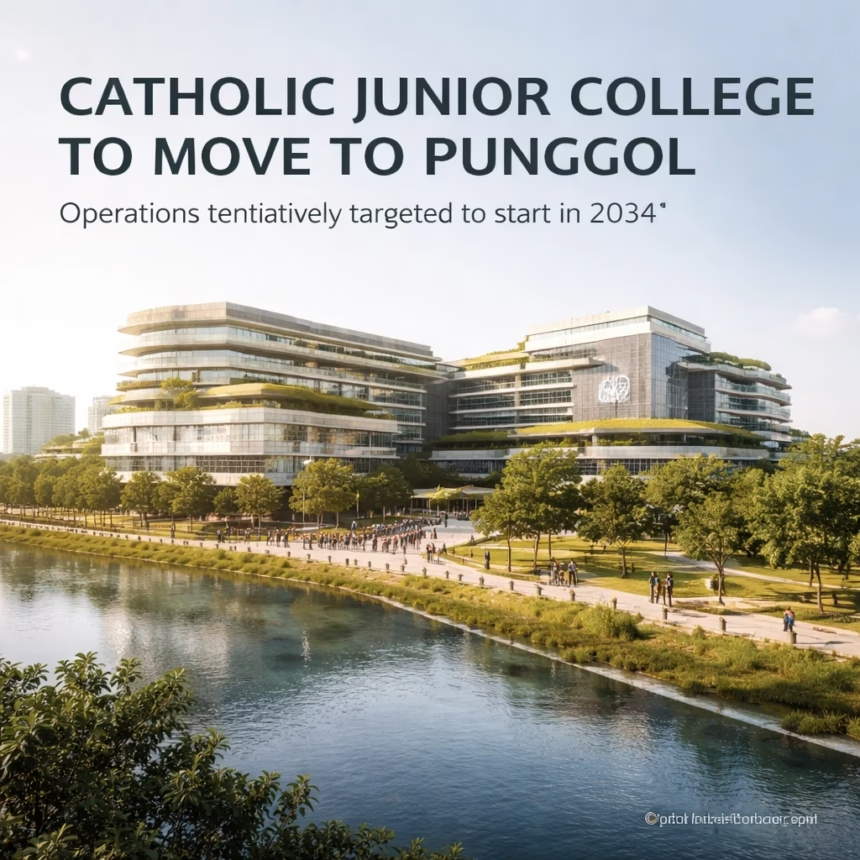
Catholic Junior College (CJC) is slated for a significant relocation from its current Bishan campus to a new, purpose-built facility in Punggol. This strategic move, part of a broader educational infrastructure development, is tentatively targeted for operations to commence in 2034. The relocation marks a new chapter for one of Singapore's established junior colleges, positioning it within a rapidly developing residential and educational hub in the northeastern region.
Background: A Legacy and a Forward Vision
Catholic Junior College holds a distinguished place in Singapore's educational landscape, having been established in 1975. Initially operating from a temporary site on Whitley Road, the college moved to its permanent home along Bishan Street 22 in 1987. For over three decades, the Bishan campus has served as a nurturing ground for countless students, fostering academic excellence and holistic development rooted in its Catholic ethos.
The Ministry of Education (MOE) regularly reviews and optimizes Singapore's school infrastructure to meet evolving demographic needs and educational demands. This includes strategic consolidations, upgrades, and relocations of schools to ensure equitable access to quality education across the island. The planned move for CJC aligns with this national strategy, reflecting a proactive approach to future-proofing the educational system.
Punggol, once a tranquil fishing village, has undergone a remarkable transformation into a vibrant "Waterfront Town of the 21st Century." It is envisioned as a smart and sustainable town, characterized by its green spaces, waterways, and modern amenities. The development of the Punggol Digital District (PDD), integrating a university, business park, and community facilities, further solidifies its status as a burgeoning economic and educational hub.
The rationale behind CJC's relocation to Punggol is multi-faceted. Demographics play a significant role, with a substantial population shift towards Singapore's northeastern corridors, including Punggol, Sengkang, and Pasir Ris. Establishing a prominent junior college in this area addresses the growing educational needs of residents in these new towns, reducing travel times for students residing there. Furthermore, the move presents an unparalleled opportunity to design and construct a state-of-the-art campus from the ground up, incorporating modern pedagogical approaches and sustainable infrastructure tailored for future learning environments.
More Read

Key Developments: Shaping the Future Campus
While specific details regarding the new Punggol site are still being finalized, the announcement of CJC's impending move signifies a significant commitment from the Ministry of Education and the college's Board of Governors. This decision underscores a long-term vision for the college's growth and its continued contribution to pre-university education.
The planning and design phase for the new campus is expected to be comprehensive, involving architectural firms, educational consultants, and stakeholders. The aim is to create a future-ready learning environment that transcends traditional classroom settings. Envisioned features include flexible learning spaces, advanced science and technology laboratories, dedicated arts and humanities studios, comprehensive sports facilities, and communal areas designed to foster collaboration and student well-being. Emphasis will also be placed on incorporating sustainable design principles, aligning with Punggol's identity as an eco-town.
Stakeholder engagement forms a crucial part of this developmental process. The college leadership is expected to consult extensively with current students, staff, alumni, and parents to gather feedback and address concerns regarding the transition. This collaborative approach ensures that the new campus truly reflects the needs and aspirations of the CJC community, preserving its unique culture and values in a new setting.

The substantial investment required for such a large-scale relocation and new campus construction highlights the government's ongoing commitment to providing high-quality educational infrastructure. This ensures that institutions like CJC can continue to deliver a holistic education that prepares students for the challenges and opportunities of the 21st century.
Impact: A New Chapter for Stakeholders
The relocation of Catholic Junior College to Punggol will have a profound impact on various stakeholders, reshaping educational access and community dynamics.
Current and Future Students
For current students at the Bishan campus, the immediate impact is minimal as the move is slated for 2034, well beyond their graduation. However, future cohorts enrolling from 2034 onwards will be the first beneficiaries of the brand-new Punggol campus. They will experience an enhanced learning environment equipped with cutting-edge facilities, designed to support innovative teaching methods and diverse academic pursuits. This move also significantly improves accessibility for students residing in the rapidly expanding northeastern regions, offering a top-tier junior college option closer to home.
Staff and Faculty
The college's dedicated team of educators and support staff will also undergo a transition. While the new campus offers modern facilities and a refreshed working environment, changes in commute patterns and adaptation to a new locale will be considerations. The move presents an opportunity for staff to engage with new technologies and pedagogies integrated into the campus design, fostering professional growth and development.
The Punggol Community
CJC's arrival will significantly bolster Punggol's status as a comprehensive educational hub. The presence of a reputable junior college will attract more families with school-going children to the area, further enriching the town's demographic profile. The college community will also contribute to the vibrancy of Punggol, potentially leading to the emergence of new amenities and services catering to students and staff. Moreover, the integration of CJC into the Punggol Digital District could foster collaborations with the Singapore Institute of Technology (SIT) and surrounding industries, creating unique learning and internship opportunities for students.
The Bishan Community and Alumni
The departure of CJC from Bishan will undoubtedly evoke a sense of nostalgia among long-time residents and the college's extensive alumni network. The Bishan campus has been a landmark for decades, and its relocation marks the end of an era for the local community. The vacated site, a valuable piece of land, will likely be repurposed by the Ministry of Education for other educational institutions or public use, ensuring its continued contribution to the community. Alumni will have a new focal point for their engagement, with opportunities to connect with the college at its modern Punggol home while cherishing memories of the Bishan campus.
More Read

Wider Educational Landscape
This strategic relocation also contributes to a more balanced distribution of educational resources across Singapore. By establishing a strong pre-university institution in the northeast, it may alleviate enrolment pressures on junior colleges in other regions and provide greater choice for students island-wide. It signifies a forward-looking approach to educational planning, anticipating future demographic shifts and urban development.
What Next: Milestones on the Horizon
With the tentative target for operations set for 2034, several significant milestones lie ahead in the journey towards CJC's new Punggol home.
The immediate future will involve the detailed finalization of architectural designs and master planning for the new campus. This phase will translate the vision for a future-ready educational environment into concrete blueprints, encompassing everything from classroom layouts to landscape design. Following this, a crucial step will be the tendering process for construction, inviting qualified contractors to bring the designs to life.
Physical construction of the new Punggol campus is expected to commence in the coming years, likely towards the end of this decade, allowing ample time for the development of a large-scale educational facility. As construction progresses, the college will embark on meticulous phased relocation planning, addressing the logistical complexities of moving equipment, archives, and preparing for the new academic year in Punggol.
Throughout this period, ongoing community engagement will remain vital. Regular updates and consultations with students, parents, staff, and alumni will ensure transparency and foster a sense of shared anticipation for the new chapter. The culmination of these efforts will be the grand opening of the new Catholic Junior College campus in Punggol in 2034, welcoming its inaugural batch of students to a state-of-the-art learning environment. This move reaffirms CJC's enduring commitment to its mission and values, ready to adapt and thrive in its new home, shaping the minds of future generations.