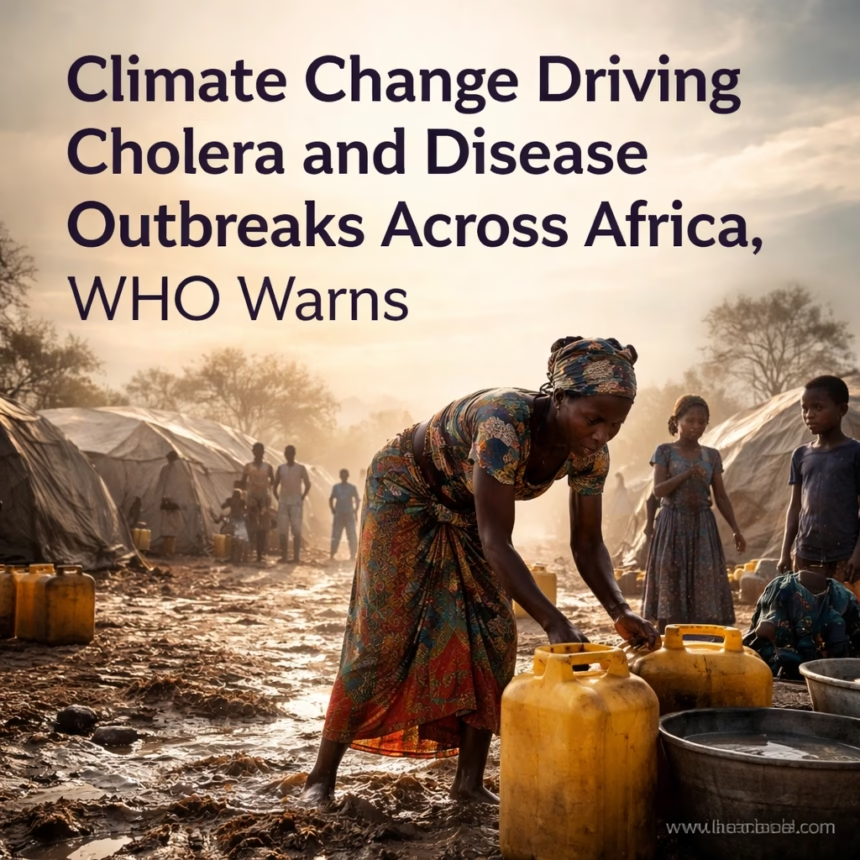
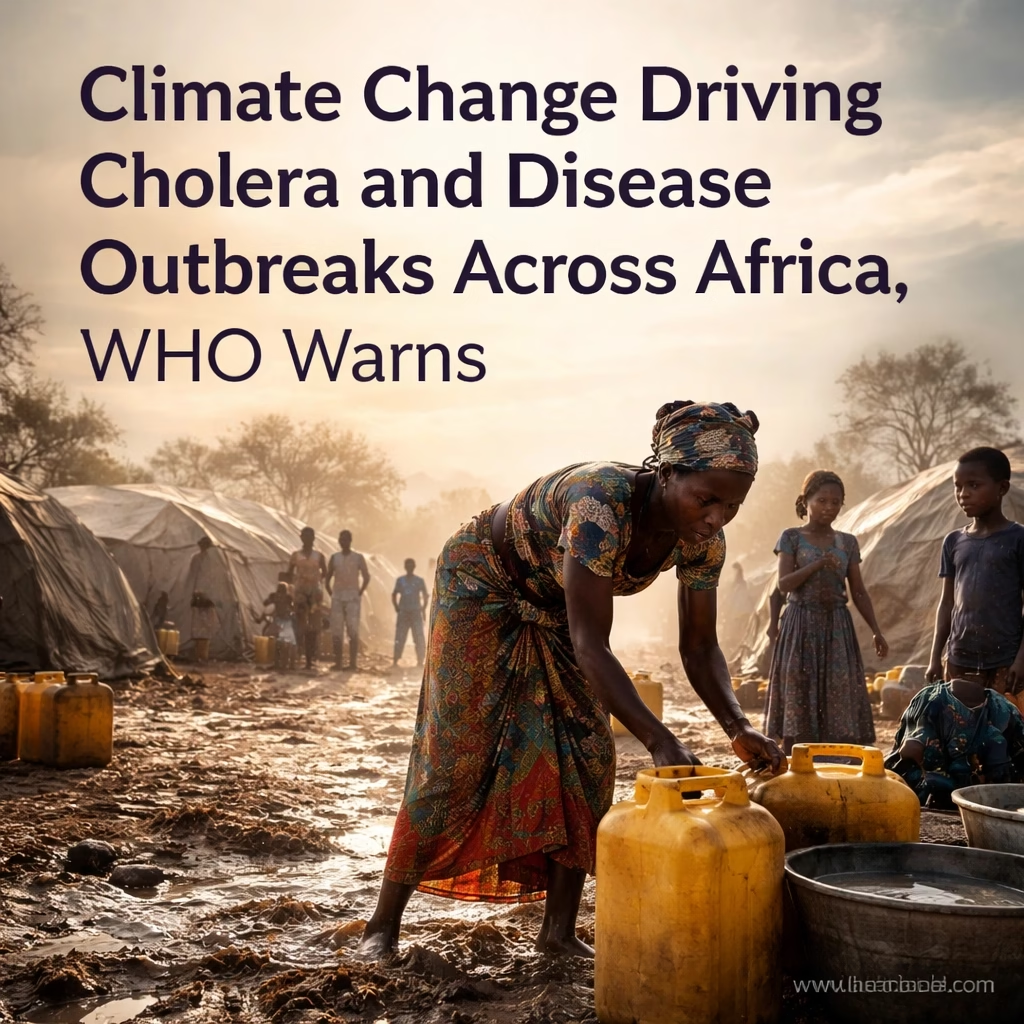
The World Health Organization (WHO) has issued an urgent warning regarding a dramatic surge in cholera and other waterborne disease outbreaks sweeping across Africa. This alarming trend, observed over the past year and intensifying in recent months, is directly linked to the escalating impacts of climate change, threatening millions and straining already fragile health systems across the continent.
A Continent Under Siege: The Roots of a Growing Crisis
Cholera, an acute diarrhoeal infection caused by ingesting contaminated food or water, has long been endemic in parts of Africa. However, the current scale and intensity of outbreaks represent a significant departure from historical patterns. For decades, public health efforts focused on improving sanitation and water infrastructure to contain its spread. Yet, the accelerating climate crisis is dismantling these gains, creating fertile ground for the bacterium *Vibrio cholerae*.
Extreme weather events, a hallmark of climate change, are identified as primary drivers. Unprecedented floods contaminate water sources and displace communities, forcing populations into overcrowded, unsanitary conditions ripe for disease transmission. Conversely, prolonged droughts lead to severe water scarcity, compelling people to rely on unsafe water points, further increasing their risk of infection. Compounding these environmental factors are pre-existing vulnerabilities such as conflict, mass displacement, rapid urbanization without adequate infrastructure, and chronic underinvestment in public health, creating a perfect storm across numerous African nations.
Escalating Outbreaks: A Snapshot of Recent Developments
The past 12 to 18 months have witnessed a relentless succession of cholera outbreaks, many reaching unprecedented scales and geographical spreads. The WHO reports a significant increase in both the number of affected countries and the severity of individual outbreaks, overwhelming national response capacities.

Malawi’s Unprecedented Crisis
Malawi has experienced its deadliest cholera outbreak in history, commencing in March 2022 and quickly spiraling out of control. By early 2023, the nation had reported tens of thousands of cases and over a thousand deaths, primarily driven by severe flooding and inadequate access to safe water and sanitation. The outbreak strained medical facilities to their breaking point, exhausting supplies of oral cholera vaccine and rehydration salts.
East Africa’s Dual Threat
In East Africa, the confluence of persistent drought and sporadic, heavy rainfall has created a volatile environment. Somalia, Ethiopia, and Kenya have grappled with significant outbreaks. Years of drought have led to widespread malnutrition, weakening immune systems, while subsequent flash floods have contaminated what little clean water was available. In Somalia, the situation is exacerbated by ongoing conflict and internal displacement, pushing vulnerable communities to the brink.
Southern Africa’s Struggle
Beyond Malawi, other Southern African nations like Mozambique, Zambia, and Zimbabwe have also faced increased cholera activity. Mozambique, frequently battered by cyclones and tropical storms, sees its coastal regions particularly vulnerable to waterborne diseases following such events. The repeated cycles of destruction and recovery make sustained public health interventions incredibly challenging.
More Read

West and Central Africa’s Persistent Challenges
In West and Central Africa, countries such as the Democratic Republic of Congo (DRC), Nigeria, and Cameroon continue to battle persistent and often widespread cholera outbreaks. The DRC, in particular, faces one of the world's longest-running cholera epidemics, with multiple concurrent outbreaks in different provinces, often linked to population movements, conflict, and limited access to basic services. Nigeria has also reported thousands of cases, especially in its northern states, following heavy rainy seasons that overwhelm drainage systems.
Humanitarian Toll: Who Is Most Affected?
The impact of these climate-driven disease outbreaks is disproportionately borne by the most vulnerable populations. Children, the elderly, and those already suffering from malnutrition or other underlying health conditions are at the highest risk of severe illness and death.
Children at Highest Risk
Children are particularly susceptible to cholera, with severe dehydration posing an immediate life threat. Malnutrition, prevalent in many affected regions due to climate-induced food insecurity, further weakens their immunity, making them more vulnerable to infection and more likely to suffer severe outcomes. School closures due to outbreaks disrupt education, perpetuating cycles of poverty and vulnerability.
Overwhelmed Health Infrastructure
National health systems, already underfunded and understaffed, are buckling under the pressure. Hospitals and health centers are overwhelmed with patients, often lacking sufficient beds, medicines, and trained personnel. The global scarcity of oral cholera vaccines means that even when available, distribution challenges and logistical hurdles impede effective mass vaccination campaigns, leaving vast populations unprotected.
Economic Ripple Effects
Beyond the immediate health crisis, these outbreaks trigger significant economic and social disruption. Livelihoods are destroyed as communities are quarantined, markets close, and agricultural activities are disrupted. The diversion of resources to emergency response efforts strains national budgets, hindering long-term development goals and perpetuating cycles of poverty in affected regions.
The Path Forward: Urgent Action and Long-Term Resilience
The WHO's warning is a stark call to action, emphasizing that the current trajectory is unsustainable. Addressing this complex crisis requires a multi-faceted approach involving immediate humanitarian response and robust long-term strategies.

Urgent Call for Funding and Resources
There is an immediate and critical need for increased international funding to support emergency response efforts. This includes the rapid deployment of medical supplies, oral rehydration salts, antibiotics, and additional healthcare personnel. Funding is also crucial for scaling up diagnostic capabilities and establishing isolation and treatment centers in affected areas. The WHO and its partners estimate that hundreds of millions of dollars are required annually to effectively respond to the growing burden of climate-sensitive diseases in Africa.
Scaling Up WASH Interventions
Investing in Water, Sanitation, and Hygiene (WASH) infrastructure is paramount. Providing access to safe drinking water, improving sanitation facilities, and promoting hygiene practices are the most effective long-term measures to prevent cholera and other waterborne diseases. This requires significant investment in building and maintaining water treatment plants, boreholes, latrines, and sewage systems, particularly in rapidly growing urban centers and rural communities.
Climate Adaptation Strategies
Long-term solutions must integrate climate change adaptation into public health planning. This includes developing early warning systems for extreme weather events, building climate-resilient infrastructure, and implementing sustainable land and water management practices. Enhancing surveillance systems for climate-sensitive diseases will allow for earlier detection and more rapid response, mitigating the spread of outbreaks.
Global Solidarity and Policy Action
Ultimately, tackling this crisis demands global solidarity and decisive policy action from national governments and international bodies. This includes fulfilling climate finance commitments to support African nations in adapting to climate change impacts and strengthening their health systems. Without a concerted global effort to reduce greenhouse gas emissions and support vulnerable communities, the specter of climate-driven disease outbreaks will continue to loom large over Africa, threatening decades of progress in public health and development.