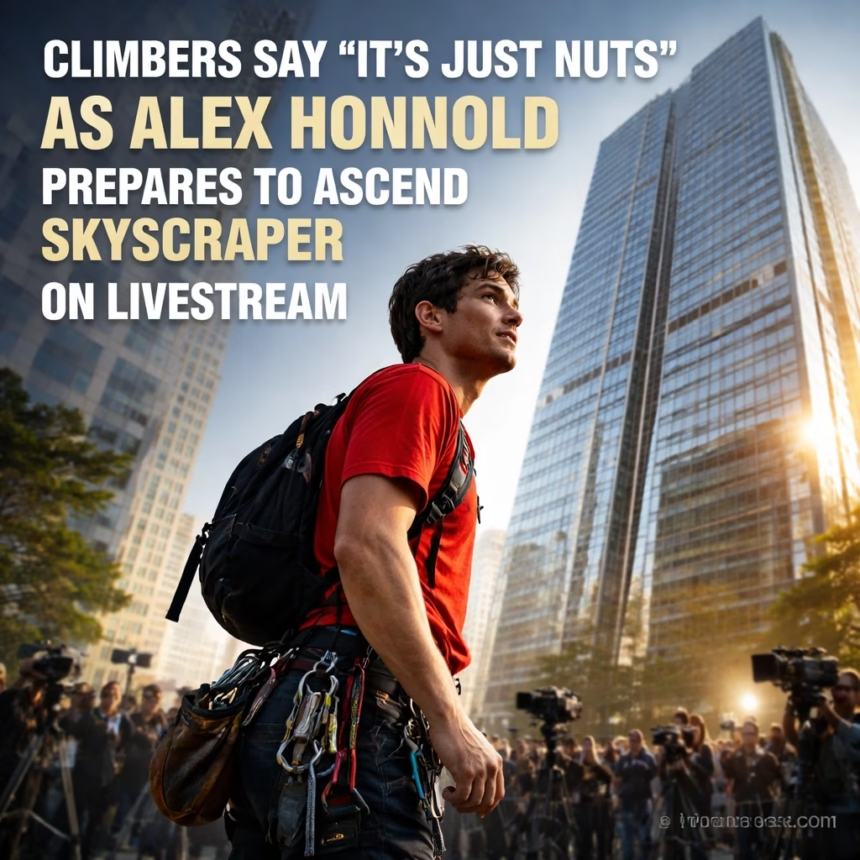
World-renowned free solo climber Alex Honnold is preparing for an unprecedented ascent of The Ascendant Tower, a 1,500-foot skyscraper in downtown Chicago, scheduled for a live global broadcast on October 26, 2024. The audacious plan has ignited a firestorm of debate within the climbing community, with many veterans calling the endeavor "just nuts" due to the unique and unpredictable challenges of urban climbing.
Background: A Legacy Forged in Stone, Tested on Steel
Alex Honnold rose to international fame for his groundbreaking free solo ascent of El Capitan's Freerider route in Yosemite National Park on June 3, 2017. This monumental feat, performed without ropes, harnesses, or any safety gear, was chronicled in the Oscar-winning documentary *Free Solo*, cementing his status as one of the most daring and precise athletes in history. His climbing philosophy emphasizes meticulous preparation, mental fortitude, and an intimate understanding of the rock.
The Allure and Peril of Free Soloing
Free soloing, the purest form of climbing, involves ascending without any protective equipment. The margin for error is non-existent; a single slip or misjudgment can be fatal. Honnold’s success on El Capitan was attributed not just to his physical prowess but to years of rigorous training, route memorization, and mental conditioning to manage fear and maintain absolute focus. While he has previously engaged in various climbing challenges, including multi-pitch routes and bouldering, his reputation is inextricably linked to the high-stakes world of free soloing.
From Granite to Glass: A Different Beast
The transition from natural rock formations to engineered urban structures presents a fundamentally different set of challenges. Unlike mountains with their varied textures, cracks, and holds, modern skyscrapers are typically clad in smooth glass, polished metal, and sheer concrete. While there’s a history of “buildering” or urban climbing, often associated with figures like Alain Robert, the “French Spiderman,” Honnold’s attempt is distinguished by its scale, its planned nature, and the intense global scrutiny it will attract. The surfaces are alien, the grip points are artificial, and the consequences remain equally dire.
Key Developments: Months of Secret Preparations Unveiled
The announcement of Honnold's skyscraper free solo, made public in early September, sent shockwaves through both the climbing world and mainstream media. Details emerged about an extensive, secretive preparation phase spanning over a year, involving a dedicated team of architects, structural engineers, and climbing experts. The goal: to map out a viable, albeit incredibly dangerous, route up The Ascendant Tower's formidable facade.
More Read

Route Planning and Simulated Training
Honnold and his team reportedly utilized advanced laser scanning and drone photogrammetry to create a highly detailed 3D model of The Ascendant Tower. This allowed for virtual route planning, identifying potential handholds and footholds within the building’s architectural features—window washing tracks, aesthetic fins, structural seams, and maintenance ledges. Honnold has spent countless hours training on custom-built indoor walls designed to mimic the exact angles and materials of the skyscraper, focusing on specific moves and sequences. His training regimen has reportedly intensified, emphasizing grip strength for smooth, often slick surfaces, and endurance for sustained vertical effort.
Livestream Logistics and Safety Protocols
The decision to livestream the ascent, facilitated by a partnership with “Vertical Vision” streaming platform, aims to bring the unprecedented event to a global audience. This also introduces complex logistical challenges, including drone camera operation, signal transmission, and contingency planning. While Honnold will be free soloing without a rope, emergency protocols are reportedly in place, involving highly specialized rescue teams stationed at various points on the building and ground level. Airspace around The Ascendant Tower will be restricted, and a significant security perimeter established to manage crowds and ensure public safety.
Expert Skepticism and Outright Alarm
Reactions from the climbing community have been largely polarized. Veteran free soloists and rock climbers have expressed profound concern. “It’s just nuts,” stated legendary climber Lynn Hill in a recent interview, echoing sentiments heard across the sport. “A building is not a mountain. The surfaces are engineered, not organic. You don’t have the same tactile feedback, the same reliable holds. One microscopic imperfection on a pane of glass, one unexpected gust of wind, and it’s over.” Many fear that the pursuit of spectacle might overshadow the inherent dangers, potentially setting a perilous precedent for less experienced individuals.
More Read

Impact: Redefining Boundaries and Sparking Debate
Honnold's audacious plan to free solo The Ascendant Tower is poised to have far-reaching impacts, not just within the climbing world but across broader society, influencing perceptions of risk, achievement, and urban environments. The event is already generating immense media buzz, drawing comparisons to daredevil stunts while simultaneously being framed as an athletic endeavor of the highest order.
On the Climbing Community and Public Perception
For the climbing community, the event forces a re-evaluation of what constitutes acceptable risk and the ethical boundaries of the sport. While some see Honnold’s attempt as a natural evolution of his quest to push human limits, others view it as a dangerous departure from traditional climbing, risking the sport’s reputation. Publicly, the livestream will undoubtedly captivate millions, potentially introducing free soloing to a new, vast audience. This mainstream exposure could inspire a new generation but also raise concerns about the glamorization of extreme risk-taking, particularly in an accessible urban environment.
Implications for Urban Security and Architecture
The mere possibility of a successful skyscraper free solo has prompted discussions among urban planners and security experts. Buildings, traditionally designed to deter unauthorized access, are now being viewed through a new lens. There could be future implications for architectural design, with potential for new anti-climb features or enhanced security measures for high-rise structures. The event will also test the limits of urban incident response and public safety management in a major metropolitan area.
Commercial and Legacy Ramifications
Commercially, the livestream is expected to draw unprecedented viewership, translating into significant revenue for “Vertical Vision” and its sponsors. For Honnold, the climb, regardless of outcome, will undeniably add another chapter to his already legendary status. A successful ascent would solidify his place as perhaps the greatest living climber, capable of adapting his unique skills to any vertical challenge. However, an unsuccessful attempt would carry a tragic personal cost and could cast a shadow over his remarkable legacy, raising questions about the line between ambition and recklessness.
What Next: The Countdown to a Defining Moment
As October 26, 2024, approaches, the world holds its breath, anticipating an event that promises to be either a monumental triumph of human will or a stark reminder of the unforgiving nature of gravity. The final preparations are underway, and the focus remains squarely on Alex Honnold and The Ascendant Tower.
More Read

The Livestream Event
The “Vertical Vision” broadcast is scheduled to begin at 8:00 AM CST, providing pre-climb analysis, interviews with Honnold’s support team, and live coverage of the ascent. The duration of the climb is estimated to be between four and six hours, depending on conditions and Honnold’s pace. Millions are expected to tune in, watching every move with a mix of awe and trepidation. Commentary will be provided by a panel of climbing experts and former athletes, offering insight into the technical demands and psychological pressures of the endeavor.
Post-Climb Repercussions and Future Horizons
Should Honnold successfully reach the summit, the immediate aftermath will involve a flurry of media engagements, medical evaluations, and celebrations. The implications for future urban climbing events, and for Honnold’s career, would be profound. Conversely, an aborted attempt or, tragically, an accident, would lead to intense scrutiny and potentially trigger widespread debate about the ethics of extreme sports and live broadcasting of such high-risk activities. Regardless of the outcome, this attempt will undoubtedly shape conversations around human potential and the boundaries of adventure for years to come. Regulatory bodies may consider new legislation concerning urban free soloing, and cities may re-evaluate security protocols for their iconic structures. The Ascendant Tower climb is not just an athletic feat; it is a cultural moment poised to leave an indelible mark.