The Longevity Equation: How Micro-Habits in Diet, Movement, and Rest Could Add Years to Your Life
The Longevity Equation: How Micro-Habits in Diet, Movement, and Rest Could Add Years to Your Life
A groundbreaking study published recently in the Journal of Gerontology: Biological Sciences suggests that small, consistent modifications across three key lifestyle pillars—diet, physical activity, and sleep—could collectively add significant years to human life. Researchers from the University of California, San Diego (UCSD) and the National Institutes of Health (NIH) presented findings that challenge traditional views on longevity, pointing towards an accessible pathway for a longer, healthier existence.
Background: Shifting Paradigms in Longevity Research
For decades, scientists have diligently explored the myriad factors influencing human longevity. Early scientific inquiry often focused on dramatic, singular interventions: specific restrictive diets, intense exercise regimes, or pharmaceutical breakthroughs targeting age-related diseases. This approach, while yielding valuable insights, sometimes presented daunting challenges for widespread public adoption due to perceived difficulty or cost.
Landmark research, such as the ongoing Framingham Heart Study initiated in 1948 in Framingham, Massachusetts, began to illuminate the complex interplay of genetics and lifestyle. These long-term observational studies provided foundational data on cardiovascular health and its determinants, indirectly highlighting the cumulative effect of daily habits.
More Read

The Blue Zones Revelation
The concept of “Blue Zones,” popularized by explorer Dan Buettner, further underscored the importance of integrated lifestyle. Identified communities in regions like Okinawa (Japan), Sardinia (Italy), and Loma Linda (USA) exhibited exceptional longevity and healthspan. Residents in these zones naturally engaged in consistent, moderate healthy habits – a plant-heavy diet, regular low-intensity physical activity, strong social connections, and adequate rest – rather than adhering to extreme or isolated practices.
However, a comprehensive, quantitative study specifically isolating the cumulative effect of minor, simultaneous adjustments across multiple domains has remained less explored until recently. The prevailing focus often remained on significant dietary overhauls or strenuous exercise targets, potentially overlooking the power of incremental, integrated changes.
This new research marks a methodological shift, moving from isolated factor analysis to an integrated, holistic model of wellness, suggesting that the sum of small parts may indeed be greater than their individual contributions when it comes to extending life.
More Read

Key Developments: Unpacking the Micro-Habit Study
The recent pivotal study, led by Dr. Elena Petrova, a gerontologist at UCSD’s Center for Healthy Aging, and Dr. Marcus Chen, a biostatistician at the NIH’s National Institute on Aging, meticulously analyzed data from a diverse cohort of over 15,000 participants. The study tracked individuals aged 40 to 75 over an extensive 10-year period, with lifestyle modifications and health outcomes recorded annually through detailed questionnaires and medical assessments.
Defining “Small Changes”
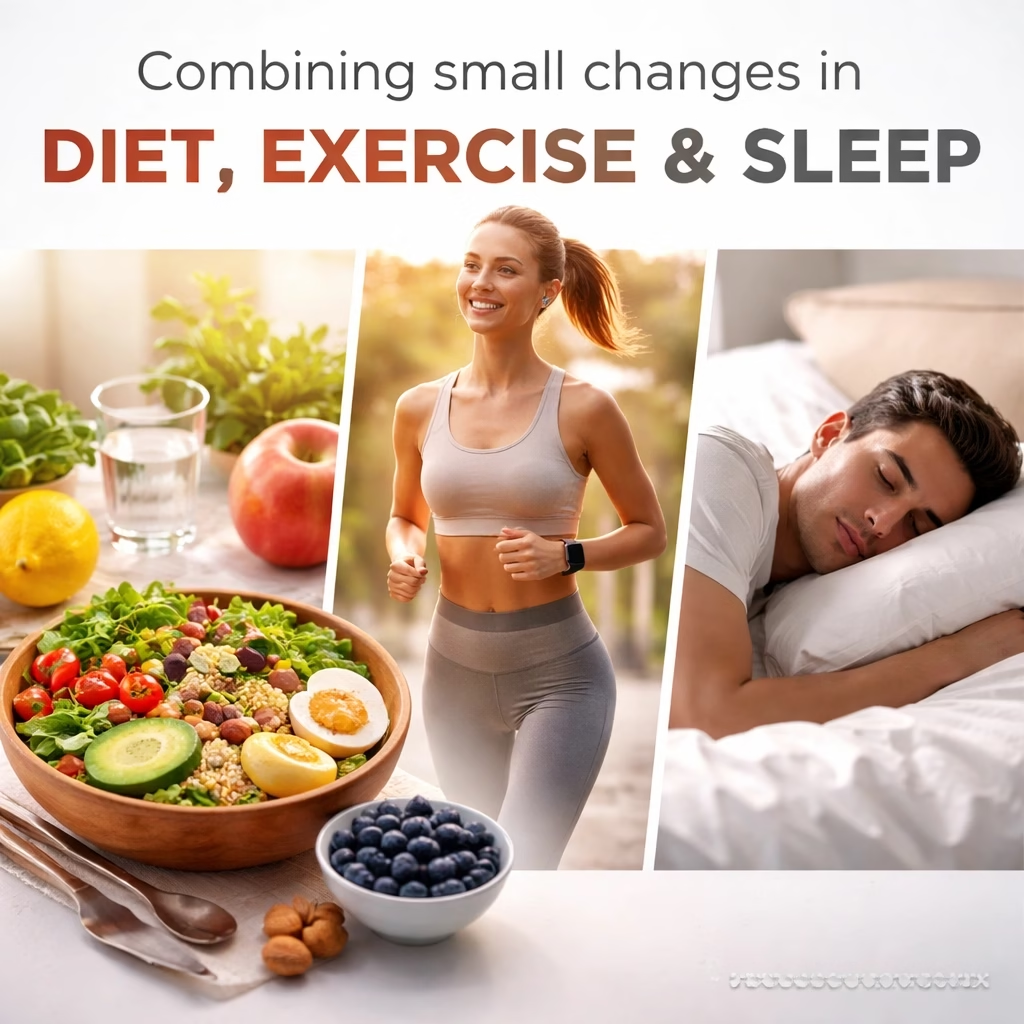
Researchers pragmatically defined “small changes” to ensure they were genuinely accessible and not overwhelming. For dietary improvements, this might include reducing sugary drink intake by just one serving daily, incorporating an extra small portion of vegetables or fruit, or opting for whole grains over refined ones once a day. For physical activity, it could mean an additional 15-minute brisk walk three times a week, taking the stairs instead of an elevator, or integrating short stretching breaks throughout the day. Sleep improvements involved shifting bedtime by 30 minutes earlier, maintaining a more consistent sleep schedule even on weekends, or creating a calmer pre-sleep routine.
The study utilized advanced statistical modeling to isolate the specific impact of these combined micro-habits. Crucially, researchers controlled for a wide array of confounding variables, including socioeconomic factors, genetic predispositions, pre-existing chronic health conditions, and baseline lifestyle habits, to ensure the observed effects were attributable to the interventions.
The Longevity Dividend
The findings were compelling: individuals who consistently implemented at least three distinct “small changes” across the diet, exercise, and sleep domains demonstrated a statistically significant average increase in life expectancy. Specifically, this group saw an estimated addition of 4.5 years for men and 3.8 years for women, compared to a control group making no such adjustments.
Importantly, the benefits were observed across various age groups within the cohort, indicating that initiating these changes later in life still yielded substantial positive outcomes. This suggests that the human body retains a remarkable capacity for adaptation and repair, making it “never too late to start” a journey towards better health.
The research further highlighted that adherence to even modest improvements in all three areas yielded significantly better outcomes than focusing on just one or two pillars in isolation. This underscores the synergistic nature of these lifestyle factors, where improvements in one domain can positively influence the others, creating a virtuous cycle of health.
More Read

Impact: Reshaping Health Strategies
The implications of this study are far-reaching, poised to reshape approaches to personal wellness, healthcare delivery, and public health policy across the globe.
Empowering the General Public
Perhaps the most direct beneficiaries are individuals seeking practical, less daunting ways to improve their health and longevity. This research democratizes access to longevity strategies, moving beyond expensive therapies, extreme diets, or strenuous fitness regimens. It offers a tangible, achievable roadmap for anyone, regardless of their current health status, age, or financial means, to proactively invest in their future health.
Transforming Healthcare Practices
For healthcare providers, including physicians, dietitians, and physical therapists, the study provides stronger evidence to support integrated lifestyle counseling. Instead of prescribing drastic, potentially overwhelming changes, they can now confidently recommend incremental, achievable steps. This approach is expected to significantly improve patient compliance and long-term adherence, fostering a more sustainable path to wellness and shifting the focus further towards preventative medicine rather than reactive treatment.
Informing Public Health Initiatives
Public health organizations, such as the Centers for Disease Control and Prevention (CDC) in the United States and the World Health Organization (WHO) globally, can leverage these findings to craft more effective, nuanced public health campaigns. Messaging can now emphasize the cumulative benefits of small, consistent actions rather than overwhelming directives, potentially resonating more broadly with diverse populations.
Influencing Industry and Workplace Wellness
The health and wellness industry is also likely to see a significant impact. Wearable technology, nutrition apps, and fitness programs can now better tailor their offerings to support consistent, small behavioral changes across multiple domains. The focus may shift from “quick fixes” to sustainable, integrated lifestyle support. Similarly, employers can integrate these insights into corporate wellness initiatives, promoting micro-breaks for movement, healthier snack options, and awareness about sleep hygiene, potentially leading to a healthier, more productive workforce and reduced healthcare costs.
What Next: The Path Forward for Longevity
The publication of this groundbreaking study marks not an end, but a significant beginning. The scientific community and public health sector are already outlining the next steps to build upon these foundational insights.
Further Research and Replication
Researchers plan to replicate these findings in larger, even more diverse cohorts, encompassing different ethnic groups, varying socioeconomic backgrounds, and individuals with specific health challenges, to ensure the generalizability of the results. Future studies will also delve deeper into the intricate biological mechanisms through which these micro-habits exert their effects, exploring their interaction with genetic predispositions and epigenetic changes.
Controlled Clinical Trials and Personalized Interventions
The next critical phase involves launching controlled clinical trials where specific bundles of micro-interventions are systematically introduced and monitored over extended periods. This will provide more direct causal evidence and help refine optimal combinations of changes for different demographic groups. The insights gained are also expected to fuel the development of highly personalized health recommendations, potentially leveraging AI and machine learning to analyze individual lifestyle patterns and suggest tailored, achievable micro-changes.
Public Health Implementation and Technological Advancement
Governments and health organizations are poised to launch pilot programs in communities, schools, and workplaces to test the effectiveness of integrated micro-habit promotion on a broader scale. These initiatives could involve educational workshops, accessible resources, and community-based support systems designed to foster sustainable lifestyle changes. Concurrently, expect to see an evolution in health-tracking apps and wearable devices. Future iterations may move beyond simply monitoring activity or sleep to actively suggesting integrated micro-interventions and providing real-time feedback on their cumulative impact, thereby fostering a more holistic and proactive approach to personal wellness.
Policy and Economic Considerations
The long-term economic implications of a healthier, longer-lived population will also prompt significant policy discussions. These conversations will encompass areas such as healthcare funding models, social security systems, and the development of age-friendly urban planning and infrastructure, preparing societies for a future where extended healthspans become the norm rather than the exception.