Planet's Fever: Is Earth Getting Hotter (and How Do We Know)?
For decades, scientists have meticulously tracked the Earth's infrared emissions – essentially, the heat radiating from our planet. Recent observations reveal subtle, yet significant, shifts in this signature, offering a clearer picture of ongoing climate change and potential future scenarios. These changes, detected primarily by satellite data, are prompting renewed research into the complexities of the Earth's energy balance.
A Historical Perspective: Understanding Earth’s Energy Balance
The study of Earth's outgoing infrared radiation began in earnest with the launch of the first Earth-observing satellites in the 1970s. Early measurements, using instruments like the Broadscale Infrared Radiometer (BIR) aboard NASA's Nimbus 7 satellite (launched in 1978), established a baseline understanding of the planet’s thermal emissions. Over the subsequent decades, more sophisticated instruments, including those on the Moderate Resolution Imaging Spectroradiometer (MODIS) aboard NASA's Terra and Aqua satellites (operational since 2000), and the European Space Agency's (ESA) Sentinel-3 mission (launched in 2014), have provided increasingly detailed and comprehensive data. This continuous monitoring has allowed scientists to build a robust historical record of changes in Earth's energy budget, attributing many of these changes to human activities.
What’s Changing Now? Recent Shifts in the Infrared Spectrum
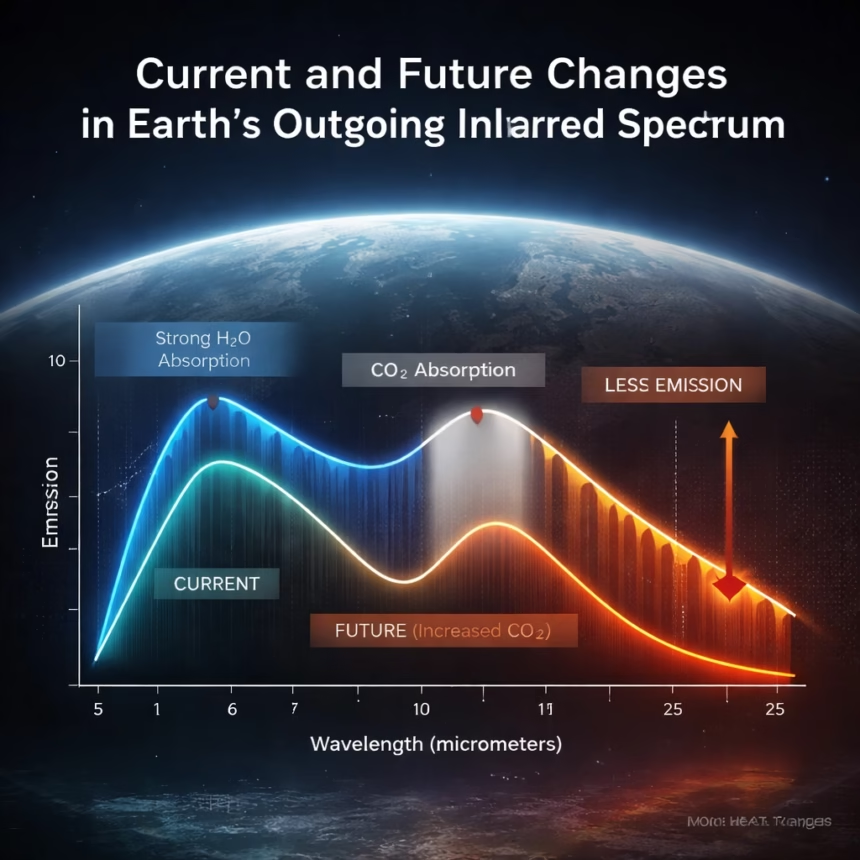
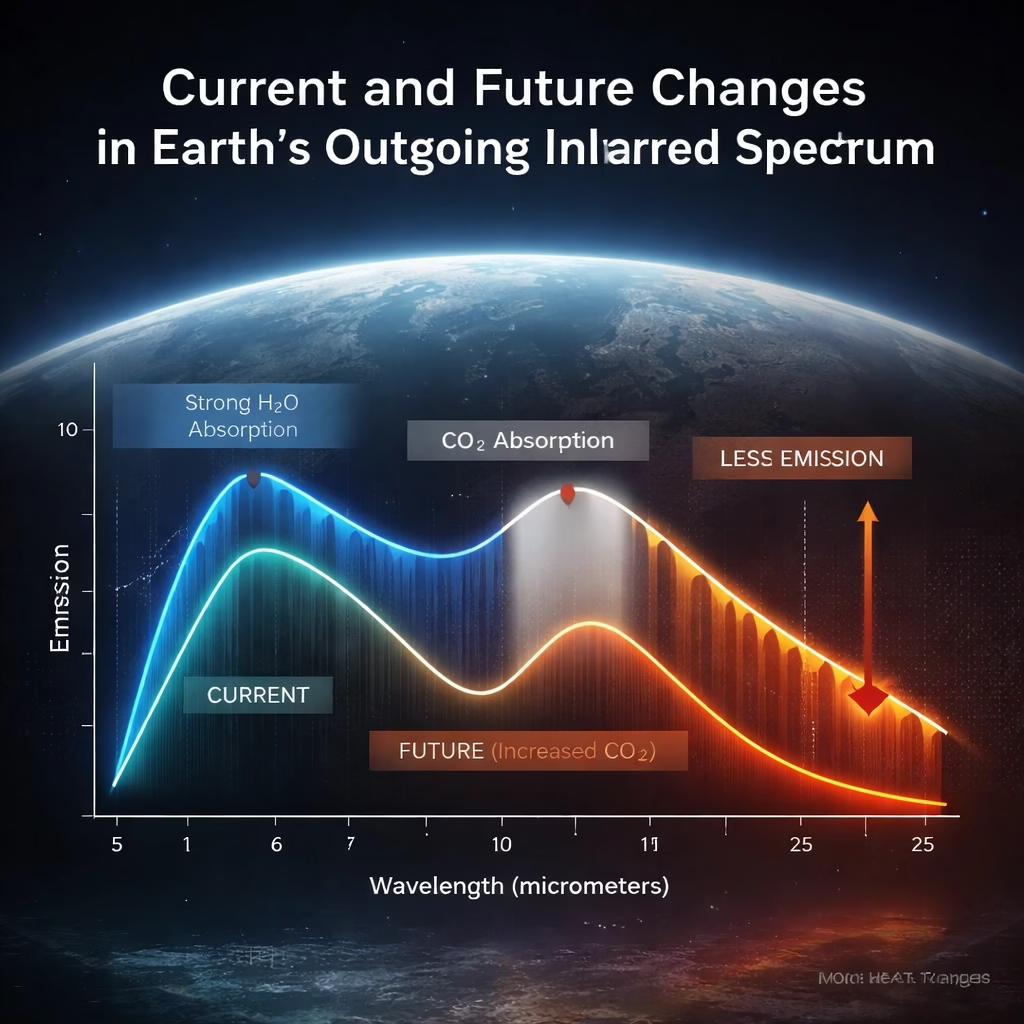
The most prominent recent change is a subtle weakening of the Earth's infrared signature at certain wavelengths, particularly in the upper atmosphere. This isn’t necessarily a cooling of the planet's surface, but rather a change in how heat is being radiated away. Scientists have observed a decrease in the intensity of infrared radiation emitted at wavelengths between 8 and 12 micrometers. This phenomenon is linked to changes in the composition of the stratosphere, specifically the increasing concentration of ozone and aerosols, potentially influenced by volcanic eruptions and human-caused emissions.
Furthermore, analysis of data from the Atmospheric Infrared Sounder (AIRS) instrument aboard NASA's Aqua satellite shows a slight increase in infrared emissions in the lower troposphere, particularly over the tropics. While this might seem counterintuitive in the context of global warming, it is linked to changes in cloud properties and atmospheric circulation patterns. These changes are making it more difficult to accurately predict future climate scenarios based solely on surface temperature data.

Stratospheric Ozone and Aerosols
Volcanic eruptions, such as the 2022 eruption of Hunga Tonga-Hunga Ha’apai in Tonga, inject significant amounts of sulfur dioxide into the stratosphere. This sulfur dioxide converts to sulfate aerosols, which reflect sunlight and cool the planet’s surface. However, these aerosols also influence the infrared spectrum by scattering and absorbing infrared radiation, leading to the observed changes in emissions.
Who Does This Matter To? The Implications of Infrared Changes
These shifts in Earth's infrared signature have broad implications. They complicate climate models, which rely on accurate information about the Earth's energy balance to project future climate scenarios. Accurate climate projections are crucial for informing policy decisions related to mitigating climate change and adapting to its effects.
The changes also affect weather forecasting. The atmosphere's infrared properties influence atmospheric stability and the development of weather systems. Understanding these changes is vital for improving the accuracy of weather predictions, especially in regions vulnerable to extreme weather events.
More Read

Looking Ahead: Future Research and Milestones
Scientists are actively working to refine climate models to incorporate these nuances in the Earth's infrared spectrum. Future missions, such as the planned European Space Agency's Plato mission, which will measure the Earth’s brightness and albedo with unprecedented accuracy, will provide critical data for improving climate projections. The Plato mission is slated for launch in the late 2020s.
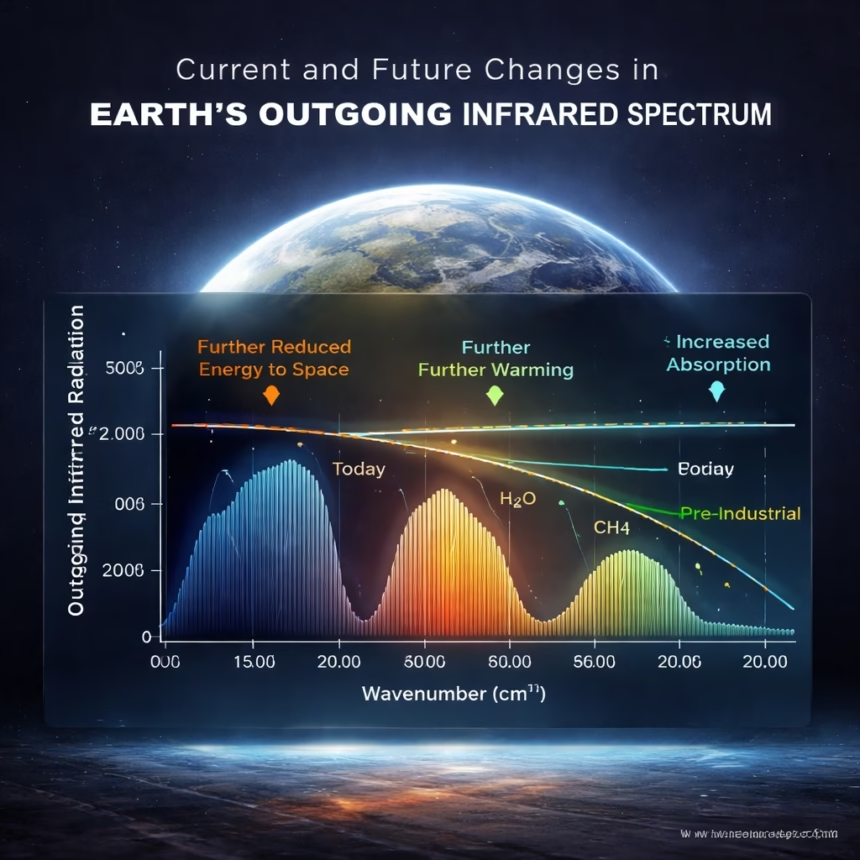
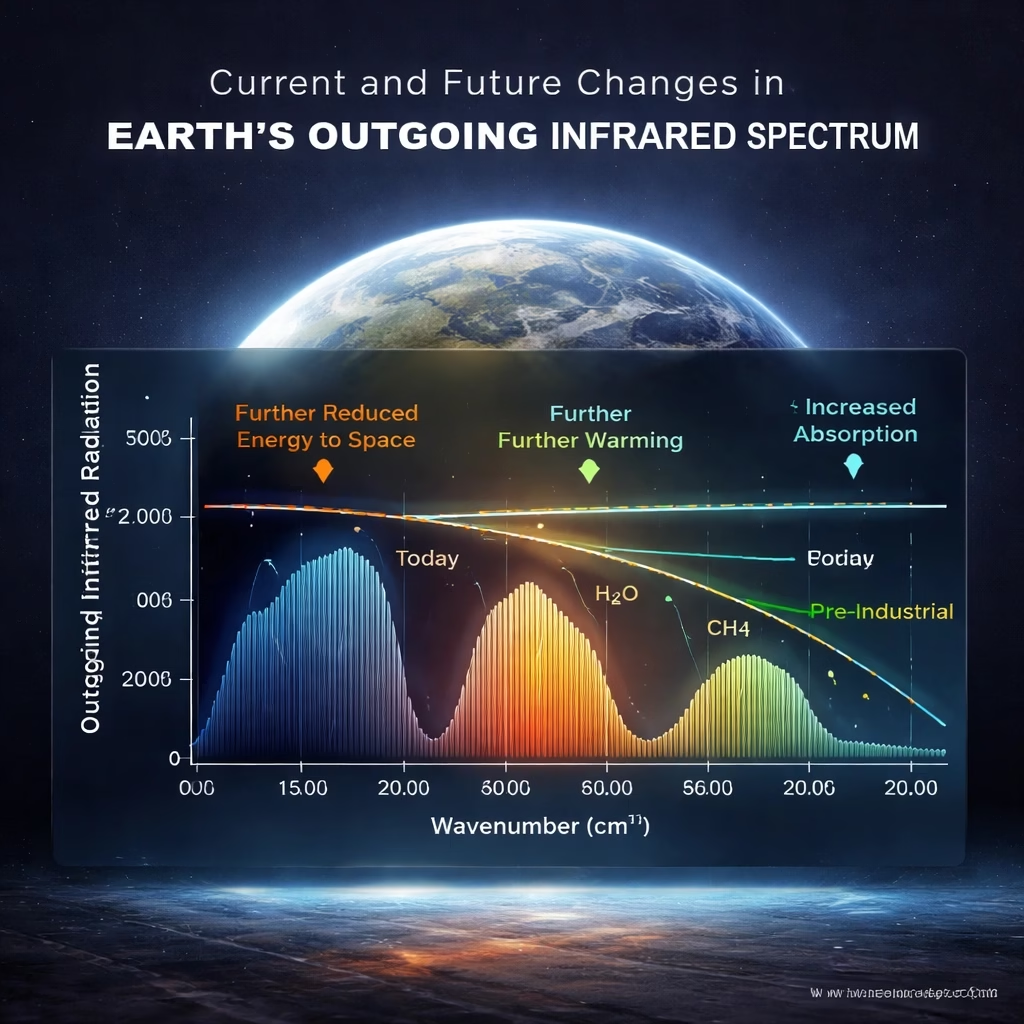
Ongoing research is also focused on better understanding the complex interactions between the atmosphere, oceans, and land surface that influence the Earth’s energy balance. Improved data assimilation techniques are being developed to integrate satellite data with ground-based observations, leading to a more comprehensive picture of how the Earth’s climate is changing. Continued monitoring and analysis of the infrared spectrum will be essential for tracking these changes and predicting future climate scenarios with greater confidence.
Advanced Modeling Techniques
Researchers are increasingly using advanced machine learning techniques to analyze the vast amounts of data collected by Earth-observing satellites. These techniques can help identify subtle patterns and relationships that might be missed by traditional statistical methods, leading to a deeper understanding of the complex processes driving changes in the Earth’s infrared signature.