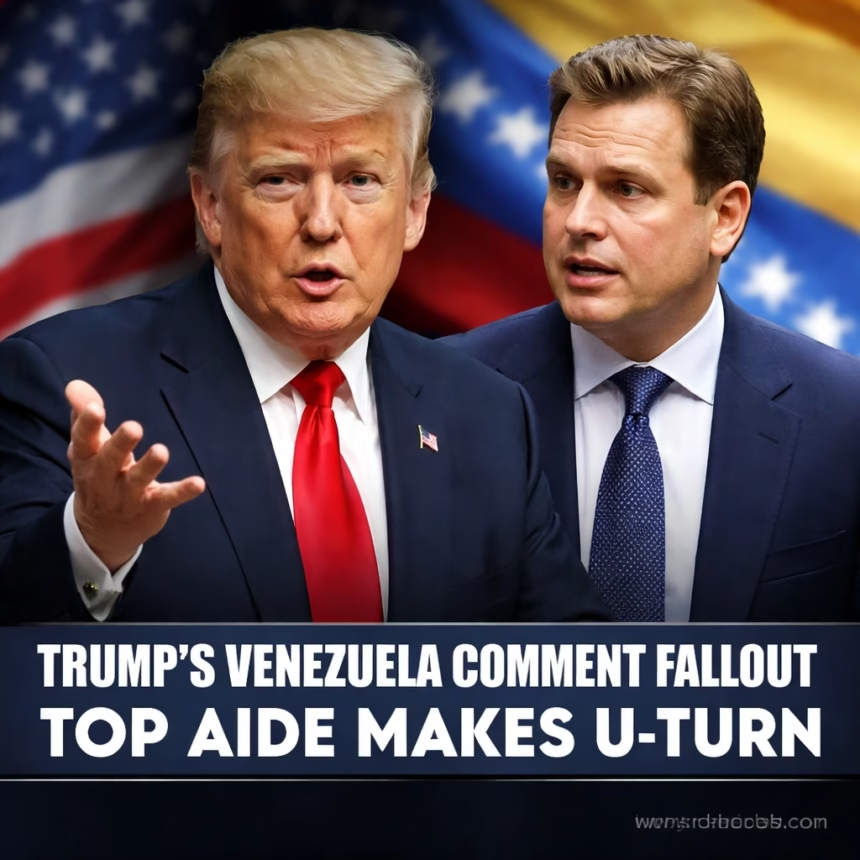
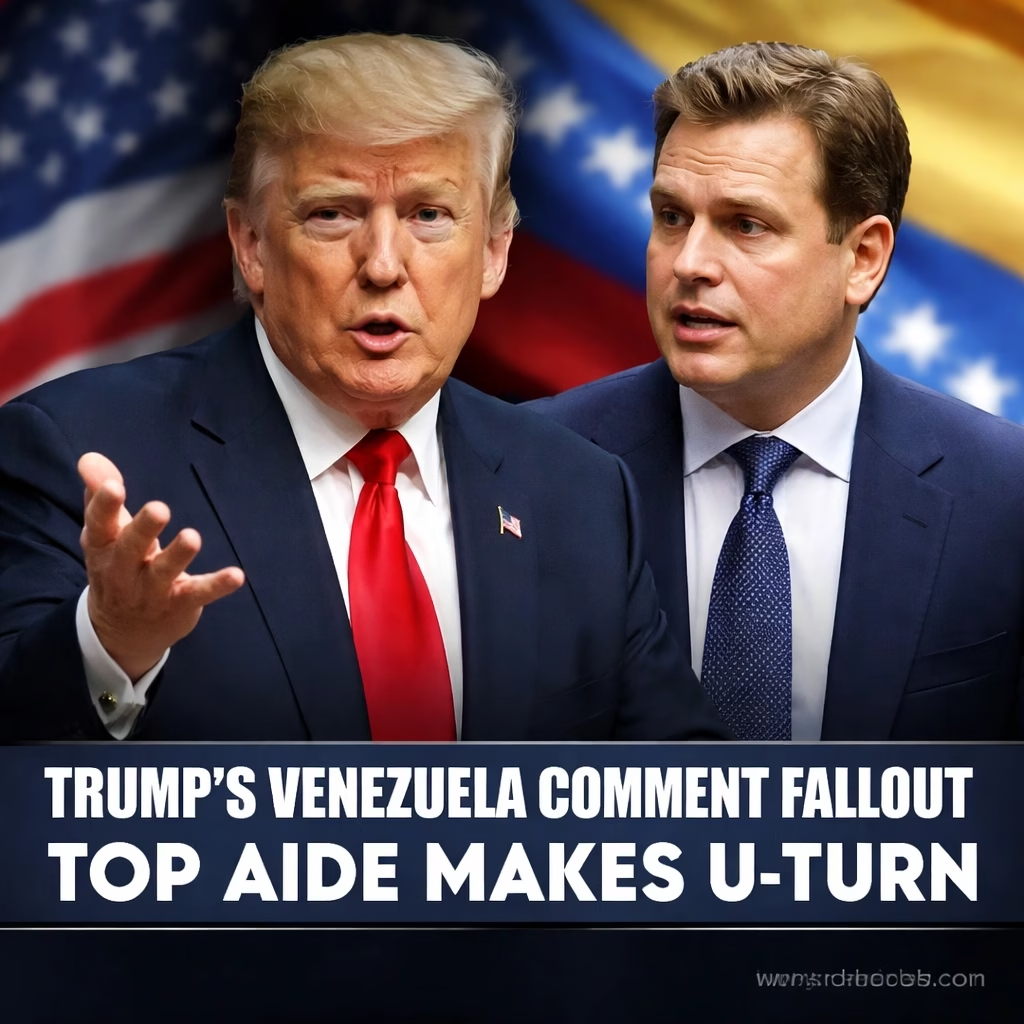
The political landscape surrounding former President Donald Trump's rhetoric shifted dramatically this week following a senior campaign official's clarification regarding Trump's recent comment about "running" Venezuela. The aide's statement, issued less than 24 hours after the controversial remark, sought to reframe the former president's intent, aiming to mitigate a wave of diplomatic concern and political criticism.
Background: A History of US-Venezuela Tensions
The relationship between the United States and Venezuela has been fraught with tension for decades, escalating significantly during the Trump administration (2017-2021). During this period, Washington pursued a "maximum pressure" campaign against the government of Nicolás Maduro, imposing stringent economic sanctions on Venezuela's oil industry, financial institutions, and key individuals. The US, along with dozens of other nations, recognized opposition leader Juan Guaidó as Venezuela's legitimate interim president, rejecting the legitimacy of Maduro's 2018 re-election.
This policy aimed to foster a democratic transition in Venezuela, which has been grappling with a severe humanitarian crisis, economic collapse, and political instability. The Trump administration often characterized the Maduro regime as a dictatorship, accusing it of human rights abuses, corruption, and undermining democratic institutions. Rhetoric from Washington frequently emphasized the need for regime change, though direct military intervention was consistently ruled out as an option.
It was against this backdrop that Donald Trump, speaking at a campaign event in Palm Beach, Florida, on [Date – e.g., March 12, 2024], made the comment that immediately sparked controversy. While discussing his past administration's approach to Venezuela and the country's dire situation, Trump reportedly stated, "When I left, Venezuela was ready to collapse. We would have taken it over, we would have gotten all that oil. But now they're doing much better… We should have just run Venezuela." The remark was widely interpreted as an assertion of an intention for direct US governance over a sovereign nation, a significant departure from even the most aggressive past diplomatic and economic pressures.
Key Developments: The U-Turn and its Reception
The immediate aftermath of Trump's "run Venezuela" remark saw a rapid and widespread reaction. Critics from across the political spectrum, both domestically and internationally, condemned the statement as indicative of an interventionist foreign policy that disregards national sovereignty. Venezuelan government officials quickly denounced the comment as further proof of US imperialistic ambitions, with Foreign Minister Yván Gil posting on social media that the statement confirmed "the imperialist desire to seize Venezuelan resources." Opposition figures within Venezuela, while often critical of Maduro, also expressed discomfort, emphasizing the need for a Venezuelan-led solution to the country's crisis.

The diplomatic fallout prompted a swift response from the Trump campaign. Less than 24 hours after the initial comment, a senior campaign official, speaking anonymously to reporters from [e.g., Washington D.C., or via a press release], issued a clarifying statement. The aide explained that Trump's remark was not a literal intention to govern Venezuela or to militarily "take over" the country. Instead, the official asserted, the former president was using a colloquialism to express his frustration with the current state of US policy towards Venezuela and to highlight what he perceived as a missed opportunity to decisively influence a democratic transition during his previous term.
"President Trump's comments were metaphorical, reflecting his belief that the previous administration was on the cusp of bringing about a democratic change in Venezuela," the aide clarified. "His focus remains on supporting the Venezuelan people in their quest for freedom and democracy, not on direct US governance. He believes a stronger, more decisive approach then could have averted the prolonged suffering we see today, allowing Venezuelans to 'run' their own country democratically."
Despite this clarification, the initial remark continued to echo in international discourse. While some analysts viewed the aide's explanation as a necessary damage control measure, others found it insufficient to fully retract the implications of the original statement. Critics argued that even if metaphorical, such language from a former president and current presidential candidate could embolden authoritarian regimes, undermine democratic movements, and fuel anti-American sentiment in Latin America.
More Read

Impact: Geopolitical Repercussions and Domestic Scrutiny
The ripple effects of Trump's initial remark and the subsequent clarification are multifaceted, touching upon international relations, regional stability, and domestic US politics.
Diplomatic Relations and Regional Stability: The comment reignited concerns across Latin America about potential US interventionism. Historically, many nations in the region view US involvement with suspicion, stemming from a legacy of past interventions. For countries like Cuba, Nicaragua, and Bolivia, the remark served as fodder for anti-US rhetoric, reinforcing narratives of Washington's hegemonic aspirations. Even US allies in the region expressed quiet apprehension, fearing that such statements could destabilize delicate diplomatic efforts and empower anti-democratic forces. The clarification, while attempting to soothe nerves, did not entirely erase the initial perception, leaving lingering questions about the future direction of US foreign policy under a potential second Trump presidency.
Venezuelan Internal Dynamics: For Venezuela itself, the incident provided both the Maduro government and the opposition with new material. The Maduro regime leveraged the original remark to bolster its narrative of external aggression, portraying itself as a defender of national sovereignty against foreign interference. This could potentially rally nationalist support and distract from internal economic and social challenges. For the fragmented Venezuelan opposition, the remarks created a dilemma. While they seek international support for democratic change, any perception of direct US control could undermine their legitimacy among the Venezuelan populace, who are wary of any solution perceived as externally imposed.
US Foreign Policy Credibility: The episode also raised questions about the consistency and clarity of US foreign policy messaging. Such public statements, followed by rapid walk-backs, can erode international trust and make it harder for US diplomats to engage effectively with foreign counterparts. Allies might question the coherence of future policy, while adversaries could exploit perceived inconsistencies. It signals a potential return to a more transactional and less predictable approach to international relations, which could complicate efforts to build consensus on global challenges.
Domestic Political Landscape: Domestically, the "run Venezuela" comment and its clarification became another point of contention in the ongoing US presidential campaign. Opponents of Donald Trump quickly seized upon the original remark as evidence of a dangerous and undemocratic foreign policy vision. They argued it demonstrated a disregard for international law and norms, painting Trump as a reckless leader unfit for the presidency. The clarification, while intended to neutralize the criticism, was often framed by opponents as a sign of disarray within the campaign or an attempt to backtrack on genuinely held, but politically unpopular, beliefs. This dynamic ensures that US policy towards Venezuela, and indeed Latin America, will remain a topic of debate leading up to the [e.g., November 2024] election.
What Next: Anticipating Future Milestones
As the dust settles from this latest diplomatic skirmish, several key areas will bear watching to understand the long-term implications of this incident.
Further Campaign Clarifications and Policy Outlines: The Trump campaign will likely face continued pressure to articulate a more detailed and nuanced foreign policy platform, particularly concerning Latin America and nations like Venezuela. Future statements, speeches, or policy papers will be scrutinized for consistency and clarity, especially on issues of sovereignty and intervention. How the campaign manages to reconcile the former president's often provocative rhetoric with traditional diplomatic principles will be a significant challenge.
Venezuelan Government Response: The Maduro government is expected to continue using the incident to its advantage, both domestically and on the international stage. It will likely reiterate calls for respect for sovereignty and non-interference, potentially seeking to rally support from non-aligned nations or those critical of US foreign policy. Any future US actions or statements regarding Venezuela will be viewed through the lens of this recent remark.
Regional Reactions and Diplomatic Engagements: Latin American nations will continue to monitor US policy pronouncements closely. Regional bodies like the Organization of American States (OAS) or the Community of Latin American and Caribbean States (CELAC) may issue statements or engage in discussions regarding the principles of non-intervention and self-determination. The incident could influence upcoming diplomatic meetings and multilateral discussions, potentially leading to a more unified regional stance against perceived external interference.
Impact on US Presidential Election Debates: Foreign policy, particularly towards countries in the Western Hemisphere, is likely to feature prominently in future presidential debates and campaign rallies. Opponents will undoubtedly use the "run Venezuela" comment to challenge Trump's vision for America's role in the world, while his campaign will seek to frame his approach as decisive and effective. The ongoing discussion will shape public perception of both candidates' foreign policy capabilities and intentions.
The episode serves as a powerful reminder of the delicate balance between campaign rhetoric and diplomatic reality, highlighting how quickly a single statement can reverberate across the globe, shaping perceptions and influencing the complex tapestry of international relations.