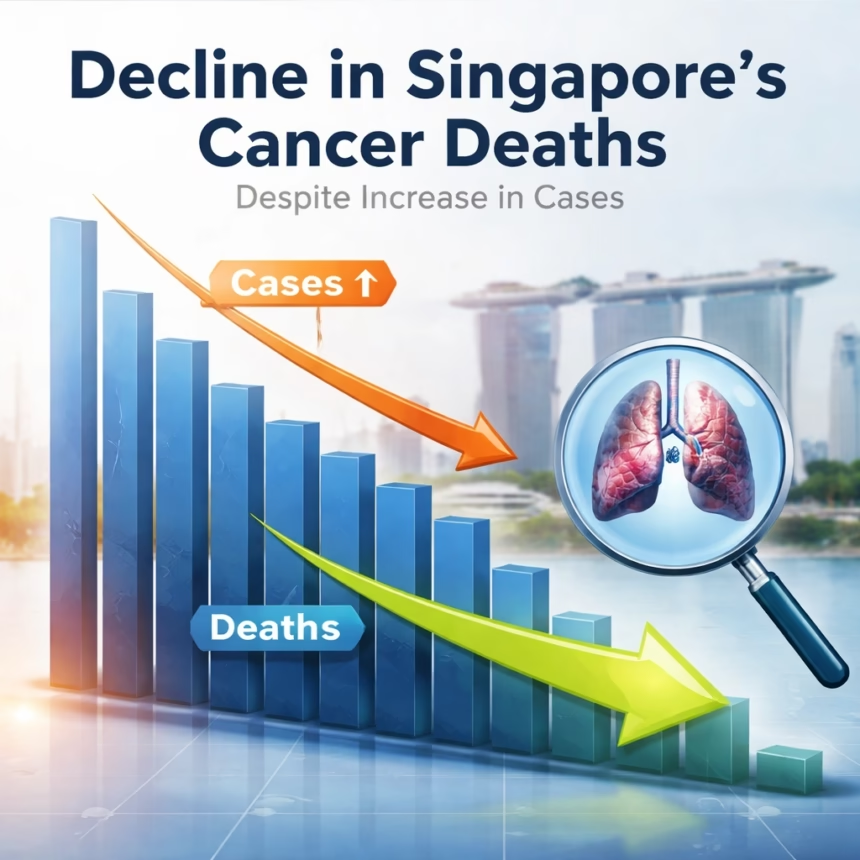
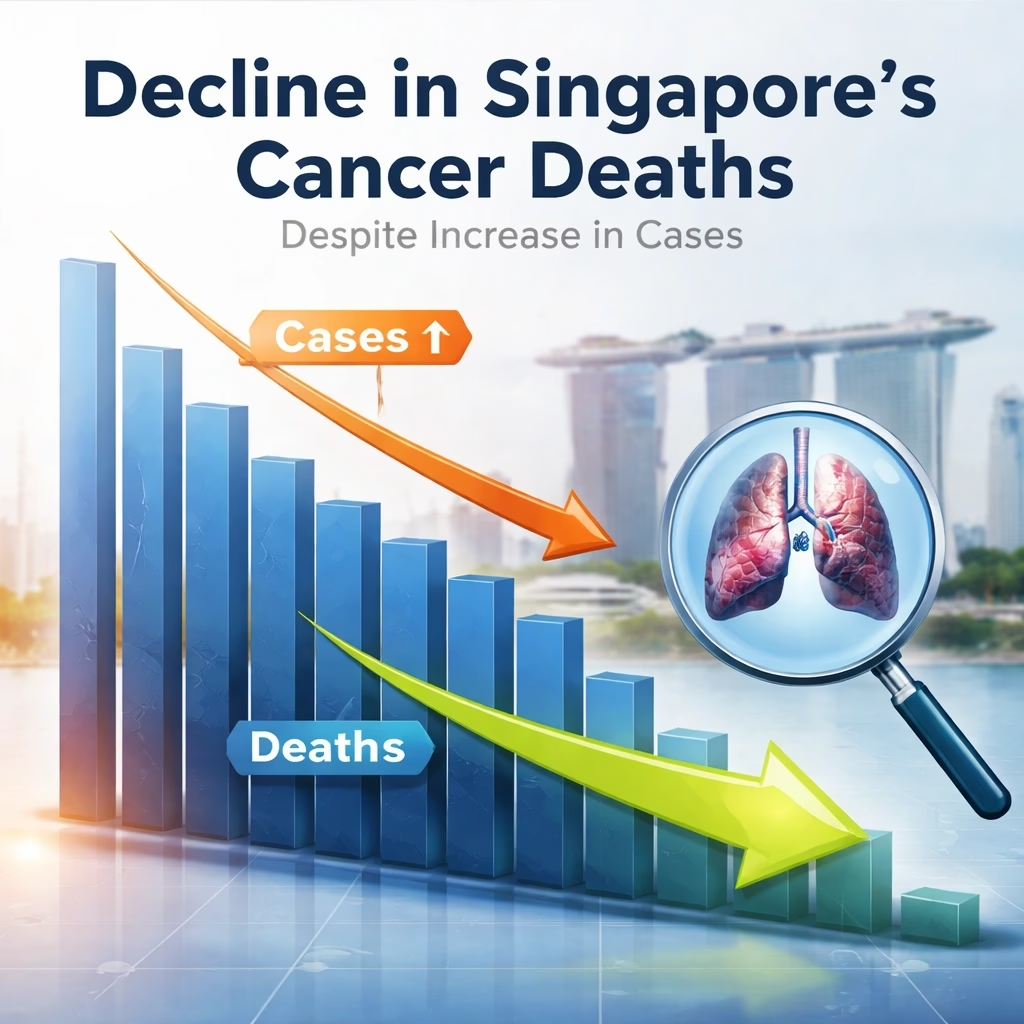
Singapore is witnessing a remarkable public health phenomenon: a significant decline in cancer deaths even as new diagnoses continue to rise. This paradoxical trend, observed over the past decade, underscores the nation's evolving strategy and enhanced capabilities in combating its leading cause of mortality.
Background: A Persistent Public Health Challenge
Cancer has consistently been Singapore's leading cause of death. For decades, incidence rates climbed steadily, driven by an aging population, evolving lifestyle factors, and improved diagnostics. The Singapore Cancer Registry confirms a continuous upward trajectory in new cases across common types like colorectal, lung, breast, and prostate cancers. This rising caseload presented a formidable challenge to the nation's healthcare. Historically, a cancer diagnosis often carried a grim prognosis. However, a noticeable shift began in the early 2000s, as medical advancements and national efforts started to decouple rising incidence from fatality rates. This commitment to addressing the complex disease has been a cornerstone of Singapore's health policy, laying the groundwork for current successes.
Key Developments: A Multi-pronged Approach to Survival
The divergence between rising cancer cases and falling death rates is attributable to a confluence of strategic investments and medical breakthroughs. Singapore's healthcare ecosystem has implemented a multi-pronged approach, focusing on early detection, advanced treatments, and comprehensive patient support.
Early Detection and Screening Initiatives
Significant strides have been made in identifying cancers at nascent stages, when they are most treatable. National screening programmes by the Health Promotion Board (HPB) for breast (mammography), colorectal (faecal immunochemical test, FIT), and cervical cancer (Pap smear, HPV testing) are widely accessible. “Screen for Life” campaigns boost public awareness. Advanced diagnostic imaging (MRI, PET scans), sophisticated biopsy techniques, and genetic profiling enable precise, timely identification of cancerous cells, even before severe symptoms appear.
Transformative Treatment Breakthroughs
Cancer treatment has undergone a revolution. Singaporean hospitals like the National Cancer Centre Singapore (NCCS), National University Hospital (NUH), and Singapore General Hospital (SGH) adopt cutting-edge therapies. Targeted therapies and immunotherapies have dramatically improved outcomes for previously untreatable cancers. Precision medicine, guided by genomic sequencing, tailors treatments to individual patient and tumour characteristics, leading to more effective and less toxic regimens. Surgical techniques are less invasive, and radiotherapy systems offer greater accuracy. Participation in global clinical trials provides early access to experimental treatments.
Integrated and Holistic Patient Care
Singapore’s healthcare system embraces an integrated care model. Multidisciplinary teams comprising oncologists, surgeons, radiologists, and palliative care specialists collaborate for comprehensive care plans. The emphasis on palliative care has grown, focusing on improving patient quality of life from diagnosis, managing symptoms, and providing psychological support. This holistic approach ensures patients receive optimal medical treatment alongside dignity and comfort. Subsidies and financial assistance schemes also mitigate the significant cost burden of advanced care, enhancing accessibility.
Impact: A Shifting Narrative of Hope and Resilience
The decline in cancer deaths has profound implications across various facets of Singaporean society, fundamentally altering the narrative surrounding a cancer diagnosis.
More Read

For Patients and Families
Improved survival rates mean more years of life, often with better quality. A cancer diagnosis is now, for many, a manageable chronic condition or even curable, reducing psychological burden and fostering hope. Families gain more time, and patients can continue contributing to society. Enhanced survivorship care also addresses long-term physical and emotional challenges post-treatment.
On the Healthcare System and Economy
Successful treatments increase the cancer survivor population, demanding continuous investment in infrastructure, specialist training, and follow-up clinics. Economically, a healthier populace reduces productivity loss. However, costs of cutting-edge diagnostics and therapies are substantial, requiring careful resource allocation. Singapore’s robust healthcare financing framework, including Medisave and MediShield Life, effectively manages these expenditures.
Societal Perception and Public Health
The evolving statistics shift societal perception of cancer from inevitable fatality to a fightable, manageable condition. This encourages more people to participate in screening programmes and seek early medical attention, reinforcing the cycle of improved outcomes. The Singapore Cancer Society (SCS) and other advocacy groups actively spread this message of hope, reducing stigma and promoting collective efforts to demystify cancer.
What Next: Sustaining Momentum and Future Frontiers
Singapore's success in reducing cancer mortality is a significant achievement, but the journey against cancer is far from over. Future efforts will focus on sustaining this momentum, addressing new challenges, and pushing the boundaries of medical science.
Continued Innovation in Prevention and Precision
Prevention remains paramount, with the Ministry of Health (MOH) and HPB intensifying campaigns on healthy lifestyles, smoking cessation, and vaccinations (HPV, Hepatitis B). Research into novel biomarkers and liquid biopsies aims for even earlier detection. The future also leans towards hyper-personalised medicine, leveraging genomic profiling and artificial intelligence (AI) for refined treatment selection, accurate diagnostics, and optimised drug discovery. Singapore’s smart nation initiatives will facilitate AI integration into advanced healthcare.
Ensuring Equity and Sustainable Survivorship
Equitable access to cutting-edge treatments across all socioeconomic strata is a priority, minimising outcome disparities. As more people survive cancer, focus shifts to long-term survivor well-being: managing late treatment effects, psychological support, and societal reintegration. Robust survivorship programmes are crucial. Furthermore, managing the cost of advanced therapies demands innovative funding models and health technology assessments, balancing access with sustainability through collaborative research with pharmaceutical companies and international partners. These continuous efforts will solidify Singapore’s position as a leader in cancer care.