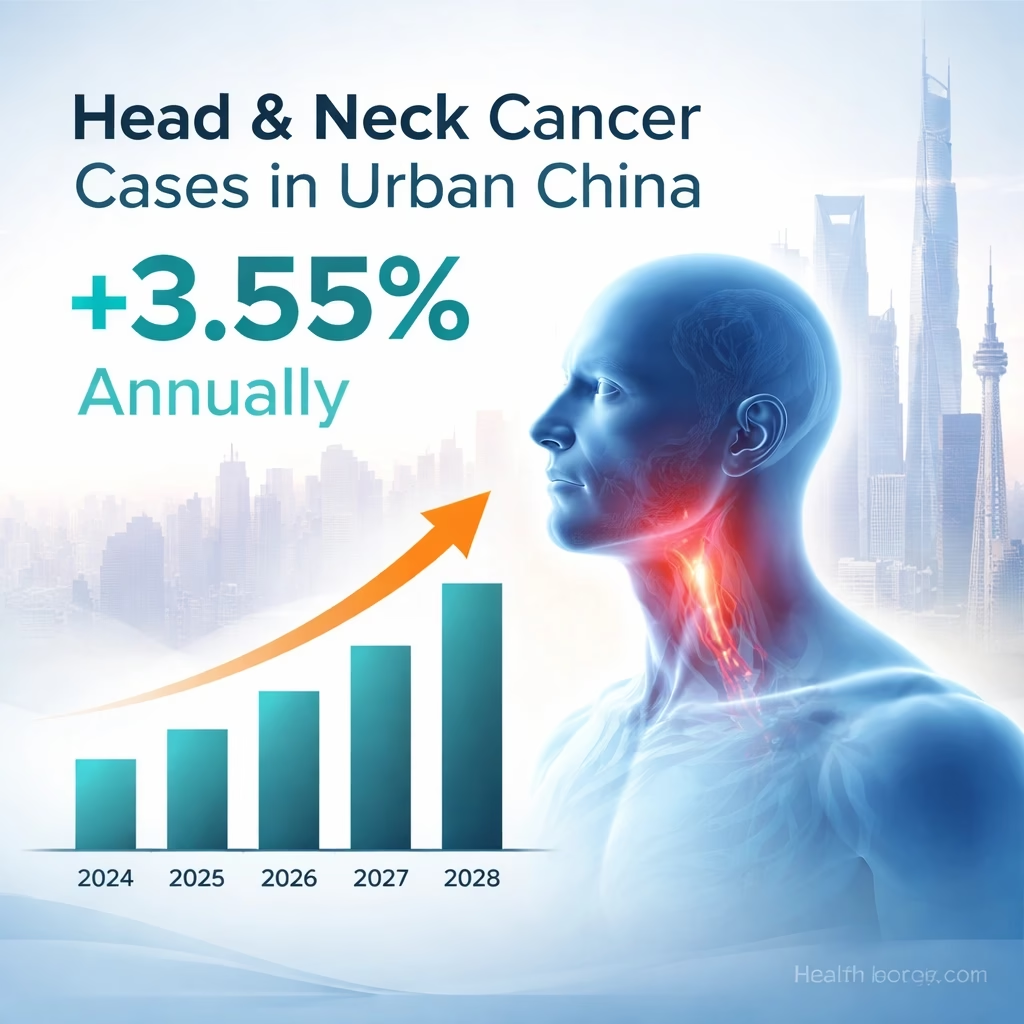
Urban centers across China are bracing for a significant increase in diagnosed head and neck cancer cases, with projections indicating an alarming annual growth rate of 3.55%. This impending rise signals a growing public health challenge that demands immediate attention for millions residing in the nation's bustling cities. The consistent upward trend underscores a complex interplay of evolving lifestyles, environmental factors, and improved diagnostic capabilities within China's rapidly developing urban landscape.
Background: A Shifting Health Landscape
Head and neck cancers encompass a diverse group of malignancies originating in the mouth, throat, voice box, sinuses, and salivary glands. These cancers, including oral cavity, pharyngeal, and laryngeal cancers, often present with symptoms like persistent sores, difficulty swallowing, or voice changes, frequently leading to late-stage diagnosis due to lack of early awareness. Historically, the burden of these diseases in China, particularly in rural areas, has been linked to traditional risk factors such as heavy tobacco use, excessive alcohol consumption, and the chewing of betel quid in southern regions.
The rapid urbanization witnessed across China over the past few decades has dramatically reshaped the health profile of its population. Millions have migrated from rural areas to major metropolitan centers like Shanghai, Beijing, Guangzhou, and Chengdu, bringing with them new economic opportunities but also exposure to altered environmental conditions and lifestyle patterns. While urban areas generally boast better access to advanced medical facilities, the sheer concentration of people and the pace of modern life introduce unique health challenges.
For decades, China has grappled with high rates of smoking, a primary driver of many cancers, including those of the head and neck. Despite government efforts to curb tobacco use, its pervasive influence continues to be a significant public health concern. Alcohol consumption, particularly among working professionals in urban settings, has also seen an increase, further contributing to the risk profile. Understanding these foundational elements is crucial to comprehending the current trajectory of head and neck cancer incidence.

The timeline of cancer care in China has seen remarkable progress, moving from a system focused primarily on treatment to one increasingly emphasizing prevention and early detection. However, the sheer scale of the population and the rapid epidemiological transition mean that even incremental changes in risk factors or diagnostic rates can lead to substantial increases in total case numbers, posing a formidable challenge to an already stretched healthcare system.
Key Developments Driving the Surge
The projected 3.55% annual increase in diagnosed head and neck cancer cases in urban China is not attributed to a single factor but rather a confluence of interconnected developments. One significant contributor is the advancement in diagnostic technologies and increased accessibility to healthcare services in urban areas. With more sophisticated imaging techniques, biopsies, and improved medical training, cancers that might have gone undiagnosed or were misdiagnosed in the past are now being accurately identified. This improved detection capability inherently leads to a higher reported incidence.
Furthermore, evolving lifestyle patterns among urban residents play a critical role. While national smoking rates have seen some decline, specific demographics within urban populations, particularly younger adults and professionals, may still exhibit high-risk behaviors. The prevalence of chronic stress, changes in dietary habits, and increased exposure to environmental pollutants like fine particulate matter (PM2.5) in densely populated cities are also emerging as contributing factors. Research increasingly links air pollution to various cancers, and head and neck cancers are no exception, given their anatomical location.
More Read

The demographic shift towards an aging population in China also contributes significantly to the rising cancer burden. As people live longer, their cumulative exposure to carcinogens increases, and the natural process of cellular aging makes them more susceptible to cancer development. Urban areas, often magnets for an older demographic seeking better medical care, will consequently experience a higher proportion of age-related cancer diagnoses.
Moreover, the Human Papillomavirus (HPV), particularly HPV-16, has been identified as a growing cause of oropharyngeal cancers globally, and its prevalence in China's urban populations is a subject of ongoing study. While data on HPV-related head and neck cancers in China is still evolving, the global trend suggests it could be a significant, albeit relatively newer, driver of incidence, especially in younger non-smokers. Public health campaigns and vaccination efforts aimed at HPV are still in nascent stages for comprehensive coverage across all age groups.
Far-Reaching Impact on Urban Communities
The anticipated 3.55% annual rise in head and neck cancer diagnoses will cast a wide net of impact, affecting individuals, families, and the entire urban healthcare infrastructure across China. For patients, a diagnosis of head and neck cancer often entails a gruelling treatment regimen involving surgery, radiation therapy, and chemotherapy, frequently leading to significant physical disfigurement, speech impairment, and difficulty eating. The psychological toll is immense, impacting mental health and overall quality of life.
Families bear a substantial burden, not only emotionally but also financially. Despite improvements in health insurance coverage, the costs associated with specialized cancer treatment, extended hospital stays, rehabilitation, and loss of income can be catastrophic. Caregiver responsibilities often fall to family members, leading to their own stress, burnout, and reduced work productivity. This creates a ripple effect that extends beyond the immediate patient.
The urban healthcare system will face unprecedented strain. Hospitals in major cities, already operating at high capacities, will need to allocate more resources towards oncology departments, including specialized surgeons, radiation oncologists, medical oncologists, and supportive care teams. The demand for advanced diagnostic equipment, operating theatres, and post-operative care facilities will escalate, requiring significant investment in infrastructure and human capital development. Shortages of skilled personnel, particularly in specialized fields, could become more acute.
Economically, the surge in cancer cases translates to a considerable loss in productivity. A significant portion of head and neck cancer patients are of working age, and their illness leads to absenteeism, reduced work capacity, and premature mortality. This impacts various industries and the broader national economy, diverting funds towards healthcare rather than other developmental areas. The increasing healthcare expenditure will be a critical concern for both government budgets and individual households.

Furthermore, the rise highlights potential disparities within urban populations. Access to early screening, quality care, and advanced treatments may still vary based on socioeconomic status, migratory background, and specific urban districts. While major city hospitals offer world-class care, the sheer volume of cases could overwhelm even the best-resourced institutions, potentially leading to longer wait times and delayed treatments for many.
What Next: Strategies for Mitigation and Progress
Addressing the projected 3.55% annual growth in urban China's head and neck cancer cases requires a multi-faceted and proactive approach, blending public health initiatives with advanced medical strategies. The immediate focus must be on enhanced prevention programs. Robust anti-smoking campaigns, particularly targeting younger urban demographics and high-risk professions, are crucial. Similarly, public awareness campaigns promoting responsible alcohol consumption and healthy dietary habits can mitigate traditional risk factors.
A significant opportunity lies in the widespread implementation of HPV vaccination programs. Expanding access to HPV vaccines for adolescents and young adults across urban centers can offer long-term protection against HPV-related oropharyngeal cancers, potentially altering the epidemiological landscape over the next two decades. Public education on the link between HPV and certain head and neck cancers will be vital for vaccine uptake.
Early detection initiatives are paramount. This involves developing and rolling out comprehensive screening programs, especially for high-risk individuals, leveraging advanced diagnostic tools like oral cancer screening using visual inspection with acetic acid or brush biopsies. Public health campaigns encouraging self-examination and prompt medical consultation for persistent symptoms (e.g., mouth sores, voice changes, neck lumps) are essential to catch cancers at their most treatable stages. Establishing accessible community-based screening centers could decentralize early detection efforts.
Investment in oncology infrastructure and research is non-negotiable. Urban hospitals will require substantial upgrades in equipment, expansion of specialized cancer centers, and recruitment and training of more oncologists, surgeons, radiologists, and pathologists. Research into novel diagnostic biomarkers and targeted therapies tailored to the specific genetic profiles of head and neck cancers prevalent in the Chinese population will be critical. Collaborative efforts with international oncology centers can accelerate knowledge transfer and treatment innovation.
Policy reforms will also play a pivotal role. Stricter tobacco control laws, including higher taxes and expanded smoke-free zones, could further reduce smoking prevalence. Environmental regulations aimed at curbing air pollution in major cities will have a broader positive impact on public health, including cancer rates. Government funding for cancer research, prevention, and treatment programs must be increased and sustained to meet the escalating demand.
Expected milestones over the next five to ten years include a measurable increase in HPV vaccination rates among target populations, a reduction in late-stage diagnoses through improved screening, and the establishment of more comprehensive cancer care networks within urban areas. While the 3.55% annual growth rate presents a formidable challenge, concerted efforts can aim to flatten this curve, improve patient outcomes, and ultimately reduce the overall burden of head and neck cancers on urban China. The coming years will test the resilience and adaptability of China's public health system in the face of this silent, yet rapidly growing, epidemic.