AI Breakthrough: Smartphones Could Predict Teen Mental Health Risk
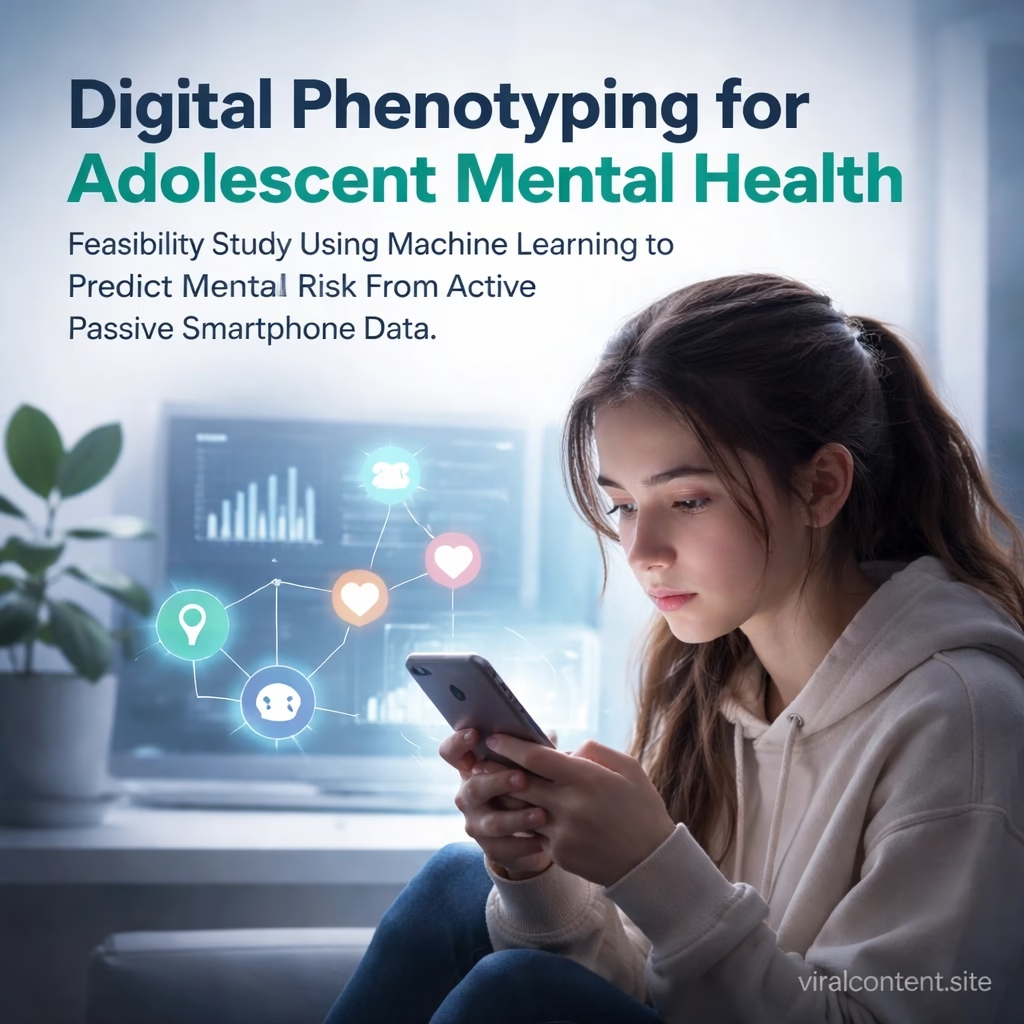
A pioneering feasibility study has unveiled promising results in using machine learning and smartphone data to predict mental health risk in adolescents. Conducted by researchers at the Digital Health Research Institute, the study explores how active and passive smartphone data patterns could offer early indicators of mental health challenges among young people.
Background: The Growing Need for Early Intervention
Adolescent mental health has emerged as a critical public health concern globally, with rising rates of anxiety, depression, and other conditions. Traditional methods of detection often rely on self-reporting or clinical assessments, which can be subjective, delayed, and stigmatizing. This often results in a significant lag between the onset of symptoms and the initiation of support.
Digital phenotyping leverages smartphone ubiquity to gather continuous, objective data, identifying subtle behavioral changes—digital biomarkers—that correlate with mental health states. For years, researchers have theorized about technology's potential to revolutionize mental health screening, moving beyond episodic assessments to continuous monitoring.
While previous digital health efforts often focused on adults, applying these techniques to adolescents presents unique challenges, including developmental variations and privacy concerns. This study specifically addresses these complexities within an adolescent cohort.
More Read

Key Developments: Unlocking Insights from Smartphone Data
The recent feasibility study, spanning several months and involving a cohort of adolescents aged 13 to 18, meticulously collected both active and passive smartphone data. Participants, recruited through local schools and youth organizations, provided informed consent alongside parental approval, emphasizing ethical data handling from the outset.
The Data Collection Process
Active data collection involved participants regularly completing short, in-app surveys assessing mood, sleep quality, social interactions, and daily activities. These self-reports provided subjective insights into their mental state and well-being. Passive data, collected continuously and unobtrusively, included smartphone usage patterns (e.g., screen time, app categories), sleep patterns derived from phone inactivity, physical activity levels from accelerometers, and anonymized location data reflecting daily routines and social engagement. Crucially, no personal content such as messages or calls was accessed.
Machine Learning’s Role in Pattern Recognition
Researchers then deployed sophisticated machine learning algorithms to analyze this vast dataset. The algorithms were trained to identify correlations between the objective passive data and the subjective active reports, as well as clinically validated mental health assessments administered at baseline and follow-up. The goal was to pinpoint specific digital behavioral patterns that might precede or coincide with heightened mental health risk.
More Read

Initial Findings and Accuracy
The study demonstrated the feasibility of using this combined data approach to predict mental health risk with promising accuracy. Models identified several key indicators: significant changes in sleep duration or consistency, marked shifts in social interaction patterns (e.g., reduced out-of-home movement), and alterations in overall screen time or specific app usage categories. For instance, a notable decrease in physical activity coupled with increased late-night screen time often correlated with self-reported declines in mood and increased anxiety scores.
Preliminary results indicate the models achieved predictive power significantly better than chance, suggesting robust potential for early risk stratification. The study successfully navigated technical and ethical complexities.
Addressing Privacy Concerns
A cornerstone of the study was its rigorous approach to data privacy and security. All collected data was anonymized and encrypted. Participants and their guardians were fully informed about the types of data collected, how it would be used, and their right to withdraw at any time. The project adhered strictly to national and international data protection regulations, ensuring that individual privacy remained paramount throughout the research process.
Impact: Reshaping Adolescent Mental Health Support
The implications of this feasibility study are far-reaching, potentially transforming how mental health challenges are identified and addressed in young people.
Benefits for Adolescents and Families
For adolescents, earlier, personalized interventions could prevent symptom escalation and reduce emotional burden, offering proactive support. It also holds potential to reduce stigma by normalizing technology for well-being monitoring.
Transforming Clinical Practice
Healthcare providers could gain an invaluable tool for continuous monitoring, enabling more targeted and timely support. This frees up clinical resources by identifying individuals most in need and providing objective data to complement subjective reports, aiding in tailored interventions and treatment tracking.
More Read

Broader Public Health Implications
On a larger scale, this research contributes to a broader understanding of population-level mental health trends among adolescents. Public health initiatives could leverage aggregated, anonymized data to identify at-risk groups, allocate resources more effectively, and develop preventative strategies tailored to specific community needs.
What Next: Towards Clinical Implementation and Ethical Frameworks
The success of this feasibility study marks a crucial first step, but significant milestones remain before such technology could be integrated into routine care.
The Digital Health Research Institute plans larger-scale, longitudinal trials to validate findings across diverse populations and refine machine learning models. This will improve accuracy and generalizability, reducing false positives and negatives for a sensitive and specific predictive system.
Parallel to technological advancement, the development of robust ethical guidelines and regulatory frameworks is paramount. Discussions are ongoing with ethicists, policymakers, and advocacy groups to establish clear protocols for data ownership, informed consent in real-world applications, and the appropriate response mechanisms when a risk is detected. Ensuring transparency and user control over personal data will be central to public acceptance and trust.
Ultimately, the vision is to integrate these predictive tools into a comprehensive support system, potentially via opt-in applications that alert individuals, parents, or designated clinicians to emerging risks, always with a human in the loop for interpretation and intervention. This could pave the way for a new era of proactive, preventative mental healthcare for adolescents, harnessing the power of everyday technology for profound positive impact.