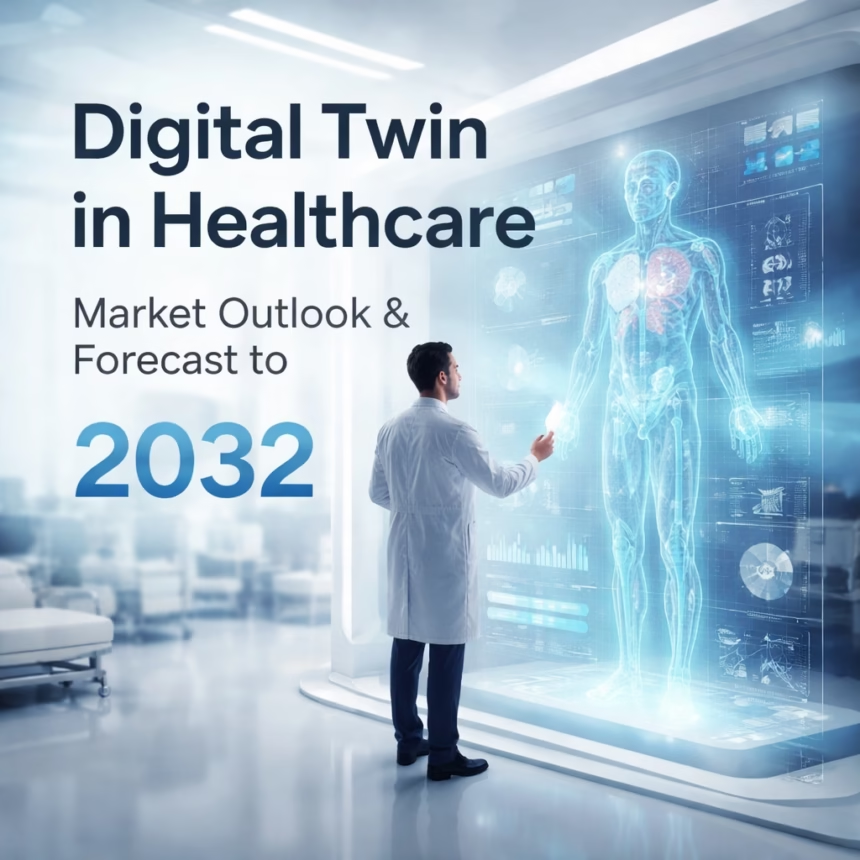
The healthcare sector is rapidly embracing digital twin technology, creating virtual replicas of patients, organs, or entire hospital systems to revolutionize medical practice. This burgeoning market, driven by advancements in AI, IoT, and data analytics, is projected for substantial growth, fundamentally reshaping patient care and operational efficiency across the globe by 2032.
A Foundation Built on Innovation
The concept of a "digital twin" originated in manufacturing and aerospace, notably championed by NASA in the early 2000s for spacecraft management. It involved creating a virtual model of a physical object, updated with real-time data, to monitor, simulate, and predict its performance. Its migration to healthcare gained traction in the late 2010s, initially through academic research and specialized engineering firms. Early applications focused on simulating complex biological systems, such as cardiac function or drug interactions within specific organs, laying the groundwork for personalized medicine. Companies like Siemens Healthineers and GE Healthcare were early proponents, investing in research and development to adapt the technology for medical imaging and device optimization.
Recent Strides and Key Developments
The digital twin market in healthcare has seen accelerated development in the past five years. Artificial intelligence and machine learning are now integral, enhancing the predictive capabilities of these virtual models. Real-time data streams from wearables, electronic health records (EHRs), and medical devices feed into these twins, creating dynamic, continuously updated representations.
AI-Powered Diagnostics and Treatment Planning
Recent innovations include AI-powered digital twins for personalized cancer treatment. For instance, researchers at institutions like the Mayo Clinic are developing "onco-twins" that simulate tumor growth and response to various therapies, allowing oncologists to tailor treatment plans with unprecedented precision. Similarly, cardiovascular digital twins are being used to model blood flow and predict the efficacy of surgical interventions before they occur.

Drug Discovery and Clinical Trials
Pharmaceutical companies are increasingly leveraging digital twins to accelerate drug discovery and optimize clinical trials. By simulating drug interactions within virtual patient populations, researchers can identify potential candidates more efficiently and reduce the need for extensive physical trials, cutting both time and cost. Companies such as Dassault Systèmes have developed platforms that enable virtual testing of new drugs, significantly streamlining the R&D process.
Remote Monitoring and Predictive Health
The COVID-19 pandemic highlighted the critical need for remote patient monitoring. Digital twins are now being deployed to create virtual versions of individual patients, continuously tracking vital signs, activity levels, and medication adherence. This allows healthcare providers to intervene proactively, preventing adverse events and managing chronic conditions more effectively from a distance. Hospitals are also exploring "hospital digital twins" to optimize resource allocation, patient flow, and energy consumption.
Transformative Impact Across the Ecosystem
The widespread adoption of digital twins promises profound impacts across the entire healthcare ecosystem.
More Read

Empowering Patients and Personalizing Care
For patients, digital twins herald an era of truly personalized medicine. Treatments can be precisely tailored to an individual's unique physiology, genetic makeup, and lifestyle. This leads to improved outcomes, fewer adverse reactions, and a greater sense of control over one's health journey. Remote monitoring capabilities also empower patients to manage their conditions actively.
Enhancing Provider Efficiency and Decision-Making
Healthcare providers gain powerful tools for diagnosis, surgical planning, and treatment optimization. Surgeons can practice complex procedures on a patient's digital twin before entering the operating room, reducing risks and improving success rates. Clinicians can simulate various treatment pathways to determine the most effective strategy, leading to more informed decisions and better resource utilization within hospitals and clinics.
Accelerating Pharmaceutical and Device Innovation
Pharmaceutical companies can drastically cut the time and cost associated with drug development by using digital twins for virtual screening and clinical trials. Medical device manufacturers can design, test, and refine devices virtually, ensuring optimal performance and safety before physical production. This accelerates the pace of innovation and brings life-saving therapies and devices to market faster.
Informing Public Health and Policy
At a broader level, digital twins of patient populations can help public health officials model disease outbreaks, predict healthcare demand, and assess the impact of policy interventions. This provides a data-driven foundation for strategic planning and resource allocation in public health emergencies and long-term health initiatives.
The Road Ahead: Milestones to 2032
The digital twin in healthcare market is poised for exponential growth. Industry analysts project the market to reach well over $X billion by 2032, exhibiting a compound annual growth rate (CAGR) exceeding Y% from its current valuation. North America and Europe are expected to remain leading regions due to robust healthcare infrastructure, high R&D investments, and early adoption of advanced technologies.
Key Milestones and Future Trends
Interoperability and Standardization: A major focus will be on developing standardized data formats and protocols to ensure seamless integration of data from diverse sources into digital twin platforms. Regulatory bodies like the FDA and EMA will play a crucial role in establishing frameworks for validation and approval.
* Ethical and Privacy Frameworks: As digital twins become more sophisticated and data-intensive, robust ethical guidelines and privacy regulations will be paramount. Ensuring data security and patient consent will be a continuous area of development.
* Integration with Wearables and IoT: Expect deeper integration with advanced wearables, smart implants, and ambient intelligence sensors, providing an even richer, real-time data stream for personal digital twins.
* Population-Level Twins: The development of "population digital twins" will expand beyond individual patients to model entire communities or regions, aiding in large-scale public health management, urban planning for health, and resource distribution.
* Advanced Simulation and Predictive Analytics: Continuous advancements in computational power and AI algorithms will enable more complex and accurate simulations, leading to highly precise predictive analytics for disease progression and treatment outcomes.

The journey to 2032 will see digital twins evolve from specialized tools to an indispensable component of mainstream healthcare, ushering in an era of precision, efficiency, and personalized well-being.