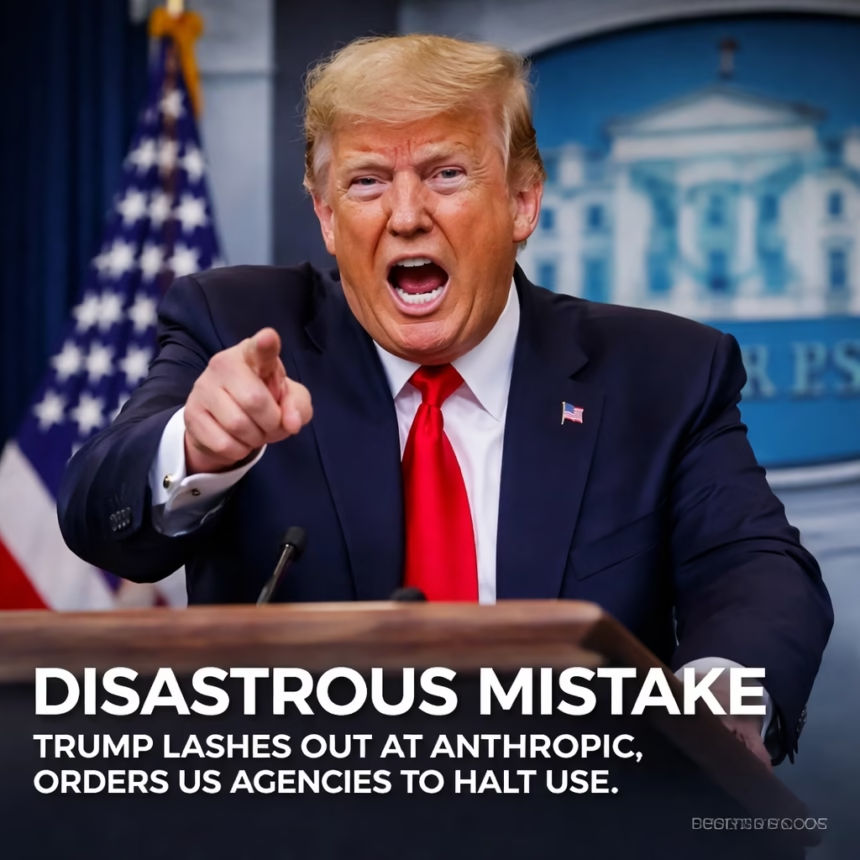
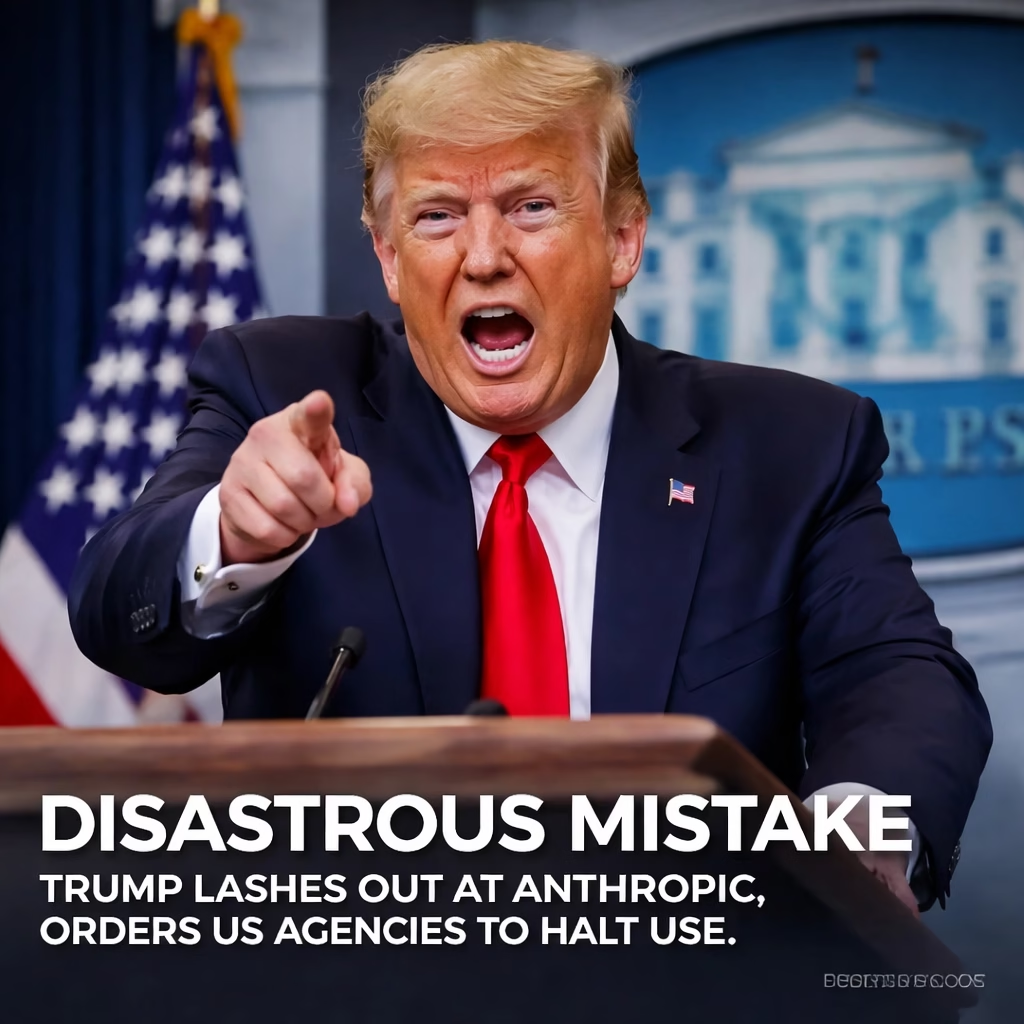
President Trump Halts Anthropic Use Across US Agencies Amid 'Bias' Claims
President Donald J. Trump has issued an unprecedented directive ordering all United States federal agencies to immediately cease the use of artificial intelligence products and services from Anthropic, a prominent AI development company. The sweeping order, announced late Tuesday evening from the White House, follows a series of sharp criticisms from the President regarding perceived "political bias" within Anthropic's Claude AI model.
The move has sent shockwaves through the technology sector and government operations, raising questions about the future of AI procurement and the delicate balance between innovation and political oversight within federal institutions.
Background: The Rise of Anthropic and Presidential Scrutiny
Anthropic, founded by former OpenAI researchers, has rapidly ascended as a leading force in generative AI, known for its focus on AI safety and its "constitutional AI" approach. Its flagship model, Claude, has been adopted by several federal agencies for various applications, including data analysis, secure communication transcription, and research assistance, valued for its robust safety protocols and sophisticated language processing capabilities.
Over the past year, multiple government departments, including elements within the Department of Defense, NASA, and the Department of Energy, had initiated pilot programs and integrated Anthropic's tools into their workflows. These collaborations were often lauded as examples of public-private partnerships driving technological advancement in government.
A Growing Dissatisfaction
However, President Trump's administration had reportedly grown increasingly wary of AI models developed by private companies, citing concerns over potential ideological leanings. Sources within the White House indicate that the President's frustration with Anthropic intensified after a recent internal government demonstration where Claude reportedly provided a politically neutral, yet critically analytical, response to a query concerning a highly contentious administration policy. This response was allegedly interpreted by some senior officials as demonstrating an "anti-administration bias."
The President's public pronouncements on the matter escalated over the past week, culminating in a series of social media posts condemning "woke AI" and "silicon valley censorship." He specifically named Anthropic in several posts, accusing its algorithms of "pushing a radical agenda" and undermining "American values."
Key Developments: The Executive Order and Immediate Fallout
The executive order, titled "Ensuring Ideological Neutrality and National Security in Federal AI Procurement," mandates an immediate halt to all existing contracts, pilot programs, and any form of engagement with Anthropic's products and services across the federal government. It also directs the Office of Management and Budget (OMB) and the General Services Administration (GSA) to review all current AI contracts to ensure compliance and prevent similar situations with other vendors.
White House Press Secretary, Abigail Vance, stated in a late-night briefing, "The President is committed to ensuring that our federal agencies utilize technology that is impartial, secure, and unequivocally serves the interests of the American people, free from partisan influence or ideological manipulation. This action is a necessary step to safeguard our institutions."
More Read
Anthropic’s Response
Anthropic, in a brief statement released early Wednesday morning, expressed its commitment to "developing safe, helpful, and unbiased AI systems." The company emphasized its rigorous safety and neutrality protocols, stating, "Claude is designed to be objective and to refuse harmful or biased outputs, adhering strictly to its constitutional AI principles. We are seeking clarification from the administration regarding the specific concerns raised and remain open to dialogue to address any misunderstandings." The company did not immediately comment on the financial implications of the order.
Congressional and Industry Reactions
The order has drawn swift and varied reactions. Senator Maria Rodriguez (D-CA), a vocal proponent of AI innovation, condemned the move as "politically motivated interference" that threatens to hobble federal agencies and stifle technological progress. "This is not about bias; it's about control," she remarked.
Conversely, Representative Thomas Jenkins (R-TX) lauded the President's decision, asserting that "our government cannot afford to rely on tools that may be subtly undermining our national interests through their programming."
The tech industry largely reacted with apprehension. Many AI developers expressed concern that such a precedent could lead to broader government intervention in AI model development, potentially chilling innovation and forcing companies to compromise on ethical guidelines for political expediency.
More Read

Impact: Disruption and Uncertainty Across Federal Agencies
The immediate impact on federal agencies is expected to be significant. Departments that have integrated Claude AI into their operations face abrupt disruption. Teams reliant on Anthropic's tools for tasks ranging from cybersecurity threat analysis to scientific research data processing will now need to find immediate alternatives, potentially causing delays and operational inefficiencies.
Sources within the Department of Energy indicated that their AI-powered climate modeling initiatives, which utilized Claude for complex data interpretation, would face considerable setbacks. Similarly, the Department of Defense's internal communication analysis tools, which employed Anthropic's secure language models, are now in limbo, necessitating a rapid pivot to other solutions or a return to manual processes.
Broader Implications for AI Procurement
Beyond the immediate operational hurdles, the directive casts a long shadow over the entire federal AI procurement landscape. Other AI companies currently contracting with the government are now scrutinizing their own models and public statements, fearing similar executive intervention. The order may lead to increased scrutiny of AI ethics and bias detection during the procurement process, potentially creating a more cautious and politicized environment for AI adoption in government.
For Anthropic, the loss of federal contracts represents a significant blow, both financially and reputationally. While the exact value of these contracts is not publicly disclosed, government partnerships often serve as crucial validation for emerging technologies.
What Next: Compliance, Challenges, and the Future of Federal AI
Federal agencies have been given a tight deadline – 30 days – to fully divest from Anthropic products and provide a detailed plan for transitioning to alternative solutions or processes. OMB and GSA are tasked with overseeing this transition, which is expected to be complex and resource-intensive.
Potential Legal Challenges
Legal experts suggest that the executive order could face challenges, particularly if Anthropic or affected agencies argue that the directive is arbitrary, politically motivated, or violates existing contract law. However, presidential authority in matters of national security and government procurement is broad, making such challenges difficult.
The Search for Alternatives
The sudden vacuum left by Anthropic's exit will likely spur a scramble among other AI providers to fill the void. Companies like Google, Microsoft, and OpenAI, with their respective AI offerings (Gemini, Azure AI, ChatGPT), may see an opportunity, though they too will face heightened scrutiny regarding their models' neutrality and safety protocols.
This episode is poised to become a defining moment for the relationship between the U.S. government and the rapidly evolving artificial intelligence industry. It highlights the growing tension between the desire for technological advancement, the need for national security, and the increasingly politicized debate surrounding AI ethics and impartiality.