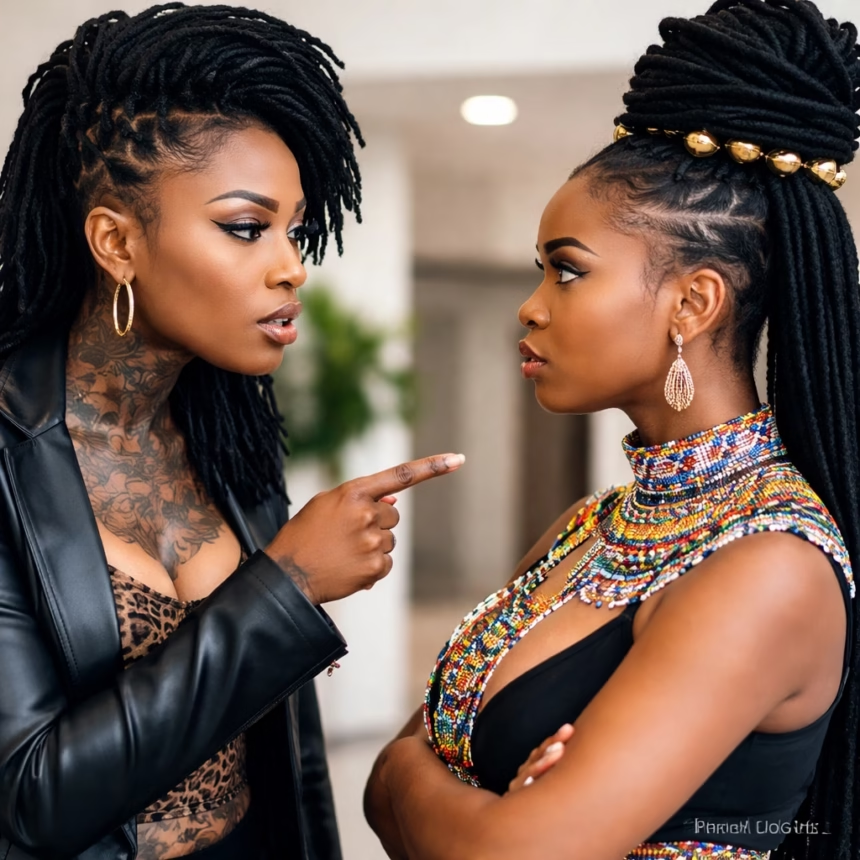
A recent public statement by celebrated South African DJ and television personality, Lamiez Holworthy, has ignited a fervent discussion across social media and the creative industries. Holworthy addressed what she perceives as a direct imitation of her distinctive signature look by a burgeoning rural Zulu girl stylist, sparking debates about originality, cultural inspiration, and intellectual property in fashion. The confrontation unfolded largely on digital platforms earlier this week, drawing widespread attention from fans, industry peers, and cultural commentators alike.
Background: The Rise of a Unique Aesthetic
Lamiez Holworthy has, over the past decade, meticulously cultivated an instantly recognizable personal brand that transcends her musical career. Her signature aesthetic is a deliberate fusion of modern streetwear, traditional African elements, and a bold, unapologetic celebration of her identity. Key components include her distinctive short, often faded or uniquely styled hair, an extensive collection of intricate tattoos, and a penchant for accessorizing with contemporary interpretations of traditional Zulu beads, head wraps, and statement jewelry. This unique blend has become synonymous with her public persona, cementing her status as a style icon and trendsetter within South Africa and beyond.
Her influence extends beyond fashion; it's a statement of empowerment and cultural pride, resonating with a broad audience. Fans often cite her look as inspiring confidence and a re-imagining of African beauty standards. This carefully curated image has also attracted numerous brand endorsements and collaborations, solidifying its commercial value.
The stylist at the center of this controversy, identified as Zola Khumalo from the rural heartland of KwaZulu-Natal, gained traction through local events and, more recently, through her vibrant social media presence. Khumalo, who styles local models and community members for various cultural gatherings and photoshoots, began to draw significant attention for her striking stylistic choices. Her work, showcased on platforms like Instagram and TikTok, often features intricate beadwork, bold hairstyles, and a modern take on traditional Zulu attire. Initially, her emergence was celebrated as a testament to rural talent and the enduring vibrancy of Zulu culture in contemporary fashion.
However, over the past few months, fans of Lamiez Holworthy began to notice a growing number of similarities between Khumalo's styling portfolio and Holworthy's established signature. These observations, initially whispers on fan pages, escalated as specific outfits, hair arrangements, and even poses in Khumalo's shoots bore an uncanny resemblance to Holworthy's well-documented public appearances.
More Read

Key Developments: The Digital Confrontation Unfolds
The simmering observations reached a boiling point late last week when Lamiez Holworthy took to her Instagram Live and Twitter feed to address the issue directly. In a series of candid posts and a heartfelt video, Holworthy expressed her dismay, stating that while she appreciates inspiration, the extent of the imitation felt like a direct appropriation of her creative identity. She highlighted specific instances, including similar tattoo-inspired sleeve designs on garments, identical hair fades paired with particular headpieces, and even the adoption of her unique eyewear choices.
Holworthy emphasized that her style is not merely clothing but an extension of her personal journey and artistic expression, built over years of intentional curation. She questioned the ethics of a creative professional directly replicating another's established look without acknowledgment or a distinct personal twist, especially given the effort and investment she has poured into defining her brand. Her tone, while firm, was notably devoid of overt malice, instead focusing on a plea for originality and respect within the creative community.
Zola Khumalo, in response, initially remained silent, leading to further speculation. However, a day later, she issued a statement via her own social media channels. Khumalo acknowledged the similarities but attributed them to shared cultural heritage and inspiration drawn from contemporary African aesthetics, rather than direct imitation of Holworthy. She argued that certain elements, such as specific bead patterns or hair textures, are deeply rooted in Zulu tradition and thus belong to a collective cultural pool, not an individual. While expressing admiration for Holworthy, Khumalo maintained that her work was an independent creative endeavor, albeit one that might coincidentally align with popular trends.
More Read

The public reaction to the confrontation was immediate and polarized. Many fans rallied behind Lamiez Holworthy, asserting her right to protect her brand and unique vision. They argued that while cultural elements are shared, the specific combination and execution of these elements, as perfected by Holworthy, constitute a distinct personal style that deserves recognition and protection. Conversely, a significant number of individuals, particularly from rural communities and cultural advocacy groups, sided with Zola Khumalo. They posited that restricting access to traditional motifs or contemporary interpretations of African style could stifle emerging talent and limit the organic evolution of cultural expression. They also raised questions about the power dynamics at play, with a prominent figure potentially overshadowing a grassroots artist.
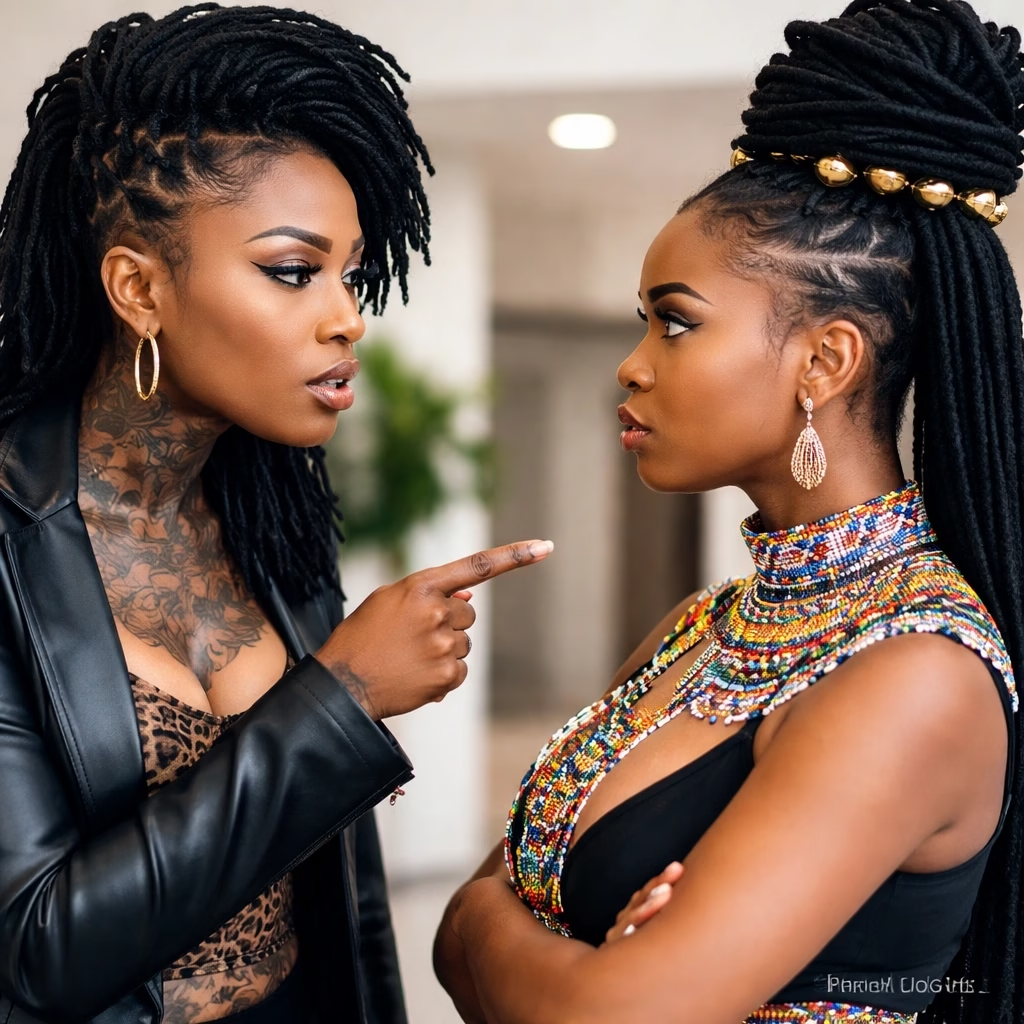
Impact: Ripple Effects Across Industries and Communities
The incident has had a multifaceted impact on all involved parties and the broader South African creative landscape. For Lamiez Holworthy, the public address has undeniably solidified her position as an originator and a guardian of her brand. While it brought some emotional toll and public scrutiny, it also reinforced the value and uniqueness of her aesthetic in the eyes of her loyal fanbase and commercial partners. The debate has inadvertently highlighted the meticulousness with which she has crafted her image, potentially strengthening her negotiating power in future endorsements by emphasizing her distinctiveness.
For Zola Khumalo, the confrontation brought unprecedented national attention to her work. While some of this attention is negative, labeling her as an imitator, it has also introduced her to a much wider audience beyond her immediate community. This newfound visibility presents a double-edged sword: an opportunity for growth and recognition, but also the challenge of navigating public perception and demonstrating her unique creative voice moving forward. The incident has undoubtedly placed pressure on her to further differentiate her work and articulate her artistic vision more clearly.
The fashion and styling industry in South Africa is grappling with the implications. The debate has reignited discussions around intellectual property rights in personal style, a notoriously grey area in legal frameworks compared to copyrighted designs or trademarks. It has also prompted a deeper conversation about the fine line between inspiration, homage, and outright imitation, particularly within a continent rich with shared cultural heritage. Industry experts are now weighing in on how emerging artists can draw from tradition and contemporary trends without infringing on established brands.
Culturally, the incident has sparked a vital dialogue about the ownership of traditional aesthetics in modern contexts. It questions how individual artists can claim a "signature look" when many elements are derived from collective heritage. This conversation is particularly pertinent in South Africa, where cultural identity is a cornerstone of artistic expression and often intertwined with personal branding.

What Next: Seeking Resolution and Redefinition
The immediate future suggests a period of reflection and potential redefinition for both artists. There are calls from various quarters for a constructive dialogue between Lamiez Holworthy and Zola Khumalo. Many hope for a mediated discussion that could lead to mutual understanding, perhaps even a collaborative project that celebrates both individual creativity and shared cultural roots, rather than fostering division.
Legal experts have noted that while personal style is difficult to copyright in the traditional sense, repeated and systematic imitation could potentially fall under unfair competition or brand dilution, especially if it impacts commercial interests. However, such legal avenues are often costly and complex, making dialogue a more pragmatic initial step.
For Zola Khumalo, the path forward likely involves a conscious effort to pivot and emphasize the unique aspects of her styling. This might include showcasing more diverse cultural influences, experimenting with new aesthetics, or explicitly stating her creative process to highlight her originality. Her social media presence will be key in reshaping her narrative.
Lamiez Holworthy may continue to use her platform to advocate for creative integrity and originality, perhaps through workshops or mentorship programs for aspiring artists. Her public stance has already set a precedent, signaling that established artists are prepared to defend their brand identity against perceived imitation.
This incident is poised to serve as a significant case study for the South African creative sector, prompting a re-evaluation of ethical practices, intellectual property boundaries, and the delicate balance between cultural inspiration and individual innovation. The long-term implications will likely shape how "signature style" is understood, protected, and celebrated in the dynamic landscape of African fashion and entertainment.