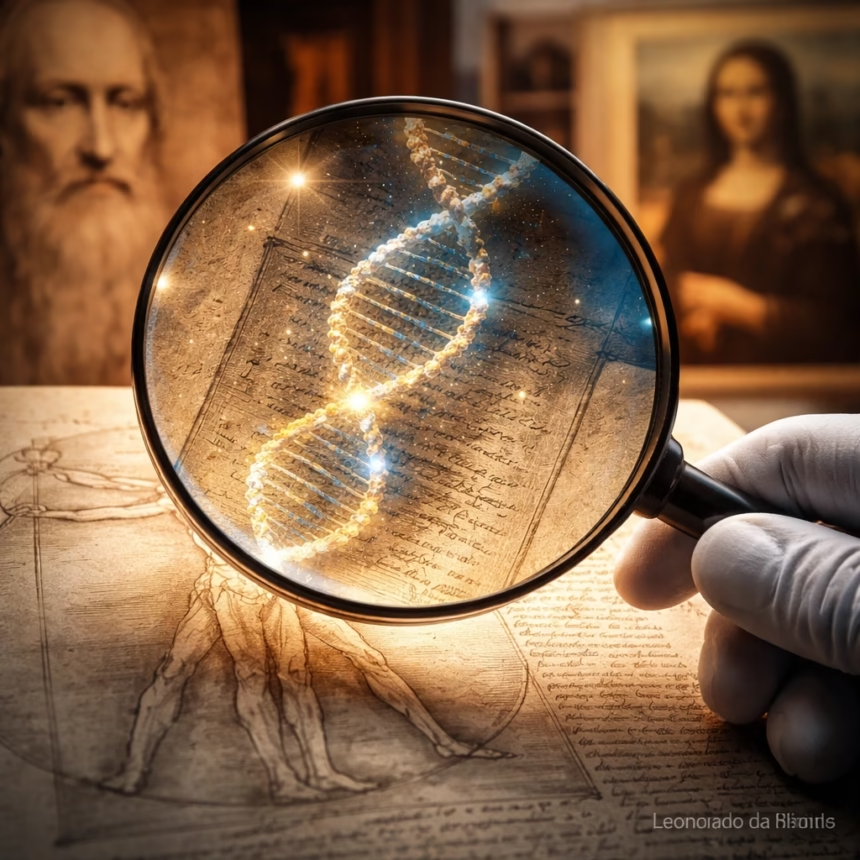
Hidden Messages in Masterpieces? New DNA Discovery Shakes Art World
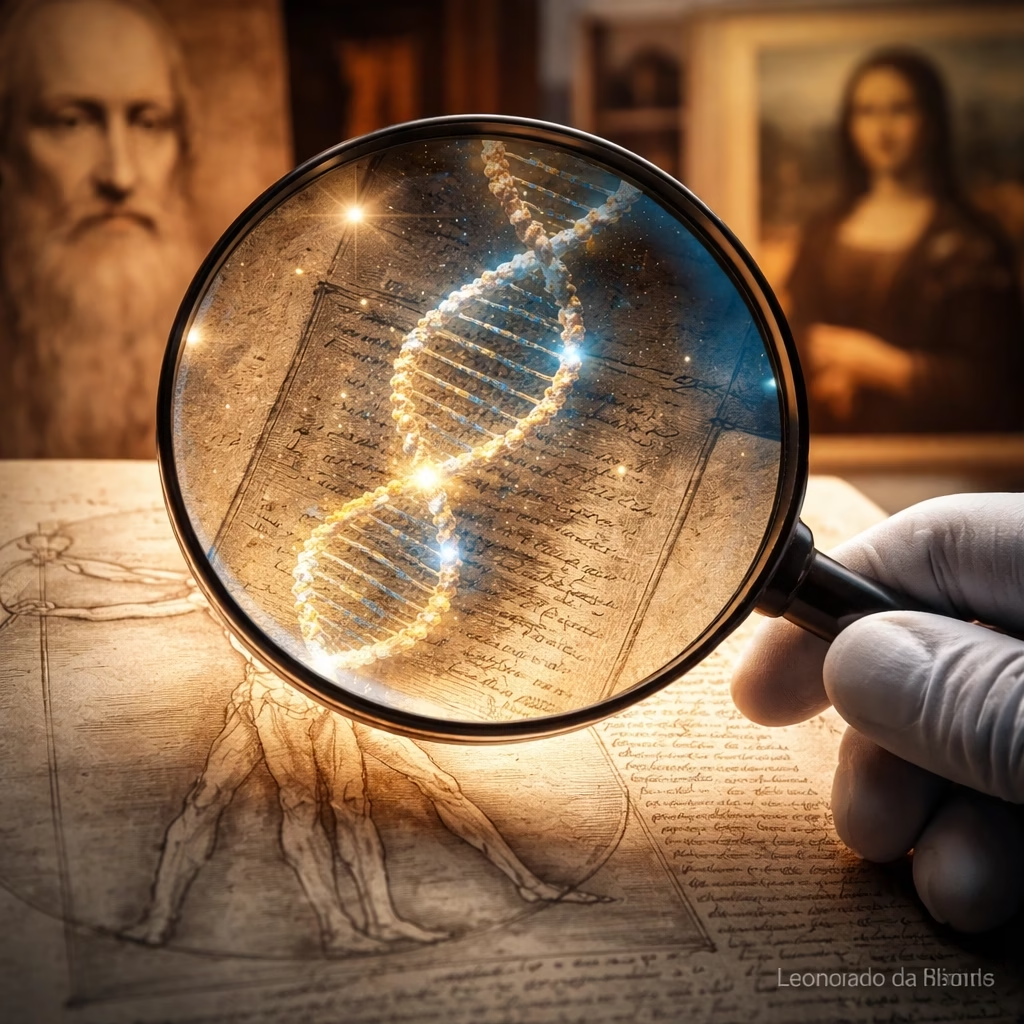
For centuries, Leonardo da Vinci's paintings have captivated the world. Now, a groundbreaking study suggests a hidden layer within his iconic works – potentially encoded using DNA. Researchers are exploring the possibility that da Vinci embedded genetic information into his art, a concept that, if proven, would revolutionize our understanding of the Renaissance master.
Background: A Legacy of Mystery and Innovation
Leonardo da Vinci (1452-1519) was a true polymath – a painter, sculptor, architect, musician, scientist, inventor, anatomist, geologist, cartographer, botanist, and writer. His genius extended beyond artistic skill; he was deeply fascinated by the natural world and pursued scientific inquiry with relentless curiosity. This intellectual breadth has fueled speculation about hidden meanings and complex symbolism within his paintings for generations.
The idea of encoding information within art isn't entirely new. Throughout history, artists have employed hidden messages, codes, and symbols in their work. However, the notion of using DNA to embed such information is a relatively recent and highly speculative development.
More Read

Key Developments: The Genetic Enigma
The recent surge of interest stems from research conducted by a team of scientists at the University of Bologna, Italy, led by Professor Sofia Barile. Their work, published in the journal *PLOS ONE* in late 2023, focuses on the potential use of DNA as a highly compact storage medium. DNA's ability to store vast amounts of data in a minuscule space makes it an attractive, albeit unconventional, method for encoding information.
Barile’s team doesn’t claim to have definitively *found* DNA in da Vinci's paintings. Instead, they are investigating the *possibility* of its presence. They are analyzing pigments used in da Vinci's works, particularly in the *Salvator Mundi* and *The Last Supper*, looking for traces of genetic material. Initial analysis has revealed unusual molecular signatures that warrant further investigation. These signatures don't match known pigment compounds and are consistent with the presence of degraded DNA.
The team is using advanced DNA sequencing techniques to identify any potential genetic sequences. They’re also exploring the possibility that da Vinci might have utilized a specific, now-extinct, DNA storage method. This is a significant challenge, given the degradation that DNA undergoes over centuries.
More Read

Impact: Rewriting Art History?
If the research is successful, the implications would be enormous. It could potentially rewrite art history and our understanding of da Vinci’s motivations. Instead of simply being a master painter, da Vinci could be revealed as a pioneer in data storage and encoding.
The discovery would also raise profound questions about the nature of art and the potential for artists to imbue their work with hidden layers of meaning that transcend immediate interpretation. It would challenge traditional art historical methods and necessitate new analytical approaches.
Art collectors, museums, and historians are already expressing keen interest in the project. The potential value and historical significance of artworks confirmed to contain encoded DNA would be immeasurable.
What Next: A Long Road Ahead
The research is still in its early stages, and many challenges remain. The degradation of DNA over time makes detection extremely difficult. Furthermore, even if DNA is found, deciphering its encoded message will be a complex and painstaking process.
Professor Barile’s team plans to continue their analysis of da Vinci’s pigments, utilizing more sophisticated DNA extraction and sequencing techniques. They are also collaborating with experts in paleogenetics and cryptography to develop methods for deciphering potential genetic codes.
Future milestones include:* Confirmation of the presence of DNA in da Vinci’s paintings. * Identification of potential genetic sequences. * Development of a method for deciphering the encoded message. * Peer review and publication of further findings.
More Read

Challenges in DNA Preservation
DNA degrades over time due to environmental factors such as heat, humidity, and UV radiation. The ancient pigments used by da Vinci would have further complicated the process, potentially masking or damaging any embedded DNA. The team is employing specialized techniques to minimize further degradation during analysis.
The Role of Cryptography
If DNA is found, the encoded message is likely to be encrypted. Researchers will need to apply cryptographic techniques to decode the information. This could involve analyzing the sequence of DNA bases (adenine, guanine, cytosine, and thymine) for patterns and codes.