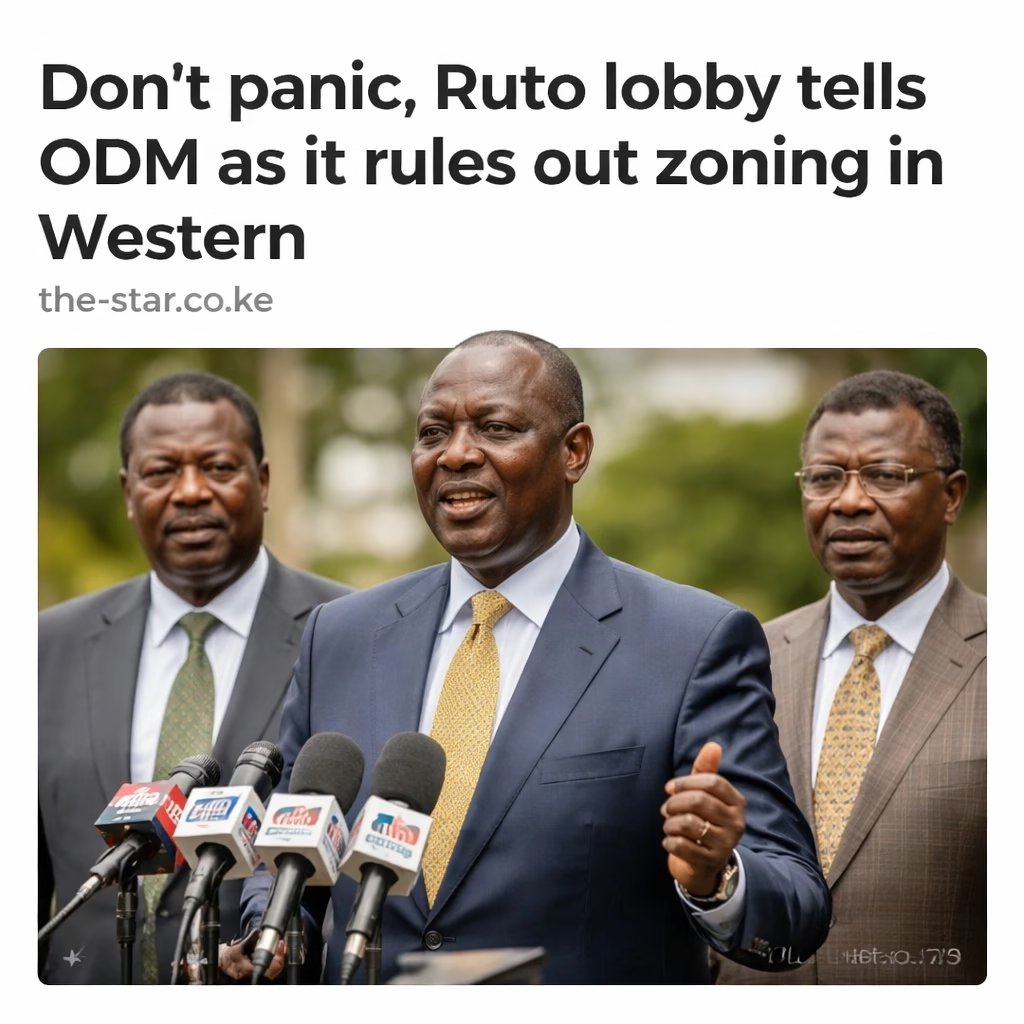
Allies of Deputy President William Ruto have emphatically dismissed any notion of political zoning in Western Kenya, directly challenging the Orange Democratic Movement (ODM) amidst its internal deliberations on the strategy. The declaration, made recently, signals an open electoral battleground in the politically significant region ahead of the eagerly anticipated 2022 General Election.
Background: The Contested Terrain of Western Kenya
Western Kenya, comprising counties such as Kakamega, Bungoma, Vihiga, and Busia, has historically been a critical swing region in Kenya's political landscape. Its substantial voter base and diverse ethnic composition, predominantly Luhya, make it a coveted prize for any presidential aspirant.
Historical Electoral Patterns
Historically, the region’s political allegiances have been fluid, oscillating between established parties and emerging formations. The ODM party, led by Raila Odinga, has traditionally enjoyed significant support, particularly in Busia and Kakamega. However, parties like Amani National Congress (ANC) under Musalia Mudavadi and Ford Kenya led by Moses Wetang’ula have also commanded considerable influence, particularly in Vihiga and Bungoma respectively.
In the run-up to the 2022 elections, the political dynamics intensified. Deputy President William Ruto’s United Democratic Alliance (UDA) had launched an aggressive charm offensive, seeking to dismantle traditional voting blocs and establish a foothold in regions previously considered strongholds of his opponents. This push was part of a broader national strategy to establish UDA as a formidable, nationwide political force.
The Zoning Debate within ODM and Azimio
The concept of “zoning” emerged as a contentious topic within the Azimio La Umoja coalition, of which ODM is a key pillar. Zoning, in political parlance, refers to a strategy where coalition partners agree not to field competing candidates in specific electoral areas to avoid splitting votes. The rationale is to maximize the chances of winning seats against rival formations, particularly in areas where a strong opposition presence is anticipated.
More Read

Proponents within ODM argued that zoning could prevent ‘friendly fire’ and consolidate support behind a single Azimio candidate, thereby securing more parliamentary and county assembly seats. However, this strategy often faces resistance from aspirants who feel their democratic right to contest is curtailed, and from parties keen on expanding their individual influence.
Key Developments: Ruto’s Allies Reject Zoning Outright
The latest development saw a powerful lobby allied to Deputy President William Ruto categorically reject any attempts to introduce political zoning in Western Kenya. Key figures within the Ruto camp asserted the region would remain an open field, allowing every aspirant within the UDA-led alliance to freely seek votes.
Voices from Ruto’s Camp
Leaders and aspirants associated with UDA made it clear their formation would not subscribe to zoning arrangements. They emphasized UDA’s philosophy of democratic competition and allowing the electorate ultimate choice. This stance directly countered the ongoing discussions within the ODM and the broader Azimio coalition regarding electoral pacts.

Zoning, they argued, stifles democratic competition, denies voters choice, and weakens parties by preventing grassroots growth. UDA, they maintained, was confident in its growing appeal and would field candidates in all elective positions, from MCA to Governor, where strong aspirants emerged.
ODM’s Internal Dissent
While Ruto’s declaration exerted external pressure, ODM itself grappled with internal divisions over zoning. Some factions within the party and the broader Azimio coalition supported the idea, seeing it as a pragmatic approach to secure victories. Others, however, expressed reservations, fearing that it could lead to disillusionment among aspirants and voters, potentially causing defections or voter apathy.
The internal debate highlighted the delicate balance between coalition unity and party ambitions. The Ruto allies’ firm stand further complicated these internal Azimio discussions, forcing them to reconsider the viability and potential backlash of implementing such a strategy in a highly competitive region.
Impact: Reshaping the Electoral Landscape
Ruto's allies' definitive rejection of zoning carries significant implications for all political actors and the electorate in Western Kenya. It sets the stage for a more intense and unpredictable electoral contest, fundamentally reshaping campaign strategies.
The Scramble for Votes
For ODM and Azimio-affiliated parties, no zoning means candidates will face robust competition not only from UDA but potentially from within their own coalition, should Azimio fail a unified approach. This necessitates aggressive campaigning, robust grassroots mobilization, and clear messaging.
UDA aspirants are emboldened, assured they won’t be asked to step down for coalition partners, and free to pursue ambitions across the region. This could lead to a proliferation of UDA candidates, potentially splitting votes that might otherwise favour Azimio, especially where Azimio faces internal competition.
More Read

Implications for Coalition Unity
Ruto’s stance puts immense pressure on Azimio La Umoja to present a united front. If Azimio fails internal consensus on zoning, or imposes it, it risks rebellion and defections. This could be particularly damaging in Western Kenya, where local political rivalries run deep.
For the UDA-led alliance, the ‘no zoning’ policy is presented as a strength, embodying democratic principles and offering wide choices to the electorate. It also serves as a subtle jab at Azimio, portraying them as potentially undemocratic or afraid of open competition.
Voters’ Perspective
For