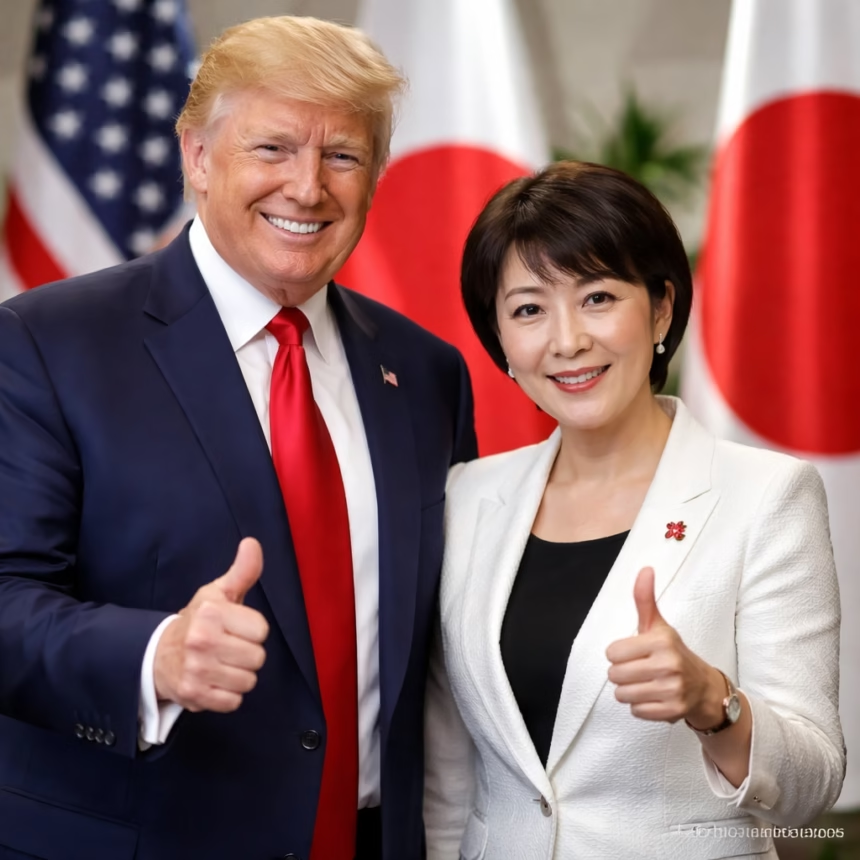
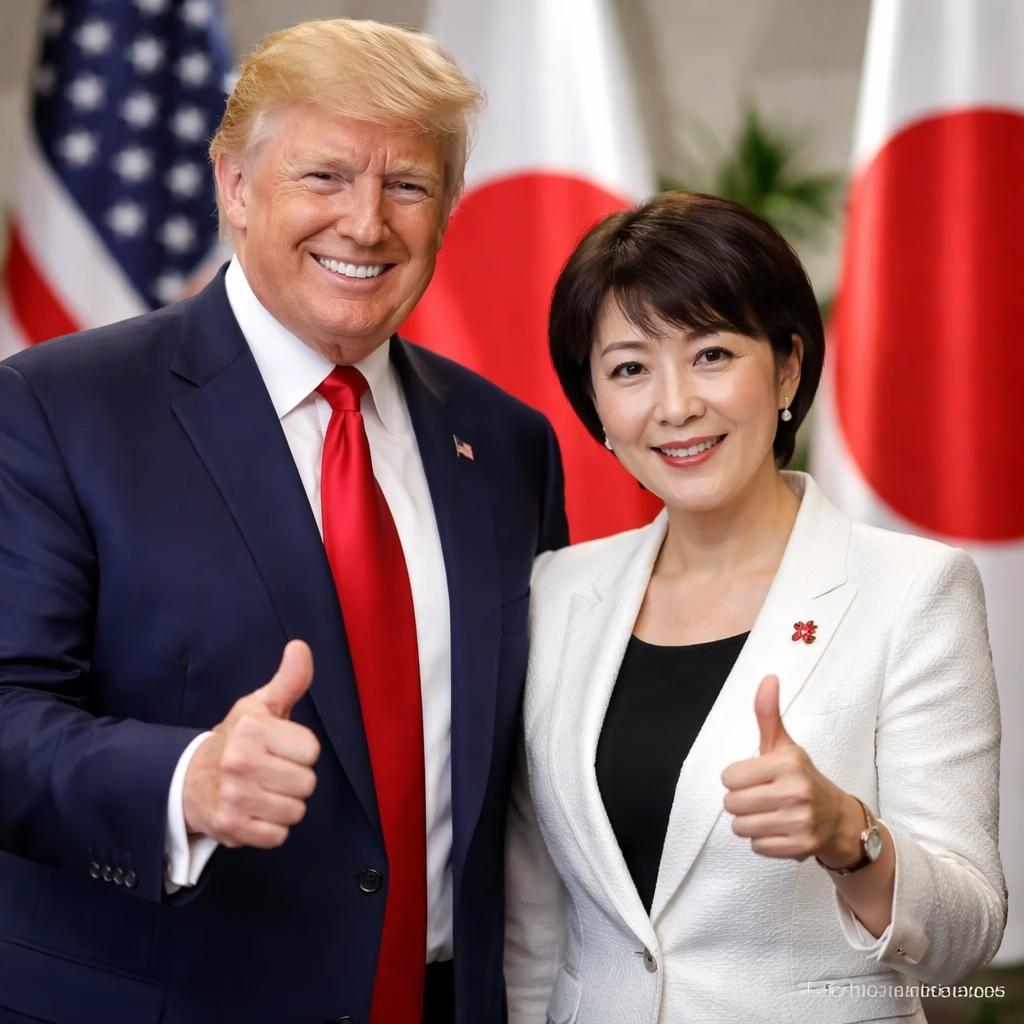
Former U.S. President Donald J. Trump has delivered a surprising endorsement to conservative Japanese lawmaker Sanae Takaichi, injecting a new and unpredictable dynamic into Japan's upcoming general election. The move, announced via a statement from Trump's political action committee on a recent Tuesday, has sent ripples through both domestic political circles and international observers, just weeks before Japanese voters head to the polls.
Background and Context
Sanae Takaichi, a prominent figure within Japan's ruling Liberal Democratic Party (LDP), has long been known for her staunch conservative views and close ties to former Prime Minister Shinzo Abe. A nine-term member of the House of Representatives, Takaichi has held various cabinet positions, including Minister of Internal Affairs and Communications, and has previously vied for the LDP leadership. Her policy platform typically emphasizes a robust defense posture, constitutional revision, and nationalist economic policies, often echoing sentiments found within the Republican Party's conservative wing in the United States.
Japan's political landscape is currently dominated by the LDP, which has governed for most of the post-war era. The upcoming general election, expected in late October or early November, will determine the composition of the House of Representatives, the more powerful lower house of the National Diet. While the LDP is widely expected to retain power, the margin of victory and the performance of individual candidates and factions are crucial. The election is set against a backdrop of economic challenges, an aging population, and evolving regional security concerns, particularly regarding China and North Korea. Trump's endorsement arrives at a critical juncture, potentially swaying undecided voters or energizing specific segments of the electorate.
Key Developments in the Endorsement
The endorsement came in a concise yet forceful statement released by Trump's "Save America" PAC, circulated widely on social media and picked up by international news outlets. The statement lauded Takaichi as a "strong leader," a "patriot," and a "true friend of the United States," highlighting her commitment to national defense and economic growth. It explicitly urged Japanese voters to support her and her allies in the upcoming election, framing her as the most capable leader to strengthen the U.S.-Japan alliance and navigate global challenges.
Takaichi swiftly acknowledged the endorsement, expressing gratitude on her official social media channels and in a press conference held the following day in Tokyo. She emphasized her long-standing relationship with American conservative figures and reiterated her commitment to strengthening the bilateral relationship. She portrayed the endorsement as a testament to her consistent policy positions and her vision for a strong Japan.

Initial reactions from other Japanese political figures were varied. Some LDP members, particularly those aligned with Takaichi's conservative faction, welcomed the endorsement, seeing it as a sign of international recognition for her leadership qualities. Others, however, expressed caution, questioning the appropriateness of foreign intervention in domestic elections and the potential for a backlash among voters wary of populist rhetoric. Opposition parties were quick to criticize the move, with some leaders suggesting it represented an undue influence from a controversial foreign figure and a potential threat to Japan's independent foreign policy. Public reaction, as gauged by early online discussions and media commentary, appeared polarized, reflecting the global divisions often associated with Mr. Trump.
Potential Impact and Repercussions
The endorsement carries significant potential implications for Takaichi's campaign and the broader Japanese political landscape. For Takaichi, it provides a high-profile boost, instantly elevating her international profile and potentially energizing her conservative base. It could also open doors to new fundraising opportunities and solidify support among voters who appreciate a strong, nationalist stance. However, the endorsement from a divisive figure like Trump could also alienate moderate voters and those who prioritize multilateralism and a more nuanced approach to international relations. Japan, a country that often values consensus and discretion, may react negatively to such an overt foreign intervention.
More Read

Within the LDP, the endorsement could exacerbate existing factional tensions. While Takaichi's allies will likely leverage it, rivals might subtly or overtly distance themselves, fearing guilt by association or a negative impact on their own campaigns. The LDP leadership, currently under Prime Minister Fumio Kishida, will need to carefully manage the narrative to avoid internal strife ahead of a crucial election. The endorsement might also signal a potential shift in the LDP's internal power dynamics, especially concerning the future direction of the party's conservative wing.
Internationally, the move has prompted discussions about the future of the U.S.-Japan alliance, particularly if Donald Trump were to re-enter the U.S. presidential race. An endorsement of a specific candidate in a key allied nation suggests a preference for a particular ideological alignment, potentially signaling a more transactional or ideologically driven foreign policy approach from a future Trump administration. This could create unease among Japanese policymakers who value stability and predictability in the bilateral relationship, regardless of who is in power. Other regional powers, such as China and South Korea, are also likely observing the developments closely, as a shift in Japan's political leadership or foreign policy orientation could have broader geopolitical consequences.
What Lies Ahead
As the general election draws nearer, all eyes will be on how Takaichi leverages this high-profile backing. Her campaign strategy will likely integrate the endorsement into her messaging, using it to underscore her perceived strength and international standing. Opponents, conversely, are expected to frame it as an unwelcome foreign intrusion, potentially appealing to nationalist sentiments against external influence or highlighting Trump's controversial past actions.
Political analysts will be scrutinizing public opinion polls in the coming weeks for any measurable "Trump effect" on Takaichi's popularity or the LDP's overall standing. The ultimate test will be whether the endorsement translates into tangible votes on election day. Beyond the immediate election, the incident raises questions about the increasing interconnectedness of global populist movements and the potential for influential international figures to shape domestic political outcomes in allied nations. The full impact of this unexpected endorsement will only become clear once the ballots are cast and counted across Japan.