Deep Sea Secret: Hidden World of Viruses Discovered in Ocean Abyss
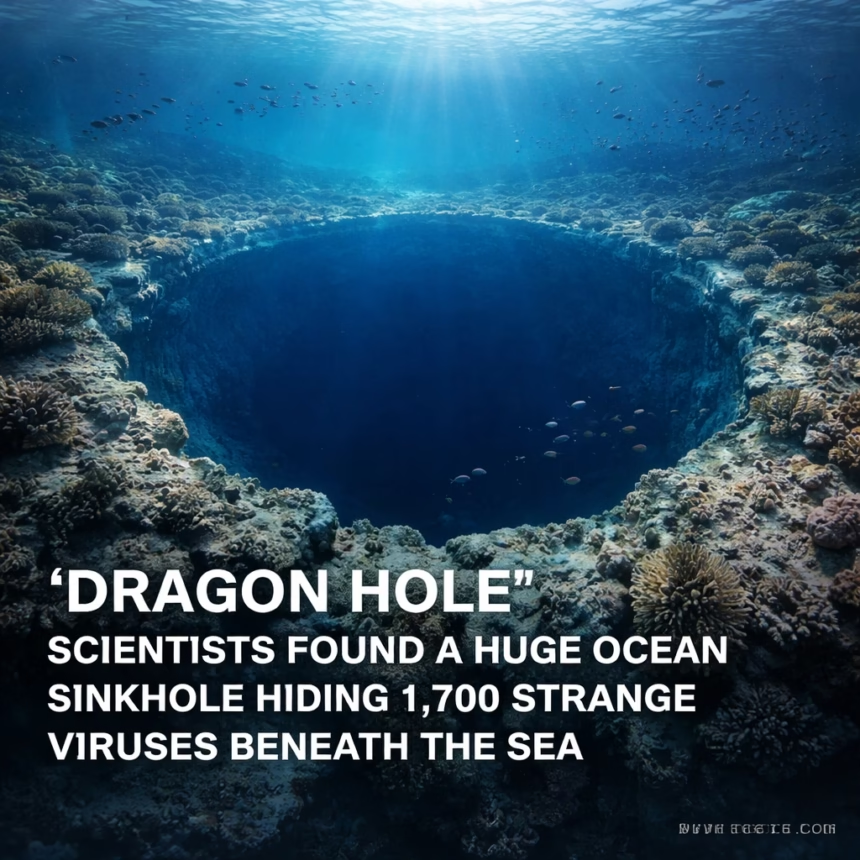
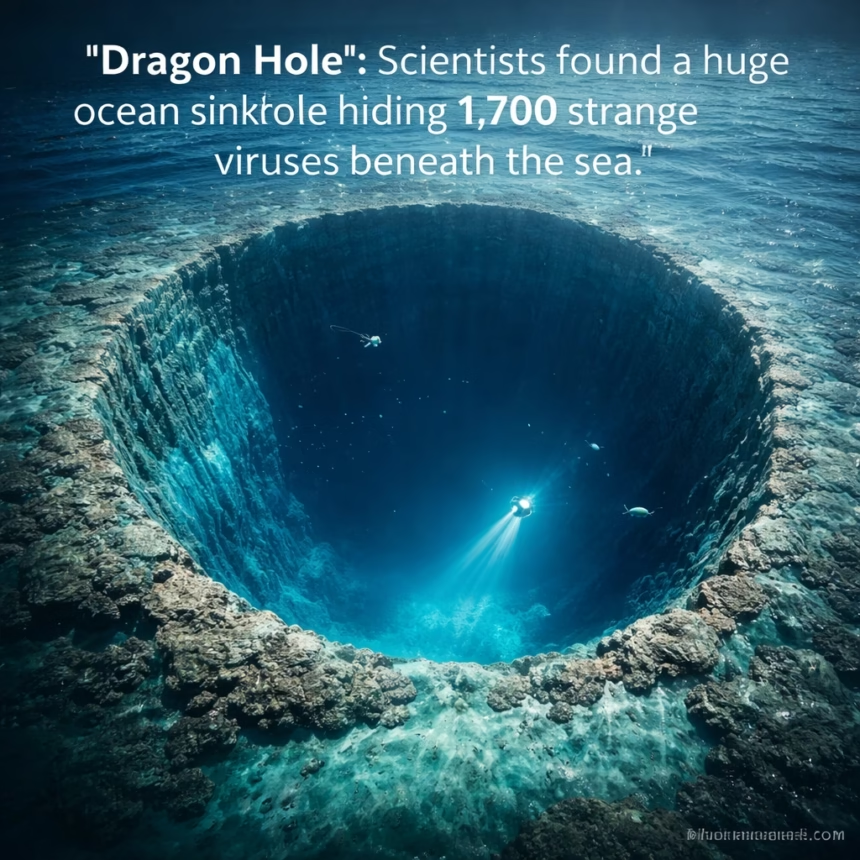
A massive underwater sinkhole, dubbed the "Dragon Hole," discovered in the Pacific Ocean near the Mariana Trench, has revealed a surprising and potentially significant discovery: a vast reservoir of viruses, some estimated to be thousands of years old. The finding, announced in early 2024, offers new insights into the evolution of viruses and their role in deep-sea ecosystems.
Background: Exploring the Deep and the Unknown
Ocean sinkholes are relatively rare geological formations, occurring when the seabed collapses, creating a large cavity. These formations can exist for thousands, even millions, of years. The Dragon Hole, located approximately 2,400 meters (7,900 feet) below the surface in the western Pacific Ocean, was first identified using sonar data collected during research expeditions in 2018. Initial assessments suggested a significant void, prompting further investigation to understand its formation and ecological implications. The area is part of the broader Mariana Trench region, known for its extreme pressures and unique biodiversity.
Scientists have long recognized that the deep ocean harbors a diverse microbial community, including viruses. These viruses, known as marine viruses, play a crucial role in regulating populations of bacteria and other microorganisms, driving nutrient cycling and impacting the overall health of the marine ecosystem. However, the scale and age of the viral reservoir found in the Dragon Hole are particularly noteworthy.
Key Developments: Unearthing a Viral Time Capsule
In late 2023 and early 2024, a team of researchers led by Dr. Xiaoming Wang from the Ocean University of China and Dr. Christopher Frudd from the University of Miami undertook expeditions to the Dragon Hole. Using remotely operated vehicles (ROVs), they collected sediment samples from the sinkhole's floor. Analysis of these samples revealed the presence of an astonishing 1,700 distinct viral strains, many of which are unlike any previously identified.
More Read

Crucially, the researchers determined that a significant portion of these viruses are estimated to be thousands of years old, potentially dating back as far as 10,000 years. Genetic analysis indicates that these viruses have remained largely unchanged over millennia, suggesting a stable and isolated environment within the sinkhole. This isolation has allowed the viruses to evolve independently, potentially developing novel mechanisms for infecting their hosts.

Impact: Understanding the Deep-Sea Ecosystem
The discovery has significant implications for our understanding of deep-sea ecosystems and the role of viruses in shaping them. The sheer abundance of viruses in the Dragon Hole suggests that they may be a more dominant force in this environment than previously thought. These viruses could be influencing the flow of energy and nutrients within the deep ocean, impacting the larger food web.
More Read

Furthermore, the ancient viruses raise concerns about potential impacts on modern marine life. While most marine viruses are specific to certain hosts, the possibility of these ancient viruses encountering and infecting contemporary organisms cannot be entirely ruled out. Understanding the viral diversity and potential pathogenicity within the Dragon Hole is crucial for assessing the health and stability of the deep-sea ecosystem.
What Next: Future Research Directions
Researchers are planning further expeditions to the Dragon Hole to conduct more detailed analyses of the viral community. Future research will focus on:
Viral Host Identification: Identifying the types of bacteria and other microorganisms that these viruses infect.
Viral Function: Determining the functional capabilities of the viruses and their impact on microbial communities.
Environmental Factors: Investigating the environmental conditions within the Dragon Hole that have contributed to the preservation of these ancient viruses.
Evolutionary History: Tracing the evolutionary history of the viruses to understand how they have adapted to their deep-sea environment.
Challenges and Considerations
Studying these viruses presents significant challenges. The extreme pressure, darkness, and remoteness of the Dragon Hole make sample collection and analysis difficult and expensive. Furthermore, the potential risks associated with handling ancient viruses require strict protocols and biosafety measures.
The discovery also underscores the need for greater exploration and research in the deep ocean, a realm that remains largely unknown. As human activities increasingly impact the marine environment, understanding the complex interactions within deep-sea ecosystems, including the role of viruses, is more important than ever.