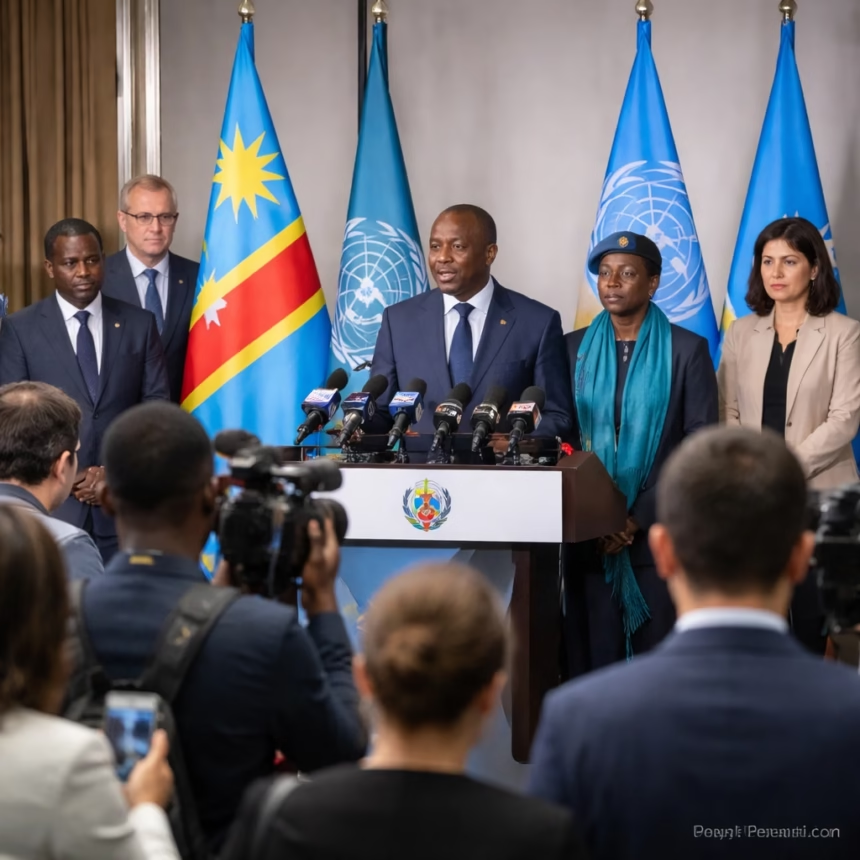
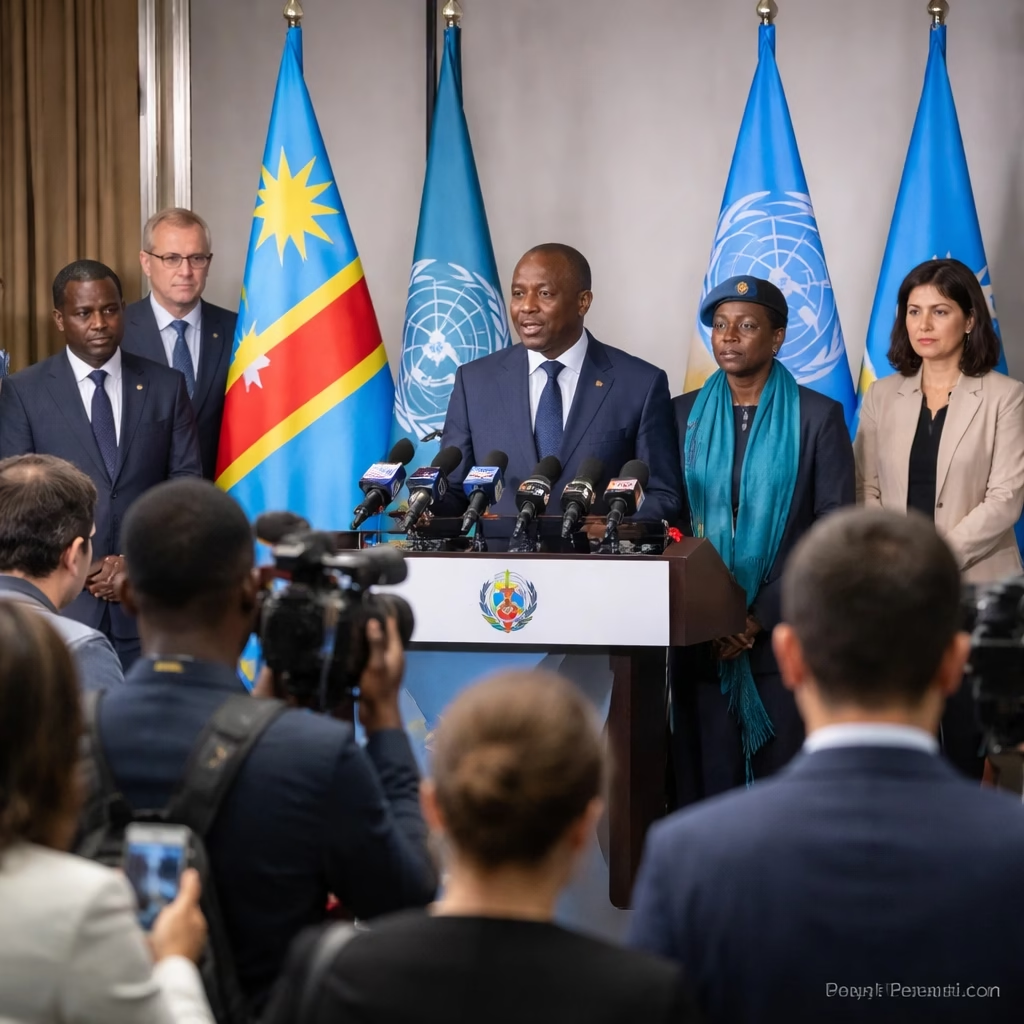
Kinshasa, DRC – The Democratic Republic of Congo (DRC) government, in collaboration with the United Nations, has officially launched a critical humanitarian response plan designed to address the escalating needs of millions across the vast Central African nation. Unveiled in the capital this week, the comprehensive initiative seeks to mobilize substantial international support to alleviate suffering caused by persistent conflict, displacement, and widespread deprivation.
Background
The Democratic Republic of Congo has endured decades of complex crises, marked by political instability, endemic poverty, and recurrent armed conflict, particularly in its eastern provinces. This protracted turmoil has created one of the world's most severe and often overlooked humanitarian emergencies.
The violence is fueled by a myriad of factors, including intense competition over vast mineral resources, deep-seated ethnic tensions, the proliferation of over 120 armed groups, and the destabilizing spillover effects of regional conflicts. These elements combine to perpetuate devastating cycles of displacement and extreme vulnerability among the civilian population.
The eastern provinces of North Kivu, South Kivu, and Ituri remain the epicenters of acute humanitarian need. The resurgence of the M23 rebel group since late 2021, coupled with ongoing activities of other non-state armed actors, has dramatically exacerbated an already dire situation, triggering mass population movements and escalating human rights abuses.
Beyond conflict, the DRC faces immense developmental challenges. A fragile economy, inadequate infrastructure, and severely limited access to basic services leave a significant portion of its population highly susceptible to external shocks, including climate-related disasters such as devastating floods and prolonged droughts.
More Read

While humanitarian partners have consistently responded to these crises, efforts have often been hampered by chronic underfunding and severe access constraints. Previous response plans, though vital, struggled to meet the full scope of needs, leading to significant gaps in aid delivery and protection for the most vulnerable.
Key Developments
The newly launched 2024 Humanitarian Response Plan (HRP) represents a unified strategic framework, bringing together the DRC government's national priorities with the operational expertise of over 200 humanitarian organizations. This coalition includes various UN agencies, as well as international and national non-governmental organizations.
The plan urgently appeals for $2.6 billion from international donors. This ambitious funding target reflects the sheer scale and complexity of the crisis, as well as the comprehensive nature of the interventions required to provide life-saving assistance and protection to those most in need across the country.
More Read

A staggering 14.5 million people are targeted for assistance under this plan. This figure represents a significant portion of the estimated 25.4 million Congolese who are projected to require humanitarian aid in 2024, underscoring the widespread and profound impact of the ongoing crisis.
The HRP outlines critical interventions across multiple essential sectors. These include emergency food assistance and nutrition programs, provision of vital health services, improvement of water, sanitation, and hygiene (WASH) infrastructure, enhanced protection for vulnerable populations, support for education in emergencies, and the provision of emergency shelter.
A core pillar of the plan is the enhancement of protection services, particularly for women and children who disproportionately bear the brunt of violence. This includes addressing sexual and gender-based violence (SGBV), preventing child recruitment by armed groups, and supporting those affected by forced displacement.
While immediate life-saving aid remains paramount, the plan also integrates elements of early recovery and resilience-building. This approach aims to bridge the gap between emergency response and longer-term development, fostering greater self-reliance and sustainable recovery among affected communities wherever feasible.
Impact
The DRC hosts Africa's largest population of internally displaced persons (IDPs), with over 6.9 million people uprooted from their homes, primarily concentrated in the eastern regions. These individuals often live in precarious conditions, lacking adequate shelter, sufficient food, and access to basic social services.
Eastern Hotspots
North Kivu alone accounts for over 2.5 million IDPs, many of whom are concentrated in overcrowded informal sites around Goma and other urban centers. This influx severely strains local resources and significantly increases vulnerability to disease outbreaks and various forms of violence.
More Read
An estimated 25.8 million people face high levels of acute food insecurity, categorized as IPC Phase 3 or above, making the DRC one of the world's largest food crises. Conflict severely disrupts farming activities, market access, and supply chains, while displacement leads to the loss of essential livelihoods.
Child Malnutrition
Over 6 million children under five suffer from acute malnutrition, with 1.8 million severely acutely malnourished. This places them at an extremely high risk of death and long-term developmental issues, hindering their future prospects and the country’s development.
The ongoing humanitarian crisis significantly exacerbates public health emergencies. Outbreaks of cholera, measles, and malaria are frequent and often deadly, particularly in overcrowded IDP camps characterized by poor sanitation and limited access to clean water. Access to functioning healthcare facilities is severely limited for millions.
Protection concerns are widespread. Women and girls face pervasive sexual violence, frequently used as a weapon of war and intimidation. Children are at high risk of recruitment by armed groups, separation from their families, and denial of their right to education. The elderly and people with disabilities also face heightened risks and significant barriers to receiving assistance.
Hundreds of schools have been attacked, occupied, or forced to close due to conflict, leaving millions of children out of school and depriving them of a foundational education. Displacement further disrupts educational continuity, impacting an entire generation's future.
Access to safe drinking water and adequate sanitation remains a critical challenge across the DRC. Only a fraction of the population has access to basic sanitation facilities, contributing directly to the prevalence of waterborne diseases and severely compromising public health standards.
What Next
The immediate priority for the 2024 Humanitarian Response Plan is to secure the full $2.6 billion requested from the international community. Without rapid and generous contributions, the plan's ambitious goals will be severely hampered, leaving millions of vulnerable individuals without essential life-saving aid and protection.
Humanitarian partners continue to advocate for unimpeded access to all populations in need, particularly in conflict-affected zones where access is often restricted. Ensuring the safety and security of aid workers remains a paramount concern, given the highly volatile and dangerous operational environment.
The humanitarian situation in the DRC is highly dynamic and subject to rapid changes. Therefore, the plan will require continuous monitoring and flexible adaptation to evolving needs, new displacement patterns, and emerging crises. Regular assessments will be crucial to inform necessary adjustments to programming and resource allocation.
A key long-term objective of the response is to strengthen the capacity of local and national actors, including the DRC government and Congolese non-governmental organizations. This aims to empower them to lead and sustain humanitarian responses, fostering greater ownership and ensuring more effective and culturally appropriate aid delivery.
While humanitarian aid addresses the symptoms of the crisis, lasting solutions fundamentally require addressing the root causes of conflict and instability. The UN and its partners will continue to advocate vigorously for peace, security, and political stability, urging all parties to respect international humanitarian law and protect civilians.
Efforts will intensify to link immediate humanitarian interventions with longer-term development and peacebuilding initiatives. This nexus approach aims to build resilience within communities, reduce dependency on emergency aid, and pave the way for sustainable recovery, economic growth, and lasting peace across the Democratic Republic of Congo.